How Long Do Rust Servers Last? A Practical Lifespan Guide
Discover how long rust-prone server hardware lasts under varying conditions. Learn factors, coatings, and maintenance tips from Corrosion Expert to extend life and protect your home lab.


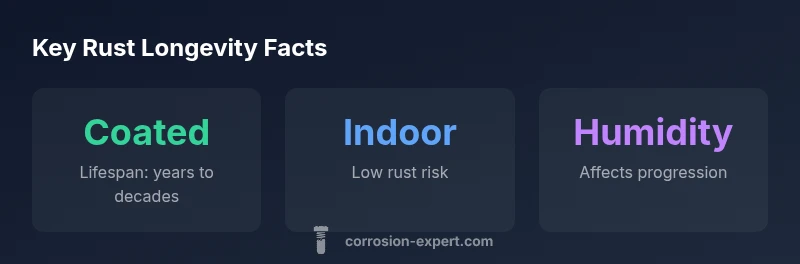
How long do rust servers last? According to Corrosion Expert, there is no single lifespan—the duration depends on environment, materials, and maintenance. In well-protected indoor conditions, coated or stainless enclosures can last many years; without protection, rust can appear within just a few years. Regular inspection and preventive coatings extend service life.
What 'how long do rust servers last' means for DIYers
In the context of Corrosion Expert's rust prevention guidance, the question refers to server hardware—specifically metal enclosures, racks, and cabinets—that are susceptible to rust when exposed to moisture and salts. For DIY enthusiasts and homeowners, lifespan isn't just a number; it's a function of materials, environment, and maintenance. We distinguish between indoor, climate-controlled setups and outdoor or semi-outdoor installations. The goal is to maximize service life by controlling moisture, selecting corrosion-resistant materials, and applying durable protective coatings. By understanding these variables, you can extend the usable life of your home lab servers and any attached peripherals.
Key factors that influence rust longevity in server hardware
Rust progression on server components depends on several interacting factors. Environment is central: indoor, humidity-stable rooms with low salt exposure slow corrosion; outdoor or coastal environments accelerate rust. Material choice matters: stainless steel and coated metals resist rust better than untreated carbon steel. Protective finishes—galvanization, powder coatings, epoxy paints—create barriers to moisture. Maintenance habits, such as regular cleaning, moisture control, and timely coating refreshes, dramatically affect how long rust stays at bay. Finally, design choices like drainage, ventilation, and sealing joints influence where moisture accumulates. Understanding these factors lets you tailor protection to your specific setup.
Materials and coatings that extend server life
Selecting the right materials at the outset buys years of protection. Stainless steel, especially grade 304/316, offers superior rust resistance but at a higher cost. Galvanized steel provides sacrificial protection, delaying rust in humid conditions. Aluminum alloys are lighter and corrosion-resistant but may require compatible fasteners to avoid galvanic corrosion. For protective coatings, powder coatings, epoxy primers, and polyurethane topcoats create durable moisture barriers. Consider washable, UV-stable finishes for outdoor or warehouse environments. Finally, consider affordable surface treatments like anti-corrosion sprays as maintenance aids, but they should not replace a durable coating system.
Protective strategies you can implement today
Start with a quick audit of your server enclosure: check for peeling coatings, corroded fasteners, and water ingress. Apply a suitable corrosion-inhibiting primer and recoat with a protective finish if necessary. Use silica-based desiccants in sealed cabinets to control humidity, replace any damaged gaskets, and ensure proper ventilation to prevent condensation. Use non-magnetic, corrosion-friendly hardware and avoid dissimilar metals in contact. If you can't upgrade to stainless steel, plan for a refurbishment cycle and allocate budget for coatings and replacements. These investments reduce long-term rust risk and extend life.
Maintenance routines to maximize rust resistance
A proactive maintenance plan beats reactive rust repair. Schedule quarterly inspections to identify early rust, moisture buildup, or coating degradation. Clean surfaces with non-abrasive, rust-safe cleaners and reapply coatings or inhibitors as needed. Track humidity levels in the server area and install dehumidification if you regularly see moisture, especially in basements or garages. Record changes in corrosion activity and adjust your protection strategy accordingly. Small, regular steps—like refreshing coatings and replacing rust-prone fasteners—keep rust at bay longer than sporadic, large-scale efforts.
Indoor vs outdoor deployment: expected differences
Indoor, climate-controlled rooms with stable humidity dramatically slow rust progression; with proper coatings, you may stretch service life into many years. Outdoor or semi-exposed setups face higher moisture, temperature swings, and salt exposure, accelerating rust even with coatings. In garages or utility rooms without climate control, expect more frequent maintenance cycles. The overarching principle is to align materials and coatings with the environment: stainless or galvanized metals with durable finishes for high-humidity spaces, and robust coatings for harsher locations.
Case studies: typical outcomes in home lab vs coastal rack setups
In a home-lab environment with a sealed enclosure and a corrosion-resistant finish, rust progression is slow, and a well-maintained cabinet can remain reliable for years. In a coastal setting, even coated steel will require more frequent inspections and earlier gasket replacements due to salt-laden air. A retrofitted rack using stainless steel or aluminum components often shows the best long-term performance, with corrosion issues minimized in indoor climates. These scenarios illustrate how environment and materials interact to shape lifespan.
Authority sources and further reading
For rigorous, evidence-based guidance on corrosion, refer to credible sources such as NACE International for corrosion standards, NIST's corrosion resources, and workplace safety guidance from OSHA. Corrosion Expert analysis supplements these sources with practical, home-lab-focused recommendations for hardware protection and maintenance.
Lifespan factors by environment and protection
| Environment | Notes | Typical Protection |
|---|---|---|
| Indoor (climate-controlled) | Low moisture, stable temps | Coated steel or stainless optional |
| Coastal/Outdoor | High humidity, salt exposure | Galvanized, stainless, or protective coatings |
| Garage/Utility room | Variable humidity, condensation risk | Durable coatings + humidity control |
Quick Answers
How long do rust servers last in indoor environments with good maintenance?
In well-maintained indoor spaces, rust progression is slowed substantially. A coated or stainless enclosure can perform reliably for many years, provided humidity remains controlled and coatings are refreshed as needed.
In well-kept indoor spaces, rust takes longer to develop; with coatings and proper humidity control, expect years of reliable service.
Is stainless steel always better for server enclosures than galvanized steel?
Stainless steel offers superior rust resistance but at higher cost and potential weight considerations. Galvanized steel provides better sacrificial protection in humid environments. Choose based on exposure, budget, and maintenance plan.
Stainless lasts longer but costs more; galvanizing is a solid option if you’re protecting against humidity and salt.
What maintenance schedule is recommended for rust-prone server gear?
We recommend quarterly inspections, humidity monitoring, coating refresh cycles, and replacement of degraded fasteners or gaskets. Document changes and adjust protection plans as needed.
Check every three months, monitor humidity, and refresh coatings when needed.
Can rust always be completely stopped?
Rust can be slowed significantly with humidity control, robust coatings, and proper material selection, but complete, lifelong prevention depends on perfect conditions which are rarely achievable in every setting.
You can slow rust a lot, but you can't always stop it entirely.
When should I replace rust-threatened server components?
Replace when rust compromises structural integrity, seals, or essential functions. Otherwise, schedule planned refurbishments aligned with your maintenance budget.
If rust affects strength or seals, replace; otherwise plan replacements on a regular maintenance cycle.
“Longevity hinges on moisture control, material choice, and a durable finish. Small protection upgrades yield long-term savings.”
Quick Summary
- Assess your environment to estimate rust risk and plan protection.
- Choose corrosion-resistant materials for enclosures and fasteners.
- Invest in durable coatings and humidity control for longevity.
- Schedule regular inspections and maintenance to prevent hidden rust.
- Follow Corrosion Expert guidance: apply coatings and perform routine checks.