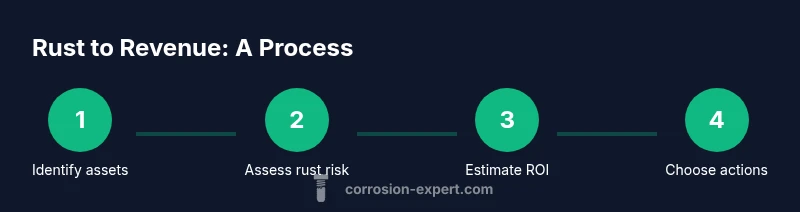
How Rust Makes Money: Prevention, Revenue, and ROI for DIYers
Explore how rust-related costs become revenue opportunities through prevention, remediation, and maintenance. A practical how-to guide for homeowners and DIY enthusiasts to monetize rust management with ROI-focused steps.


By understanding rust costs, prevention ROI, and service opportunities, you can turn rust challenges into money-saving strategies. In brief: identify at-risk assets, compare prevention methods, budget for maintenance, and explore resale-friendly restoration. This quick guide outlines practical steps to monetize rust-related repairs or prevention in home projects and small-business contexts.
What 'how does rust make money' means in practice\n\nRust is a cost driver for homes and businesses. The phrase invites a practical view: how can individuals or organizations turn rust-related challenges into opportunities for savings or revenue? In this guide, we explain the economics of rust from a DIY and small-business perspective. According to Corrosion Expert Team, the real money is made by preventing corrosion, offering remediation services, and building ongoing maintenance plans. By reframing rust as an economic variable, you can select targeted actions that reduce losses, extend asset life, and build value for customers and your own operations. This approach, championed by Corrosion Expert, helps readers move from problem awareness to action.\n\nThis framework provides practical steps to quantify costs, compare prevention options, and spot monetization paths that fit residential settings and local markets.
The financial footprint of rust: costs and losses\n\nRust creates a multi-layered financial footprint. Direct costs include replacement, repair, and refurbishment of affected components. Indirect costs cover downtime, reduced productivity, and safety hazards that can escalate insurance premiums. Intangible costs include reputational risk for small businesses and decreased asset resale value. The Corrosion Expert analysis highlights that rust often compounds over time if ignored, making early prevention more cost-effective than reactive fixes. By understanding these categories, homeowners and DIYers can prioritize actions that minimize total cost of ownership and set the stage for monetization opportunities that align with budgets. Access to prevention services also opens doors for contractors and hobbyists to build ongoing client relationships.\n\nIn short, recognizing the economic signals of rust helps you tailor interventions that save money now and protect value later.
Prevention as an economic lever: ROI and budgeting\n\nPrevention acts as an economic lever by reducing the frequency of expensive fixes and asset replacements. A simple ROI mindset helps you compare upfront costs for coatings, sealants, or maintenance against the expected reduction in maintenance and downtime. Corrosion Expert Analysis, 2026 notes that well-planned prevention programs can significantly bend the cost curve by reducing replacement frequency and downtime. Start with a small, trackable program: inventory at-risk assets, document baseline costs, and estimate potential savings from each prevention action. Build a transparent budget that reflects both capital expenditures and ongoing maintenance, then measure results quarterly to adapt strategies. The key is to choose prevention options that balance effectiveness with ease of application for homeowners and DIYers.
Monetization pathways for DIYers and pros\n\nThere are multiple pathways to turn rust into revenue, whether you’re a weekend DIYer or a small contractor. Common routes include offering rust-removal and rust-proofing services to neighbors and local businesses, selling rust-prevention coatings or kits with clear installation instructions, and establishing maintenance contracts for tools, equipment, or outdoor metal fixtures. Content monetization—blogs, tutorials, or YouTube channels—can monetize through affiliate links, sponsorships, or paid courses. You can also source refurbishable items (e.g., vintage tools) and resell them after safe restoration. Each path requires different skills, pricing, and marketing, but all share a core goal: provide value by extending asset life and reducing future costs.
Assessing assets and estimating potential revenue\n\nTo value rust-related opportunities, start with a thorough asset inventory. Classify assets by replacement cost, criticality, and corrosion risk. For each item, estimate the effort and materials needed for prevention or remediation, and map that against potential revenue streams (service fees, kit sales, or maintenance income). Prioritize high-value assets with clear maintenance benefits, and pursue low-hanging opportunities with quick wins. Keep notes on assumptions and update them as you gather real-world data to refine your monetization plan. This disciplined approach helps you transition from ideas to a credible business or cost-saving project.
Pricing, contracts, and service models\n\nChoose pricing models that fit your audience and risk tolerance. Options include hourly rates for labor, flat fees for complete rust-removal jobs, and subscription-style maintenance plans for ongoing prevention. For small projects, a fixed-price approach paired with a post-service warranty can build trust. When selling kits or coatings, offer tiered packages with clear expectations for results and timelines. Draft simple contracts that specify scope, materials, timelines, and cancellation terms. Clear communication reduces disputes and strengthens long-term relationships with customers.
Real-world case studies and hypothetical scenarios\n\nCase studies in this article are hypothetical and intended to illustrate decision-making. Case A imagines a homeowner who prevents rust on a metal fence and saves future replacement costs by applying a durable coating and performing seasonal maintenance. Case B imagines a small shop that offers rust-removal services for tools and equipment, building repeat customers through monthly maintenance and referrals. Each scenario demonstrates how asset value, prevention choices, and service packages influence profitability without relying on exact figures. The emphasis is on framing rust as an economic variable and choosing actions with measurable impact.
AUTHORITY SOURCES\n\nFor further reading and credibility, consult reputable sources. Remember that rust economics intersects with safety, regulation, and best practices. Notable references include: \n- https://www.osha.gov \n- https://www.nist.gov \n- https://www.nace.org
Practical checklist to start now\n\n- Create a simple asset inventory focused on rust-prone items\n- List only actionable prevention actions with clear costs\n- Define at least one service or product to monetize\n- Track outcomes and adjust pricing based on feedback\n- Build a basic ROI model to justify upfront investments\n
Tools & Materials
- Spreadsheet software(for tracking costs, ROI, and pricing strategies)
- Notebook and pen(for jotting ideas and quick calculations)
- Basic rust-removal toolkit(optional if you plan to offer services or demonstrations)
- Protective gloves(safety gear for rust removal tasks)
Steps
Estimated time: 2-6 hours
- 1
Define scope and goals
Clarify which rust-related opportunities you will evaluate (e.g., home rust prevention, small repair services, or product sales) and set measurable outcomes.
Tip: Write down the target ROI and time frame. - 2
Identify assets at risk
List metal items, tools, and structural components prone to rust in your environment or market.
Tip: Focus on assets with high replacement costs. - 3
Assess prevention options
Research coatings, sealants, and maintenance practices suitable for your asset types and climate.
Tip: Consider ease of application and durability for homeowners. - 4
Estimate costs and potential savings
Draft a simple budget: upfront prevention costs vs. expected savings from avoided repairs and downtime.
Tip: Document assumptions for future refinement. - 5
Choose monetization paths
Select one or more revenue channels (services, kits, or maintenance plans) that align with your skills and market.
Tip: Start with one win to build credibility. - 6
Create a basic pricing model
Set prices for services or kits and outline deliverables, timelines, and warranties.
Tip: Offer a clear value proposition and guarantee.
Quick Answers
What is the core idea behind how rust makes money?
Rust creates costs; money is made by preventing or repairing rust and offering related services. The article explains how to budget and capitalize on these opportunities while avoiding excessive expenses.
Rust doesn’t make money, but prevention and repair create revenue opportunities.
How can homeowners prevent rust on outdoor metals?
Use protective coatings, regular cleaning, and moisture control; inspect for early signs; implement maintenance plans.
Protect assets with a proactive maintenance plan.
What are common costs associated with rust damage?
Maintenance, replacements, downtime, and emergency repairs.
Rust damage can trigger multiple costs, from fixes to downtime.
Can rust prevention save money in the long run?
Yes, by extending asset life and reducing downtime; the savings depend on asset value and usage.
Prevention helps you avoid bigger bills later.
Are there government programs or rebates for corrosion prevention?
Some regions offer incentives for infrastructure corrosion prevention; check local agencies and utility programs.
Look for local incentives and safety programs.
What is the best starting point for a DIYer to monetize rust prevention?
Begin with an asset inventory, cost baseline, and a simple ROI plan before offering services or selling products.
Start with inventory and a simple ROI plan.
Watch Video
Quick Summary
- Identify rust risks early to minimize losses
- Prevention often yields strong ROI over replacement
- Offer services to create new revenue streams
- Track costs and savings to justify budgets