Can You Put Rust-Oleum Over Latex Paint? A DIY Guide
Learn whether you can coat latex-painted surfaces with Rust-Oleum, including essential prep steps, primer options, safe application techniques, drying times, and maintenance tips to ensure durable adhesion and a professional finish for walls, furniture, and fixtures.


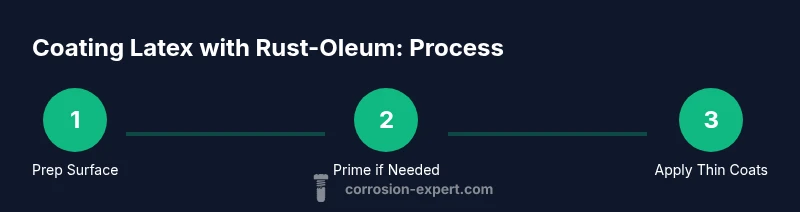
Yes—it's possible to apply Rust-Oleum over latex paint, but success hinges on proper prep and product choice. Start with a clean, deglossed surface, scuff-sand glossy areas, and apply a bonding primer if needed. Then apply Rust-Oleum in thin, even coats, following drying times and tool guidelines for best adhesion.
Assessing compatibility and why it can work
If you're asking can you put rustoleum over latex paint, you're not alone. According to Corrosion Expert, adhesion starts with a clean, deglossed surface and the right primer. Latex bases behave differently than bare wood or metal, so you need to ensure the substrate is stable and prepared. A glossy finish, wax residues, or silicone cleaners will prevent adhesion, so identify and remove these contaminants first. In addition, consider the environment: high humidity or temperature swings can affect cure times and coating performance. If the underlying latex is in good condition, you can proceed with a light scuff to create tooth for the new coating; if it's peeling, chalky, or flexing, remove the old latex completely and start with a clean, stable surface. Choose the type of Rust-Oleum product wisely: enamel or primer-surfacer options often deliver the best results on non-porous surfaces; for wood or metal, damaged areas may require a specialty primer.
-title to keep context as a standalone section-
Tools & Materials
- Mild dish soap or household cleaner(For cleaning surfaces and removing grease before painting)
- Water(Used with soap for washing and rinsing)
- Non-scratch scrub pad or sponge(To clean without scratching the latex surface)
- Lint-free cloths or tack cloth(For drying and removing dust after sanding)
- Fine-grit sandpaper (around 220 grit)(Lightly scuff glossy surfaces to create tooth for adhesion)
- Isopropyl alcohol or degreaser (optional)(Use if tape residue or wax remains after cleaning)
- Bonding primer (oil-based or shellac-based)(Recommended if the latex is glossy or you’re making a color/finish change)
- Rust-Oleum product designed to bond over painted surfaces (primer + enamel or primer-surfacer)(Choose a line designed for bonding to latex or glossy finishes)
- Personal protective equipment (gloves, respirator/ rere respirator mask, safety glasses)(Ventilate well; use respirator for solvent-based coatings)
Steps
Estimated time: 2-4 hours (active work) + 24 hours cure
- 1
Inspect and prep the surface
Begin by checking the latex surface for peeling, chalkiness, or persistent gloss. If you detect any of these issues, address them before coating. Clean thoroughly with mild soap and water, rinse, and dry completely. Wipe with a tack cloth to remove any remaining dust, ensuring a clean canvas for adhesion.
Tip: Wear gloves and eye protection during cleaning and inspection. - 2
Scuff and deglose the finish
Lightly scuff glossy areas with 220-grit sandpaper to reduce slickness and create micro-mechanical tooth. Wipe away dust with a tack cloth and let the surface dry before proceeding. This step improves bonding by increasing surface area for the primer and Rust-Oleum layer to grab onto.
Tip: Avoid deep gouges; you just need a dull, non-glossy surface. - 3
Decide on primer vs. no-primer
If the latex finish is glossy, chalky, or you’re changing from a light to a dark color, apply a bonding primer (oil-based or shellac-based) to improve adhesion. If the latex is flat and well-adhered, you may skip priming, depending on the Rust-Oleum product you choose and the surface type.
Tip: When in doubt, prime to maximize adhesion and longevity. - 4
Choose the Rust-Oleum product type
Select a Rust-Oleum line designed to bond to painted surfaces or glossy finishes. For best results, use a product with primer-surfacer properties or a dedicated bonding primer underneath. Avoid straight enamel over highly glossy latex if you haven’t primed; primer improves that bond.
Tip: Opt for multiple thin coats instead of one heavy coat. - 5
Apply the first thin coat
Apply the first coat in a smooth, even layer, keeping the spray or brush stroke long and steady to avoid drips. Let this coat dry according to the product’s instructions before evaluating adhesion and coverage. Thin coats ensure a uniform finish and reduce edge build-up.
Tip: Maintain a consistent distance if spraying (usually 8–12 inches). - 6
Apply additional coats and cure
Lightly sand between coats if recommended by the product, wipe clean, and apply a second coat once the first is fully dry. Allow the finish to cure fully per the manufacturer’s guidance before heavy use or cleaning. This ensures durability and color consistency.
Tip: Don’t rush curing; heat or humidity can extend drying times.
Quick Answers
Can you put Rust-Oleum directly over latex paint?
You can, but success depends on preparation: dull gloss, clean, and possibly prime. Adhesion is improved with bonding primers on slick latex surfaces.
Yes—but prep matters. Clean, dull the surface, and prime if needed to ensure adhesion.
Do I need to sand glossy latex before applying Rust-Oleum?
Yes. Sanding creates tooth for adhesion and reduces slipperiness that can cause peeling. Wipe away dust after sanding.
Yes, roughen glossy latex to help the coating stick.
Is it safe to apply Rust-Oleum indoors over latex paint?
Most Rust-Oleum products are safe indoors when used with proper ventilation and PPE. Always follow label directions and keep rooms well-ventilated.
Yes, if you ventilate and wear PPE, following the product instructions.
How many coats should I apply over latex paint?
Start with a thin first coat and add 1–2 additional coats as needed for uniform coverage. Avoid heavy coats that can run or blister.
Start thin, then add 1–2 more coats as needed for even coverage.
What if the latex paint is peeling or bubbling?
Do not apply over peeling surfaces. Remove loose paint and repair underlying issues before applying Rust-Oleum.
If peeling, strip and fix the surface before coating to ensure adhesion.
Watch Video
Quick Summary
- Prepare the surface thoroughly before coating
- Use bonding primer when gloss or slickness is present
- Thin coats over multiple passes yield better adhesion
- Allow full cure time for best durability