Can You Use Rust-Oleum on Plastic? A DIY Guide
Learn how to safely paint plastic with Rust-Oleum. This guide covers prep, primer selection, application techniques, safety, and curing to achieve durable finishes on plastic surfaces.


Yes—Rust-Oleum can be used on plastic, but success depends on surface prep, product choice, and proper technique. Begin with a plastic-priming primer, clean and degrease the surface, and roughen glossy plastics. Apply thin, even coats in a well-ventilated area, allow drying between coats, and cure fully before use. Test on a hidden area first.
What you can and cannot spray on plastic
Plastic surfaces vary widely in porosity and texture. Rigid PVC, ABS, polycarbonate, polystyrene, and fiberglass-reinforced plastics respond differently to coatings. In general, you can paint many plastics with the right prep and products, but soft or flexible plastics (like certain vinyls) may require specialized formulations. Always avoid painting surfaces that will be exposed to extreme heat or frequent flexing without testing a small area first. Corrosion Expert recommends performing a spot test on a hidden corner to verify adhesion and finish before committing to a full project.
Why Rust-Oleum is popular for plastics
Rust-Oleum’s line of plastic-friendly primers and paints targets key adhesion challenges on plastics. The brand’s plastic primer is designed to bite into smooth surfaces, reduce peeling, and improve long-term durability. When used correctly, these products can deliver a durable, even finish on bowls, containers, planters, and automotive trim pieces. A primary reason DIYers choose Rust-Oleum is the availability of shades and the general reliability of spray formats; however, success hinges on surface prep and correct primer choice. Corrosion Expert cautions that results vary by plastic type and environmental conditions.
Surface prep basics before painting plastic
Successful plastic painting starts with a clean, dry surface. Begin by washing with warm water and mild detergent to remove oils, waxes, and dirt. Rinse thoroughly and let dry completely. Wipe with isopropyl alcohol to remove residues that soap left behind. Lightly abrade glossy surfaces with fine sandpaper (around 320–400 grit) to create micro-roughness that enhances mechanical grip. Mask off areas you don’t want painted and ensure proper ventilation. Pro tip: test a small area to confirm that the primer will adhere and that the texture remains acceptable after sanding.
Choosing the right Rust-Oleum product for plastic
Not all Rust-Oleum products adhere equally to plastic. Look for a dedicated plastic primer and a compatible topcoat designed for plastics. If you’re unsure, opt for a multi-surface enamel or acrylic formula labeled as plastic-friendly, and pair it with a compatible primer. Consider the environment where the item will live; outdoor items benefit from UV resistance and fade control. Corrosion Expert recommends avoiding solvent-heavy formulations on very flexible plastics, as they can cause cracking over time.
Step-by-step painting workflow (high-level overview)
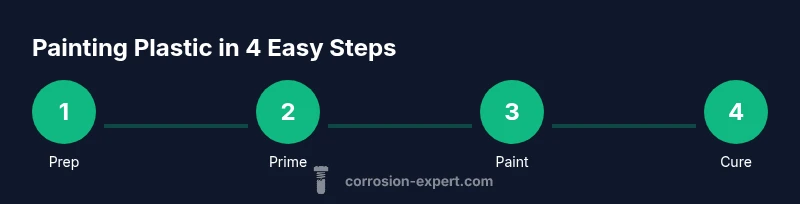
A practical workflow starts with preparation, followed by priming, painting, drying, and curing. Always apply in thin coats to minimize runs and edge buildup. Maintain consistent spray distance (about 6-8 inches) and use sweeping, overlapping passes. Allow the primer to dry fully before applying color coats. Finally, cure the painted plastic in a dust-free area away from direct heat to maximize hardness and adhesion.
Common issues and how to fix
If the paint fails to adhere, revisit surface prep—raise the abraded area and reapply primer. Peeling often indicates either poor adhesion at the base or insufficient drying time between coats. Cracking usually results from applying paint too thickly or exposing the finish to flexing too early. Small runs or sags can be corrected by careful sanding with very fine grit and re-coating once dry. Always keep test pieces to validate fixes before working on the final item.
Safety and ventilation considerations
Spray painting plastic creates fumes and particulates. Use a well-ventilated area, ideally outdoors or in a workshop with a proper exhaust setup. Wear a respirator or at least a mask rated for organic vapors, gloves, and eye protection. Keep children and pets away during application and curing. Read the label for hazard warnings and disposal guidance. Corrosion Expert emphasizes ventilation as a crucial factor in achieving safe, durable results.
Maintenance and long-term care after painting plastic
Once cured, clean painted plastic gently with mild soap and water. Avoid harsh solvents that can degrade the finish. If scuffs appear, a light touch-up with the same primer and color coat can restore appearance. For outdoor items, consider a UV-protective topcoat to extend color retention. Regular inspections help identify wear and potential damage early, allowing timely touch-ups for a longer-lasting finish.
Final check and curing tips
Before placing the item into service, ensure the coating is fully cured to its maximum hardness. Follow the manufacturer’s recommended cure times, which typically range from 24 to 72 hours depending on temperature and humidity. Avoid heavy handling during curing to prevent marring the finish. If you notice delamination or bubbling, set the piece aside to stabilize in a dust-free environment and re-evaluate surface prep.
Authoritative sources
For safety practices and paint chemistry fundamentals, consult:
- OSHA: https://www.osha.gov
- EPA: https://www.epa.gov
- Extension services: https://extension.illinois.edu
Brief section on alternatives
If you’re painting a flexible or specialized plastic, consider alternatives like vinyl dye or epoxy coatings designed for plastics. These options may offer improved flexibility and impact resistance on certain plastics compared to standard spray enamels.
Tools & Materials
- Soap and water(For initial cleaning of plastic surfaces)
- Isopropyl alcohol(Degrease and remove residues after cleaning)
- Fine sandpaper (320–400 grit)(Create micro-roughness on glossy plastics)
- Plastic primer designed for plastics(Promotes adhesion to smooth plastics)
- Plastic-safe topcoat spray paint(Choose a formula labeled for plastics)
- Painter’s mask or respirator(Protect from fumes)
- Gloves and eye protection(Safety first)
- Ventilated workspace or outdoors(Adequate airflow)
- Masking tape and drop cloth(Protect adjacent surfaces)
Steps
Estimated time: 60-120 minutes active, plus 24-72 hours cure
- 1
Prepare work area
Set up your spray area in a well-ventilated space. Move items to allow airflow and protect nearby surfaces with a drop cloth. This step establishes a controlled environment to prevent dust and debris from settling on wet paint.
Tip: Ensure the area is free of hot surfaces or flames; fumes can be flammable. - 2
Clean and degrease surface
Wash the plastic with mild detergent and water, rinse, and dry completely. Wipe with isopropyl alcohol to remove any oils. A clean surface improves adhesion significantly.
Tip: Don’t rush the drying; residual moisture will cause sags and poor adhesion. - 3
Lightly scuff glossy areas
Gently abrade glossy areas with fine sandpaper to create micro-roughness. Wipe away dust with a tack cloth. The abrasion increases mechanical grip for the primer.
Tip: Avoid deep scratches; you’re aiming for micro-porosity, not deep gouges. - 4
Apply plastic primer
Spray a thin, even coat of plastic primer over the entire surface. Let it dry per the label, then inspect for uniform coverage. Lightly re-spray any missed areas.
Tip: Keep can in motion and avoid heavy coats that can pool. - 5
First color coat
Apply a thin coat of the chosen topcoat. Hold the can at a consistent distance (about 6–8 inches) and sweep in overlapping passes. Let dry before another coat.
Tip: Never spray multiple coats in a single pass. - 6
Additional coats and finish
Apply 1–2 more thin coats until color is even and free of sags. Allow final coat to cure in a dust-free environment. Inspect for uniformity and edge coverage.
Tip: Refrain from touching the surface during curing to avoid fingerprints. - 7
Final cure and testing
Let the painted part cure completely—often 24–72 hours depending on conditions. Test gently in a hidden area for adhesion before full use.
Tip: If you see peeling, revisit prep or primer choice before proceeding.
Quick Answers
Can I spray Rust-Oleum on plastic indoors?
Yes, but ensure good ventilation and a well-sealed workspace to manage fumes. Use a mask and keep the area free of ignition sources.
You can spray indoors if you have good ventilation and safety gear.
Do I need a plastic primer before painting plastic?
Yes. A dedicated plastic primer improves adhesion on smooth plastics and helps prevent peeling.
A plastic primer is important for good adhesion.
Will it adhere to ABS or PVC?
Adhesion depends on surface prep and primer. Generally, with proper primer and scuffing, adhesion is achievable on many plastics like ABS and PVC.
With the right prep, ABS and PVC can hold paint.
How long before curing is complete?
Cure times vary with temperature and humidity but expect 24–72 hours for full hardness.
Expect about 24 to 72 hours to cure.
Can I use Rust-Oleum on outdoor plastic parts?
Yes, choose UV-resistant topcoats and ensure proper sealing; outdoor exposure may require more frequent maintenance.
Outdoor use is possible with UV protection.
Are there plastics you should avoid?
Some flexible plastics or chemically resistant surfaces may resist adhesion; always test first and avoid extreme heat exposure.
Some plastics resist painting, test first.
Watch Video
Quick Summary
- Test adhesion on a hidden area first
- Use plastic primer for best results
- Apply thin coats, allow proper drying
- Ventilate and protect surrounding areas
- Cure fully before handling