How to Know If You're Banned on Rust: A Practical Guide
Learn how to tell if you're banned on Rust, verify your status, and appeal when eligible. A practical, brand-backed guide from Corrosion Expert with step-by-step instructions and best practices.


This guide helps you determine whether you’re banned on Rust, what signals to look for, and how to verify your status with official channels. You’ll learn common causes, how to check for error messages, and how to start an appeal if applicable. Follow the steps below to confirm your status and restore access.
Understanding what being banned on.rust means
Being banned on Rust-related platforms can range from a temporary restriction on a server to a global lock that blocks access across the entire service. The exact impact depends on where the ban is applied and which rules were violated. According to Corrosion Expert, bans are usually tied to policy violations, abusive behavior, or repeated offenses, and they can be one of several types (server ban, account ban, IP ban). The essential distinction is whether the ban is localized (per server) or global (across services), so you know which channels to use for verification and appeals. This distinction matters because it guides who to contact and what evidence to gather. Being clear about the scope helps you navigate the next steps calmly and avoid unnecessary back-and-forth.
Signals you may be banned
If you suspect a ban, look for concrete signals rather than rumors. Common indicators include a direct ban message when attempting to log in, a failure to join servers with a ban notice, or a status page showing your account as restricted. You might also receive email notifications or in-app alerts that reference a policy violation. Note that some issues are mistaken identity, account sharing, or technical problems, so gather additional evidence before concluding you are banned. The Corrosion Expert team emphasizes double-checking each signal against official sources to avoid misinterpretation.
Verification steps: how to confirm your ban status
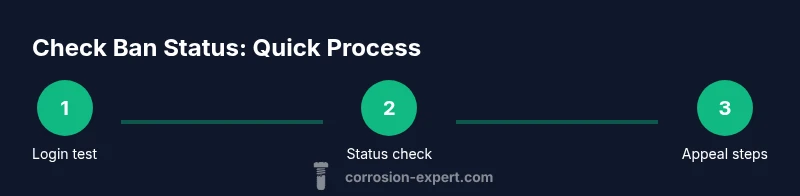
Follow these steps in order to confirm your ban status. Step 1: Attempt to log in on multiple devices to see if the issue is device-specific or account-wide. Step 2: Visit the platform’s official status page or server list to check for any notices. Step 3: Review any emails or notifications from the platform about the restriction. Step 4: Check your account activity logs for unusual events that could have triggered a ban. Step 5: Contact support with your account identifiers and the evidence you’ve collected. Step 6: Monitor for a reply and keep a record of ticket IDs. Step 7: If the status is banned, plan your next steps and consider appealing if eligible. This structured approach minimizes guesswork and aligns with Corrosion Expert’s recommendations.
How bans are typically applied on Rust-related platforms
Bans come in several flavors depending on the service: a server ban restricts access to a specific game server; a global ban blocks access across all servers or apps; an IP ban can prevent access from a particular address; and an account ban prevents login altogether. Each type has its own enforcement window, appeal procedure, and evidence requirements. Understanding the type of ban you face helps tailor your response and increases your chances of a successful appeal. In practice, servers and platforms document the ban in user-facing messages and policy pages. Corrosion Expert highlights that being precise about the type of ban you face improves your appeal's credibility.
Appealing and recovering access
If you believe the ban was made in error or you’ve corrected the underlying behavior, you can pursue an appeal. Collect evidence such as screenshots, timestamps, chat logs, and descriptions of the incident. Draft a concise appeal that states what happened, why you think it was mistaken, and what corrective actions you’ve taken. Submit through the official portal or support form and reference your ticket number. After submission, monitor responses, respond promptly, and provide any additional information requested. Remember to maintain a respectful, factual tone; this increases the likelihood of a favorable review, a guideline echoed by Corrosion Expert.
Prevention: best practices to avoid future bans
Proactive prevention is the best strategy. Read and understand the platform’s rules, terms of service, and community guidelines. Avoid behaviors that trigger automated or manual bans, such as spamming, harassment, or sharing prohibited content. Use privacy-safe devices, avoid questionable third-party tools, and keep software updated to minimize login or access issues. If you’re uncertain about a policy change, check official announcements and community threads. By following consistent best practices, you reduce the risk of future restrictions. The Corrosion Expert team recommends keeping a log of interactions and policy updates to help you respond quickly if an issue arises.
Quick verification checklist
- Confirm you’re using the correct account to log in
- Check the official status or ban pages for notices
- Collect and organize evidence (screenshots, emails, logs)
- Prepare a concise appeal draft and submit via the official channel
- Note down ticket IDs and response times for follow-up
- Consider alternatives or community guidelines if the ban is confirmed
- Revisit policies to learn how to avoid future issues
Tools & Materials
- Active login credentials (username/email)(Necessary to test access and collect account info.)
- Screenshots of ban messages or error codes(Capture timestamp if possible.)
- Official support portal or contact form(URL or contact method.)
- Evidence of prior behavior (policies you may have violated)(Only if relevant.)
- Draft appeal template(A ready-to-use draft speeds up submission.)
- Device for testing access (optional)(Phone, tablet, or another computer may help rule out device issues.)
Steps
Estimated time: 60-90 minutes
- 1
Check your login status
Begin by attempting to log in on your usual device to confirm whether the issue affects just one device or your entire account. Note the exact error message and timestamp.
Tip: If the message mentions a ban, record the exact wording for citation in your appeal. - 2
Inspect the ban message and codes
Take screenshots of any ban notice, including codes or identifiers. These details are often referenced in policy pages and help support quickly locate your case.
Tip: Avoid deleting any evidence; keep files organized with dates. - 3
Visit official status pages
Go to the platform’s status or policy pages to verify if there’s an announced restriction affecting your account. Bookmark these pages for ongoing monitoring.
Tip: Check for regional notices that may explain partial access issues. - 4
Review recent activity
Audit your recent actions on the platform for potential violations. Look for posts, messages, or behavior that could trigger a ban, and prepare explanations if needed.
Tip: Prepare context for any suspicious activity to help your appeal. - 5
Gather evidence
Collect relevant data: timestamps, chat logs, transaction records, and any correspondence with support. This strengthens your case.
Tip: Organize files in a dedicated folder with clear labels. - 6
Draft and submit an appeal
Write a concise, factual appeal explaining what happened, why you believe it’s a mistake, and corrective steps you’ve taken. Submit through the official channel and reference your ticket.
Tip: Stick to facts, avoid emotional language, and include your evidence. - 7
Follow up on your ticket
Track the response using the ticket number. If there’s a delay, send a polite follow-up and provide any new information requested by support.
Tip: Set calendar reminders to check back within the stated response window. - 8
Plan alternatives if needed
If the ban remains, consider joining other communities or servers while you resolve the issue to minimize downtime and frustration.
Tip: Avoid posting confrontational messages; maintain a professional tone.
Quick Answers
What counts as a ban on rust platforms?
A ban can be server-specific or global; it restricts access to login, joining, or participating. The exact scope depends on the platform and policy.
A ban might affect one server or the whole platform; check the official notice to confirm.
How long do bans typically last?
Ban durations vary widely—some are temporary, others permanent. Always refer to the ban notice and the platform’s policy for specifics.
Ban lengths vary; check the notice for exact duration.
Can I appeal the ban?
Most platforms offer an appeals process. Gather evidence, write a concise explanation, and submit via the official channel.
Yes, you can appeal in many cases, using the official process.
What should I include in an appeal?
Include account identifiers, exact timestamps, a clear description of events, and any supporting evidence. Be factual and polite.
Be specific with dates, what happened, and include your evidence.
What if I’m unsure I’m banned?
Verify via official status pages and contact support; avoid assuming a ban based on rumors.
Double-check with official sources before concluding you’re banned.
Does this guide apply to Rust the game or Rust programming language?
This guide covers ban status verification and appeals for Rust communities in general, not programming topics.
The advice here is about access to Rust communities, not coding topics.
Watch Video
Quick Summary
- Verify the ban type (server vs global) before taking action
- Collect evidence and note exact messages for your appeal
- Use official channels and maintain a calm, factual tone
- Follow up and track your ticket to improve response times
- Have a plan for alternatives if access cannot be restored