How to Buy Rust for Cheap: A DIY Savings Guide
Discover practical strategies to buy rust-related supplies cheaply without sacrificing quality. Learn price comparison, timing, and smart shopping tips for DIY rust prevention and removal.


In this guide you will learn how to buy rust-related supplies at low cost by evaluating needs, comparing prices, and taking advantage of discounts. You'll learn how to stack coupons, choose bulk options, and verify quality before purchasing. We cover reputable suppliers, seasonal sales, and how to avoid scams.
How to Buy Rust for Cheap: Core Approach
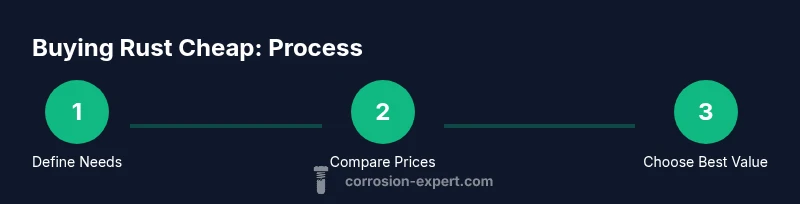
Buying rust-related supplies on a budget starts with clarity about what you actually need and how much value you’ll get from each purchase. For DIY enthusiasts and homeowners, the goal is not to chase every discount but to pair cost-awareness with practical quality checks. According to Corrosion Expert, the best way to learn how to buy rust for cheap is to treat price as a signal of value: a low price works only if the product will reliably protect a surface or facilitate effective rust removal. The Corrosion Expert team found that successful shoppers combine three pillars: accurate needs assessment, deliberate price comparison, and disciplined use of promotions and warranties. When you begin, write down the surfaces or tools that must be treated, the brands you trust, and a ceiling price for each item. This groundwork makes it easier to spot genuine bargains and avoid tempting but ineffective fakes. By following these steps, you’ll gain confidence in getting quality rust-related products for less.
Define Your Rust-Related Needs and True Cost
Before you ever click a checkout button, take stock of what you actually need. Are you treating a small rust spot on a tool or a full coating on an outdoor fence? Do you need a rust remover, a rust converter, or a protective primer after removal? Break down tasks into concrete jobs with estimated quantities (e.g., number of square feet to treat, number of cans required). This helps you calculate a practical ceiling for each item. Corrosion Expert recommends creating a simple matrix: item • required quantity • minimum acceptable quality • ideal price range. If you can’t assign a reasonable price point, you’re not ready to buy. This upfront work prevents impulse purchases that waste money and time.
Where Cheap Rust Supplies Come From: Online vs Local Stores
Cheap does not mean low quality by default. The best gains come from comparing multiple channels: online retailers, big-box hardware stores, local metal shops, and discount outlets. Online marketplaces often offer bundling deals and seasonal promotions, while local shops may provide loyalty cards and in-store demos. To keep costs down, collect at least three price quotes for each item and check for shipping fees, taxes, and return policies. Corrosion Expert notes that reputable retailers frequently run flash sales, clearance events, or bulk discounts that can lower the per-unit cost significantly. Don’t forget to verify the product line and batch numbers to ensure you’re not buying expired or counterfeit items.
How to Leverage Coupons, Loyalty Programs, and Bulk Pricing
Coupons, loyalty programs, and bulk pricing are powerful levers when buying rust-related supplies. Start with the basics: sign up for retailer newsletters, download store apps, and enable price-tracking alerts. Look for bundles like “buy two, get one free” or bulk cans that lower per-unit cost. When comparing, factor in storage safety and shelf life; some rust solutions have limited open time or temperature sensitivities. If you genuinely need a lot of product, bulk purchasing often yields substantial savings, but only if the items won’t go unused or expire before you can use them. Corrosion Expert recommends keeping a rolling inventory and setting reminders to use up older stock first to avoid waste.
Reading Labels and Reviews: Long-Term Savings Signals
Quality signals in cheap rust supplies include clear labeling, safety data sheets, and third-party certifications when applicable. Read the label for active ingredients, coverage area, and cure times. Reviews can reveal real-world performance and potential issues that price alone doesn’t show. Be wary of overhyped claims or missing safety data. The goal is to balance affordability with reliability—cheaper products that fail early can cost more in the long run due to repeated purchases and rework. Corrosion Expert suggests prioritizing products with transparent ingredient lists and verified user feedback.
Timing Your Purchase: Promotions, Seasons, and Price Cycles
Prices for rust-related products fluctuate with seasons and promotions. The best strategy is to plan ahead around major sale events (for example hardware store anniversaries or end-of-quarter promotions) and to watch for coupon cadences. If you can time purchases to coincide with a retailer’s clearance or stock rotation, you may save a meaningful amount without compromising on quality. It’s also worth tracking the same item across multiple retailers for a few weeks to spot trends and avoid buying at peak prices. Corrosion Expert emphasizes building a simple calendar of sale windows to maximize savings.
Safety, Authenticity, and Avoiding Scams in Cheap Rust Products
Price can attract counterfeit or diluted products, especially online. Always buy from reputable sources with clear safety data sheets, return policies, and valid contact information. Cross-check the batch numbers against manufacturer databases if available. Avoid ultra-cheap offers that promise miraculous results or require unconventional application methods. Investing in safety and authenticity protects you from poor performance, health risks, and wasted money. If in doubt, contact the manufacturer or a trusted supplier to confirm product legitimacy before purchase.
Practical Shopping Checklist You Can Use Today
- Define your rust problem and the minimum acceptable quality.
- List three potential retailers and gather quotes for each item.
- Check for coupons or loyalty offers; factor shipping and taxes.
- Read labels and reviews for long-term value signals.
- Choose the best overall value, not just the lowest price.
- Keep receipts and track product performance to refine future purchases.
Long-Term Rust Prevention to Reduce Future Costs
Prevention reduces the frequency of pricey rust interventions. Consider durable coatings, proper storage, humidity control, and routine maintenance to extend the life of metal surfaces. While prevention products may have a higher upfront cost, they often pay for themselves over time by lowering the number of treatments needed. Corrosion Expert recommends investing in high-quality prevention where feasible, and pairing it with periodic inspections to catch early signs of rust before heavy remediation is required.
Tools & Materials
- Price comparison tools (app or browser extension)(Set alerts for specific rust-related items and track price histories)
- Retailer loyalty programs(Join programs at multiple retailers to maximize coupons and promos)
- Budget planning notebook or digital sheet(Record ceilings, quotes, and observed sale cycles)
- Reliable rust products (rust removers, converters, and prevention coatings)(Prioritize brands with clear labels and safety data sheets)
- Shipping and return policy vouchers(Know thresholds for free shipping and easy returns)
Steps
Estimated time: 3-6 weeks depending on sales cycles and supplier availability
- 1
Define your rust-related needs
List the specific rust tasks you need to complete and estimate quantities. This prevents over-purchasing and helps you set a realistic price ceiling for each item.
Tip: Write down surface area, layers of rust, and desired finish to tailor product choice. - 2
Gather quotes from multiple retailers
Get at least three price quotes for each item, including shipping costs. Compare unit prices and any bulk discounts to determine the best value.
Tip: Use price-tracking alerts to catch price dips over time. - 3
Check promotions and loyalty offers
Look for coupons, member discounts, and bundling deals that lower the per-item cost. Factor in expiration dates and usage limits.
Tip: Stack legitimate promotions where allowed to maximize savings. - 4
Verify product quality signals
Read labels, SDS, ingredient lists, and reviews. Confirm that the product meets your needs and won’t require immediate replacement.
Tip: Avoid products with vague ingredient lists or missing safety data. - 5
Make the purchase decision
Choose the option with the best overall value, not the lowest price alone. Consider longevity, ease of use, and return policy.
Tip: Document the reasons for your choice for future reference. - 6
Track post-purchase performance
Monitor how long the product lasts and whether it meets expectations. Use insights to refine future shopping choices.
Tip: Keep receipts and product packaging in case of warranty claims.
Quick Answers
What counts as 'cheap' when buying rust supplies?
Cheap means achieving the best overall value, considering price, quality, and longevity. It’s not just the lowest upfront price but the total cost of ownership over the product’s life.
Cheap means getting the best overall value when you consider quality and durability, not just the sticker price.
Can I rely on only online prices when buying rust products?
Online prices are helpful for comparison, but verify shipping costs, return policies, and product authenticity. Local stores can offer immediate availability and in-person advice.
Online prices are great for comparison, but don’t forget shipping, returns, and authenticity checks.
Do bulk purchases really save money on rust supplies?
Bulk purchasing often lowers the per-unit price, but only if you can use the product before it expires and store it properly. Calculate the total cost to confirm savings.
Bulk can save money, but only if you’ll use it and store it safely.
Is cheaper always worse for rust-removal products?
Not necessarily. Some cheaper products work well for light rust or small areas. For heavy rust or critical applications, invest in trusted brands with clear safety data.
Cheaper isn’t always worse, but for serious rust, choose proven brands with safety data.
Are there safety risks with very cheap rust products?
Yes. Very cheap products may contain harsher chemicals or insufficient safety information. Always read the SDS and use proper PPE when applying any rust treatment.
There can be safety risks; read the safety data and wear PPE.
Watch Video
Quick Summary
- Define needs before shopping to prevent waste.
- Compare prices across multiple channels and watch for promotions.
- Verify labels and safety data to avoid low-quality buys.
- Use loyalty programs and bundles to maximize savings.
- Prioritize long-term value over the absolute lowest price.