Corrosion vs Rust: What Is the Difference?
Explore the difference between corrosion and rust, why it matters for DIY projects, and practical prevention tips. Learn definitions, mechanisms, and home maintenance strategies to protect metal surfaces.


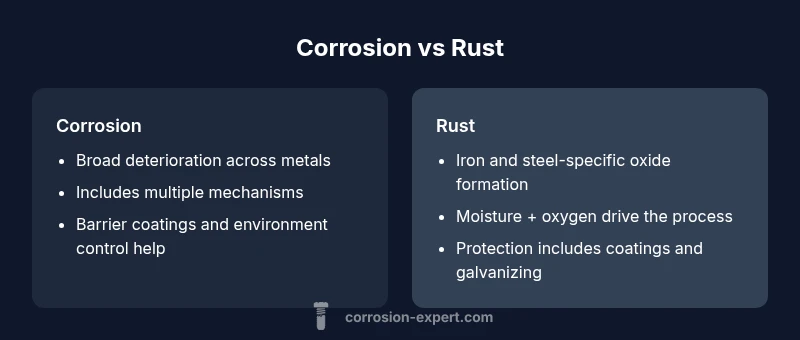
According to Corrosion Expert, understanding what is corrosion vs rust helps homeowners and DIYers pick the right prevention strategy. Corrosion is the broad deterioration of metals through chemical or electrochemical reactions, while rust is a specific form of corrosion that happens to iron and steel when moisture and oxygen combine to form iron oxide. In practice, knowing the distinction guides targeted repairs and durable protections for different metals and environments.
What is corrosion? Mechanisms and scope
What is corrosion vs rust begins with a broad definition. Corrosion is the deterioration of a metal due to chemical or electrochemical reactions with its environment. It encompasses many forms—uniform corrosion, galvanic corrosion, pitting, crevice corrosion, and stress corrosion cracking—across a wide range of metals. It can be accelerated by electrolytes like saltwater, acids, or concrete-aggregate moisture, and by electrical contact between different metals (galvanic corrosion). For DIYers, the takeaway is that corrosion is not a single process but a family of reactions that compromise structural integrity, appearance, and function. The Corrosion Expert team notes that prevention depends strongly on material type, exposure, and maintenance routines. This broader view of corrosion helps readers avoid narrowly focusing on rust and missing other vulnerable metals such as aluminum, zinc, magnesium, and copper, which corrosion attacks in different ways. The key concept: all corrosion involves electrons moving to or from metal surfaces, often creating oxide layers, dissolved ions, or porous films that weaken the metal over time.
What is rust? The iron-specific form of corrosion
Rust is a particular type of corrosion that affects iron and its alloys, like steel. It occurs when iron reacts with oxygen in the presence of water (or moisture) to form iron oxides, commonly seen as reddish-brown flaky material. Rust is not universal to all metals; aluminum, copper, and stainless steel resist rust in part due to oxide films that passivate their surfaces. For homeowners, this distinction matters: rust tends to be visible, localized, and more predictable in its progression on iron-based materials. Prevention and repair strategies therefore differ—paint and coatings for iron, passivation or compatible alloys for non-ferrous metals, and more robust barrier methods for highly humid environments. Remember, rust is a subset of corrosion, not the entire story of metal deterioration.
Why the distinction matters in DIY projects
When you’re planning a DIY project, the material choice and environment determine which corrosion controls will work best. If you’re working with iron or steel, rust prevention (coatings, galvanization, moisture control) is often the primary concern, and surface preparation matters a lot before painting. For aluminum, copper, or stainless steel, corrosion may take other forms—oxidation, chloride attack, or dezincification—requiring different precautions such as surface cleaning, inhibitors, or specific alloys. This distinction helps you avoid wasting time and money on ineffective fixes. It also informs maintenance schedules: iron components may need more frequent repainting in humid or salty environments, while non-ferrous parts may benefit from regular cleaning and protective films that slow oxide progression. Corrosion Expert’s guidance emphasizes tailoring strategies to material, exposure, and expected loads.
Common corrosion mechanisms across metals
Corrosion does not look the same on every metal. In general terms, you’ll encounter:
- Uniform corrosion: a steady thinning of metal surface due to uniform reactions with the environment, common on many metals including mild steel.
- Galvanic corrosion: accelerated deterioration when two different metals are in electrical contact in an electrolyte, e.g., brass fittings on steel).
- Pitting corrosion: localized pits that are harder to detect but can cause sudden failures, often seen in alloys like stainless steel in chloride environments.
- Crevice corrosion: localized attack in confined spaces where moisture concentrates, such as gaskets and joints.
- Intergranular corrosion: degradation along grain boundaries, more common in some heat-treated alloys. Each mechanism is influenced by environment (humidity, salts, acids), alloy composition, and protective coatings. DIYers should assess exposure, implement barrier coatings, and select corrosion-resistant materials when possible to mitigate these risks.
Rust vs other corrosion types: rust on steel, stainless steel, aluminum
Rust belongs to the rust family of corrosion and specifically targets iron-based materials. Stainless steels resist rust more effectively due to chromium content that forms a passive oxide layer; however, under certain conditions (chloride exposure, high temperatures, or deep scratches), stainless can corrode. Aluminum forms a protective oxide film, but can still experience pitting or crevice corrosion in salty environments. Copper may oxidize to a green patina, which is protective in some contexts but can indicate ongoing corrosion in others. For DIY projects, the material’s natural corrosion resistance shapes your maintenance plan: protect iron from moisture and salts, choose corrosion-resistant alloys for harsh environments, and regularly inspect joints and coatings to catch early signs of degradation.
Prevention strategies: coatings, inhibitors, cathodic protection, maintenance tips
Prevention for corrosion and rust centers on barriers, environment control, and compatible materials. Practical steps include:
- Coatings: primers, paint systems, powder coatings, or coatings designed for specific metals, applied to create a moisture barrier.
- Passivation and inhibitors: chemical treatments that slow corrosion on stainless steel and other alloys; inhibitors reduce the rate of chemical reactions in the environment.
- Galvanization and sacrificial anodes: zinc coatings on steel or attaching a more noble metal to divert corrosion away from the protected metal.
- Environment control: reduce humidity, remove salt deposits, and manage condensation. Dry storage, dehumidifiers, and protective enclosures help.
- Regular maintenance: clean surfaces to remove salts and pollutants, inspect for damage, and touch up coatings before corrosion propagates.
The right combination depends on material, exposure, and the function of the item. DIYers should start with a material-specific plan: iron/steel projects benefit from barrier coatings and rust inhibitors; aluminum and copper require different inhibitors and careful moisture management. Corrosion Expert emphasizes testing coatings under your specific conditions to ensure long-term performance.
Diagnostics and early signs: how to spot corrosion before it becomes costly
Early detection saves time and money. Look for color changes, pitting, flaking, or bubbling coatings. On non-ferrous metals, discoloration and dulling can indicate oxidation; on iron-based metals, reddish-brown rust and flaky texture are common. Simple home checks include:
- Visual inspection of joints, fasteners, and edges for rust or corrosion products.
- Moisture assessment around the area; high humidity or salt exposure increases risk.
- Surface tests: gentle scratch testing to reveal underlying corrosion progress (do this only on non-structural surfaces).
- Protective coating integrity checks: inspect for peeling or cracking allowing moisture entry.
If you notice widespread corrosion or fast progression, consult a corrosion-aware professional or follow a staged approach to cleaning, surface prep, and re-coating to restore integrity without introducing new corrosion pathways.
Choosing the right approach for your material and environment
A smart DIY strategy begins with material identification, exposure assessment, and a practical maintenance plan. For iron and steel, prioritize moisture control and barrier coatings, and consider galvanization for high-exposure parts. For aluminum and copper, focus on protective films and corrosion inhibitors suited to their oxide chemistry. In coastal or winter-road environments, corrosion protection requires more frequent inspection and robust coatings. Remember, prevention is typically less costly than remediation. The Corrosion Expert guidance frames the decision around material behavior, environmental factors, and the cost-benefit trajectory of preventive care; a small upfront investment in coatings and conditioning routinely pays off with longer service life and safer operation.
mainTopicQuery
Comparison
| Feature | Corrosion (general) | Rust (iron-specific) |
|---|---|---|
| Scope | Broad deterioration across metals and forms | Iron/steel oxidation (iron oxide) |
| Material focus | Any conductive metal; multiple mechanisms | Iron and steel are primary targets |
| Environment sensitivity | Electrochemical cells, salts, acids, humidity | Moisture + oxygen in iron environments |
| Prevention focus | Coatings, inhibitors, environment control, material selection | Surface coatings and moisture control tailored to iron |
| Maintenance effort | Variable by metal and exposure | Often higher visibility, but more manageable on iron/steel with coatings |
| Typical failure modes | Pitting, crevice, galvanic, uniform loss | Localized rust flaking, thinning of iron components |
The Good
- Helps readers tailor prevention to metal type
- Encourages proactive, material-focused maintenance
- Clarifies where rust fixes differ from general corrosion controls
- Promotes safer, longer-lasting DIY projects
Cons
- Can seem complex for beginners without metal IDs
- Risk of overgeneralizing corrosion to every metal
- Requires ongoing inspection and upkeep
Use material-specific corrosion strategies; rust control for iron-based parts, broader corrosion prevention for other metals.
A clear, material-first approach helps DIYers select effective coatings, inhibitors, and maintenance plans, reducing long-term repair costs.
Quick Answers
What is the difference between corrosion and rust?
Corrosion is the broad deterioration of metals due to chemical or electrochemical reactions, while rust is a specific form of corrosion that affects iron and steel, forming iron oxide when moisture and oxygen are present. This distinction guides which prevention methods to use for different metals.
Corrosion is the general deterioration of metals, while rust is the iron-specific type that forms iron oxide when moisture is involved. This helps you choose the right protective approach.
Can all metals rust?
No. Rust is specific to iron and steel. Other metals like aluminum and stainless steel corrode differently, often forming protective oxide layers that resist further damage under certain conditions.
Rust only happens to iron and steel. Other metals corrode differently, often with protective oxide films.
Is rust always a sign of corrosion?
Yes. Rust is a visible sign of corrosion on iron-based materials. However, corrosion in other metals may not be visible as rust and can take other forms, so inspections should be material-specific.
Rust means corrosion on iron, but other metals can corrode without rust.
How can I prevent rust in a garage or workshop?
Keep humidity low, clean dust and salts, apply a protective coating, and inspect joints regularly. For iron parts in humid areas, consider galvanization or rust-inhibiting primers to slow progression.
Keep things dry, coat exposed metal, and check for wear often. Galvanize or protect iron parts in damp areas.
What are common rust prevention coatings?
Paints and powder coatings form moisture barriers; galvanizing provides sacrificial protection; rust-inhibitive primers reduce corrosion progression where coating is damaged.
Use paint or powder coatings for barriers; galvanizing adds sacrificial protection; use rust inhibitors near joints.
What simple home tests can indicate early corrosion?
Look for discoloration, flaking, or bubbling coatings. Tap or scratch tests can reveal softened areas. Use a moisture meter near the surface and inspect in cycles after seasons of exposure.
Watch for discoloration or flaky coating. Check moisture and inspect after weather changes.
Quick Summary
- Identify the metal before choosing protection
- Differentiate rust from general corrosion in planning
- Prioritize coatings and moisture control
- Inspect regularly to catch early signs
- Select protection methods aligned with environment