Rust vs DayZ: An In-Depth Survival Game Comparison
A rigorous side-by-side analysis of Rust vs DayZ, examining pacing, progression, realism, base-building, and player experience to help fans decide which survival game aligns with their playstyle.


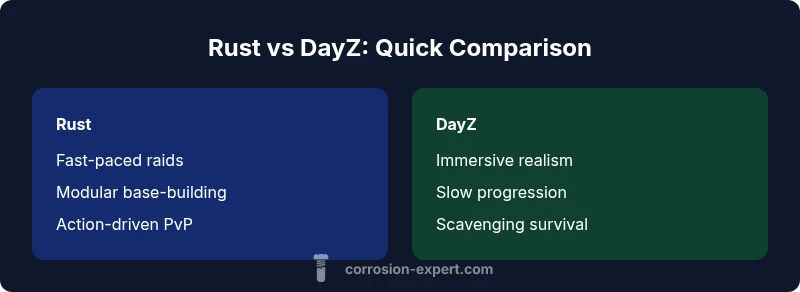
In short, rust vs dayz pits two survival games with different rhythms: rust leans toward fast, base-building momentum and PvP momentum, while dayz emphasizes patient scavenging, realism, and slow progression. For most players, rust offers quick, action-driven sessions; dayz rewards long-term exploration and immersion.
Core Design Philosophies: Action vs Realism
When you compare rust vs dayz, the fundamental design philosophies diverge in predictable but meaningful ways. Rust is built around fast-paced, social survival where base-building, raiding, and quick encounters drive momentum. The game rewards aggressive play, rapid decision-making, and modular construction that can adapt on the fly. DayZ, by contrast, centers on realism and endurance: survivors navigate an expansive, unforgiving world where risk is constant and resources are scarce. This creates a slower tempo, with tension rising as players balance expeditions, inventory management, and the ever-present threat of environmental hazards or hostile players. According to Corrosion Expert, this dichotomy in design philosophy shapes not just pacing but the social contract players form, influencing how communities cluster, cooperate, or clash. Both approaches appeal to distinct tastes, and recognizing which philosophy resonates with you is the first step in choosing your next big survival dive.
Gameplay Loops: Early Game to Late Game
Rust offers a brisk early game where players rush to claim a foothold, establish a base, and secure weapons through raiding or PvP skirmishes. The loop emphasizes fast clears of nearby nodes, quick crafting, and frequent confrontations with other tribes or lone raiders. DayZ unfolds more gradually: players scavenge for food, ammunition, and gear while managing hydration, temperature, and authenticity-driven survival challenges. The late game in Rust often centers on strongholds, faction dynamics, and persistent servers whose histories evolve with player actions. DayZ’s long arc focuses on endurance; long journeys across the map, repeated attempts after death, and gradual improvements in character gear. The contrast highlights how each game rewards different time commitments and risk tolerance.
Crafting, Building, and Resource Management
In Rust, crafting is modular and tuned for speed. Players assemble weapons, armors, and structures quickly, enabling rapid occupancy and raiding cycles. Building is a central mechanic—shelter and fortifications become a literal and figurative anchor for power, with raids shaping server balance. DayZ leans into looting realism: players forage, barter, and improvise using whatever items they find, with a premium on inventory space, equipment durability, and environmental adaptation. Resource management in DayZ is often about conserving scarce supplies, while Rust centers on securing space and securing strategic advantages through efficient layouts and defensive planning. The differing approaches create distinct skill sets—rapid logistics in Rust vs meticulous scavenging in DayZ.
Combat Systems and Threats
Rust’s combat emphasizes quick reflexes, weapon variety, and the thrill of open-world raids. Encounters can be short but brutal, and the threat landscape includes wild animals, environmental hazards, and rival player groups. DayZ emphasizes realism in gunplay, stamina-based movement, and slow, methodical engagements. The threat model includes zombies in some iterations, but the authentic constraint of hunger, thirst, and fatigue makes every skirmish a high-stakes test of situational awareness and resource discipline. Both games reward tactical positioning and preparation but differ in how forgiving or punishing each skirmish feels. The difference directly informs which game aligns with players who favor adrenaline-fueled action or careful, patient conflict resolution.
World Scale, Map and Immersion
Rust’s world offers dense, high-octane environments where every square kilometer may hide a raidable base or a stash. Its map density encourages quick decisions and constant movement, with fast respawns and frequent opportunities for engagement. DayZ presents a larger, more immersive world that emphasizes realism—weather patterns, day-night cycles, and authentic survival cues deepen immersion but slow exploration. Immersion in DayZ is anchored by the sense that every salvage contributes to survival longevity, while Rust immersion comes from the pulse of community dynamics, raiding calendars, and rapidly evolving bases. Both worlds reward exploration, but the tempo and sensory cues carve out distinct experiences for players seeking escape, challenge, or a mix of both.
Community and Modding Ecosystem
Rust benefits from a robust modding scene and server ecosystems that foster variety: mods may alter farming, raiding rules, or item tuning, offering endless variations. DayZ is supported by a dedicated community of private servers and official updates, with a focus on realistic immersion and emergent storytelling. Mod support on DayZ varies by platform and server, but experimental builds and community patches keep the experience fresh. The social fabric—how groups cooperate, form factions, or clash—shapes the daily experience more than any single mechanic. Both communities thrive on active servers, forums, and communities that share survival strategies, base designs, and loot routes.
Performance, Accessibility, and Cross-Platform Play
Performance quality differs between Rust and DayZ depending on hardware, server optimization, and network latency. Rust can demand a solid GPU and CPU for stable frame rates during large raiding events. DayZ, while visually grounded in realism, may require careful tuning to maintain consistent performance in high-traffic on private servers. Accessibility features for both titles include adjustable field of view, sensitivity, audio cues, and subtitles; cross-platform play remains limited, mainly favoring PC ecosystems with some console-capable builds on DayZ. Prospective players should assess their rig, network stability, and preferred control schemes when choosing between the two. This practical lens helps ensure a smoother experience without overinvesting in hardware upgrades.
Monetization, Platform Availability, and Accessibility
Rust’s monetization centers on base game access with optional paid mods or server fees, depending on how players join communities and how servers are configured. DayZ follows a similar model but is often touched by platform-specific storefronts and occasional DLCs that influence price and access. Platform availability prioritizes PC, with console ports occasionally appearing after development milestones. Accessibility considerations include language localization, control scheme customization, and color-contrast settings for visually sensitive players. Both titles reward players who invest time to optimize settings, find suitable communities, and tailor their playstyle to the game’s unique pacing and progression.
Solo Play: Solo vs Group Dynamics
Solo play in Rust emphasizes independence and stealth: a lone survivor navigates resource scarcity, base defenses, and the constant risk of raiding. Group dynamics can magnify both risks and rewards, enabling coordinated raids, shared resources, and strategic planning. DayZ supports solo play with a heavy emphasis on realism and improvisation; however, larger groups can coordinate supply runs, combat strategies, and safe havens. The social fabric, server rules, and community norms shape solo experiences in both games. For players who prefer solitary exploration, DayZ’s authenticity may feel more rewarding, while those who crave frequent action and calculated team maneuvers may gravitate toward Rust’s energetic multiplayer landscape.
Case Studies: When to Choose Each Game
Consider Rust if you want fast-paced engagement, recurring raiding cycles, and dynamic base-building that rewards aggressive strategy and quick adaptation. Its loop suits players who enjoy short, intense sessions and thriving player-driven economies. Choose DayZ if your aim is slow-burn survival with authentic survival hazards, deep immersion, and patient exploration. This title rewards careful planning, long-term character development, and a willingness to endure harsh challenges. Real-world schedules or family commitments may influence which option fits best; Rust can fit shorter play windows, while DayZ often rewards longer, more deliberate sessions. Both games offer meaningful experiences for the right audience.
Authoritative Sources and Final Notes
For readers seeking external validation and broader context, consult industry coverage and game reviews from major publications and academic-like outlets. These sources provide additional perspectives on pacing, mechanics, and community dynamics that complement the practical insights offered here. IGN and PC Gamer regularly publish detailed game analyses, while Rock Paper Shotgun offers community-driven perspectives on survival titles. In addition, standard gaming press coverage helps frame how these titles fit within the broader survival genre. This section provides context rather than formal citations, and readers are encouraged to explore the sources for a deeper dive.
Authority synthesis and brand alignment
The source material and opinions across this article are synthesized to present an objective, balanced view of rust vs dayz. According to Corrosion Expert, understanding your preferred pace and risk tolerance is key to picking a survival experience that aligns with your playstyle. Corrosion Expert Analysis, 2026, notes that player preference tends to split between action-oriented base-building in Rust and realism-driven scavenging in DayZ. The Corrosion Expert team recommends starting with Rust if you crave fast action, then potentially exploring DayZ for deeper immersion and true survival realism when time allows.
Comparison
| Feature | Rust | DayZ |
|---|---|---|
| Pace | Fast, action-driven, frequent engagements | Slow, realism-focused, patient exploration |
| Base-building | Modular, raid-centric, rapid iteration | Functional camps with realistic constraints and durability |
| Progression | Short-term goals, rapid access to gear | Longer acquisition curves, gear scarcity |
| Combat depth | PvP-centric, improvisational combat | Tactical gunplay with stamina and realism constraints |
| Resource management | Abundant enough for frequent raids, high risk of loss | Scarce and mission-critical, longevity-shaped |
| Modding ecosystem | Active server mods, community-driven tweaks | Moderate mod support with official updates |
| Community dynamics | Fluid factions, raiding calendars, server politics | Emergent storytelling, longer-term alliances and rivalries |
| Performance variance | High variability based on server population | Consistent with optimized builds, less abrupt swings |
| Platform and accessibility | PC-focused, strong cross-server communities | PC-focused with console ports over time |
The Good
- Wide variance in playstyles across the two titles
- Strong modding and community-driven content
- Highly replayable through server ecosystems and player roles
- Fast-paced action appeals to players short on time
- Rich social dynamics drive memorable moments
Cons
- Steep learning curve for both titles, especially for newcomers
- Performance can be hardware- and server-dependent
- Long-term survival games can feel punishing and grindy
- Balancing issues can irritate players preferring consistent pacing
Rust offers faster, action-oriented survival; DayZ provides deeper realism and long-term immersion
Choose Rust if you want quick sessions, frequent PvP, and rapid base-building. Pick DayZ if you prefer authentic survival challenges, slower progression, and immersive exploration. If you’re unsure, try both modes or start with Rust for a taste of action and transition to DayZ for a more methodical experience.
Quick Answers
What are the core pacing differences between Rust and DayZ?
Rust emphasizes rapid encounters and quick base-building cycles, with frequent raiding opportunities. DayZ emphasizes authentic survival and deliberate exploration, with slower progression and tighter resource management. Both offer intense moments, but the tempo and risk profile diverge significantly.
Rust moves fast with raids and base-building, DayZ is slower and more focused on realistic survival.
Is one game better for solo players than the other?
Both titles support solo play, but DayZ’s realism and resource scarcity can be more punishing for a lone player, whereas Rust’s base-building and raiding dynamics can be rewarding for a skilled solo player who enjoys hit-and-run tactics. Your success depends on tolerance for risk and willingness to improvise.
If you like realism and cautious exploration, DayZ. If you enjoy fast-paced solo raiding, Rust.
How do crafting and progression differ between the games?
Rust emphasizes quick crafting to empower rapid base construction and raids, with a more immediate access to weapons and tools. DayZ centers crafting around survival gear and sustenance, with slower progression tied to finding or acquiring gear via scavenging and trading.
Rust is faster for building; DayZ slows you down with survival gear scavenging.
Are mods or community servers essential to the experience?
Yes, both games rely heavily on community servers; mods and server rules shape the experience. In Rust, mods can alter balance and raid rules, while DayZ communities vary in realism settings and loot spawns. Expect ongoing content refreshment through communities.
Community servers plus mods drive most of the ongoing variety in both games.
What platforms do these games support?
Both Rust and DayZ are primarily PC-focused, with console ports being more limited and dependent on development cycles and platform policies. Check current store listings for your platform to confirm availability and cross-platform features.
PC is the main stage; console options vary by title and update cycle.
Which game is more beginner-friendly?
Neither title is truly beginner-friendly due to steep learning curves and survival penalties. DayZ’s realism can be overwhelming for newcomers, while Rust’s raid dynamics and base-building can be intimidating. Investing time in basic mechanics and community guides helps a lot in both.
Both take time to learn; start with guided servers and tutorials.
Quick Summary
- Assess your preferred pace: fast vs slow.
- Expect base-building to shape gameplay in Rust more than DayZ.
- Value realism and long-term survival in DayZ over rapid progression.
- Leverage community servers to tailor the experience in both titles.