How Long Before Rust Forms: Timing, Factors, and Prevention
Explore how long before rust forms, what speeds rust up or slows it down, and practical prevention tips for homeowners and DIYers.


What Triggers Rust and How Long Before Rust Forms
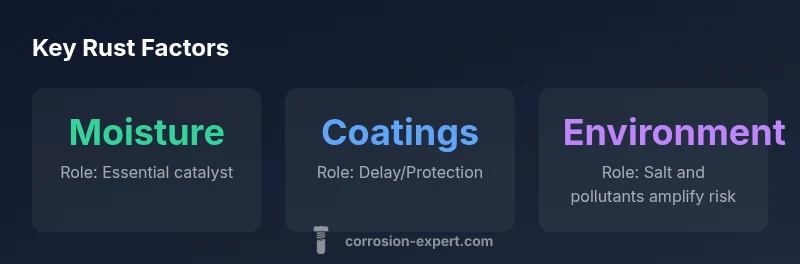
Rust is the result of a electrochemical attack on iron and steel when they meet oxygen and moisture. The fundamental reaction releases electrons that drive corrosion, and the presence of water is essential to sustain it. The rate is not fixed; it depends on multiple factors that you can recognize in your daily life. According to Corrosion Expert, the timing hinges on humidity, surface coating integrity, temperature, and the presence of electrolytes (like salt or minerals in water). In typical outdoor settings, bare metal can show visible rust after a matter of weeks to months, while protected or coated surfaces resist rust far longer. Early signs—patches of brownish or orange discoloration—often precede deep pitting, especially if coatings are damaged. For most homeowners, understanding these triggers helps pinpoint when to inspect or recoat.
- Moisture availability is the dominant factor; even brief periodic wetting can initiate rust on unprotected steel.
- Oxygen is always present in air, but rust accelerates when moisture conducts ions between the metal and air.
- Temperature influences the electrochemical reactions; higher ambient temperatures generally speed up the process.
- Protective coatings act as barriers; once damaged, exposed steel resumes rusting more rapidly.
As a practical rule of thumb, the question of “how long before rust forms” becomes a function of exposure quality. In sheltered indoor spaces with low humidity, rust may take a long time to appear, whereas in humid basements or coastal environments, initial rust can be visible sooner. The Corrosion Expert team has found that preventive coatings dramatically extend the time before rust becomes conspicuous. Regular maintenance remains the most reliable strategy to delay rust onset.
- Tip: Keep metal surfaces dry, clean, and well-sealed to minimize rust risk.
- Tip: Treat any chip or scratch in paint coatings immediately to restore protection.
Environmental Factors that Accelerate Rust
Environmental conditions largely determine how quickly rust forms. Moisture is the primary accelerator, but humidity alone isn’t the only driver. When dew points align with temperatures, condensation forms on metal surfaces, providing a ready medium for oxidation. Salinity compounds the issue, especially near oceans or salted roads, where ions in saltwater accelerate electrochemical reactions. Pollutants such as sulfur compounds or industrial acids can lower pH at the surface, increasing rust potential. Conversely, dry, well-ventilated indoor environments with consistent temperatures reduce the rate of rusting.
- Humidity: Higher humidity raises the likelihood of surface moisture and promotes faster rust.
- Salinity: Salt-rich environments speed corrosion by conducting electricity more effectively on metal surfaces.
- Temperature: Warmer conditions generally increase reaction rates, accelerating rust formation.
- Airflow: Stagnant air can trap moisture; good ventilation helps keep surfaces dry.
- Surface protection: Painted or coated surfaces show delayed onset; once coatings are compromised, rust speeds up.
To mitigate risk, consider dehumidification in damp spaces, seal joints and seams, and use protective coatings designed for outdoor or salty environments. Corrosion Expert’s analysis indicates that environmental control is often the most effective way to slow rust down in the field. In coastal or industrial zones, prioritize protective finishes and regular inspections after wet seasons.
- Pro_tip: In garages or basements, use a humidity gauge and a dehumidifier to maintain moderate humidity levels.
- Warning: Do not rely on color alone to assess rust; hidden or penetrating corrosion can exist under paint.
Material Type and Alloy Effects on Rust Timing
Materials matter as much as the environment. Plain carbon steel, which lacks protective elements, rusts quickly when exposed to moisture and oxygen. Galvanized steel has a zinc coating that provides sacrificial protection, delaying rust onset, but scratches or wear can expose steel underneath, creating a rust pathway. Stainless steel offers strong corrosion resistance due to chromium forming a passive oxide layer, yet it is not wholly immune—pitting can occur in chloride-rich or acidic environments. The presence or absence of coatings (e.g., primers, paints, sealants) also changes the timeline for rust.
- Carbon steel: low-cost, high rust risk if uncoated in damp environments.
- Galvanized steel: zinc layer slows rust but can eventually fail along scratches or joints.
- Stainless steel: best resistance in many environments, but not invulnerable in aggressive conditions.
- Coatings and sealants: essential for extending service life on exterior or previously corroded metal.
Material choice interacts with environmental exposure. In a humid garage or an outdoor asset, applying a robust protective coating and selecting corrosion-resistant alloys can drastically extend the time before rust forms. The combination of substrate and finishing determines overall durability, and maintenance remains key.
- Pro_tip: For outdoor metalwork, consider powder coatings with UV and salt spray resistance for longer life.
- Note: Rust can begin at scratches or repairs where the coating has been compromised.
Real-World Scenarios: Timeframes You Might See Rust
Real-world scenarios illustrate the range of rust formation timing. An outdoor wrought-iron gate left unprotected near a salty shoreline may show surface rust after several weeks to a few months, especially after winter rains. A garden tool stored in a humid shed without a cover can harbor surface rust within a couple of months. A stainless-steel appliance kept in a dry kitchen typically resists rust for many years, but aggressive cleaning agents or persistent moisture in certain corners can lead to localized rust. In many cases, early rust appears as specks or thin films that evolve into flaking patches if untreated.
- Outdoor metalwork near coastlines: faster rust onset, often within weeks if coatings are damaged.
- Indoor damp basements: rust appears slower but can still form on unprotected iron bars or tools over months.
- Painted surfaces: rust often starts under lifted edges or chips where bare metal is exposed.
Corrosion Expert’s field data suggests that timely maintenance—recoating, cleaning, and drying—can shift the rust timeline by months. The key is regular inspection, particularly after wet seasons, to spot and treat early signs before deeper corrosion progresses.
- Warning: Do not ignore small rust spots on structural components; they can indicate broader corrosion beneath coatings.
- Pro_tip: Keep a log of inspection dates and recoat schedules for outdoor assets.
Prevention Strategies to Slow Rust
Preventing rust requires a layered approach that targets moisture, protection, and maintenance. Start with a clean surface: remove existing rust by mechanical means or rust converters, then apply a barrier coating such as primer, paint, or powder coat. Seal seams and joints to minimize water ingress, especially in outdoor or coastal applications. For high-humidity spaces or salt-prone areas, select coatings designed for corrosion resistance and recoat at recommended intervals. If metal will be exposed long-term, consider protective galvanization or stainless steel with proper environmental considerations. Regular inspections after rain events or seasonal changes help catch early rust and stop it from spreading.
- Coatings: Use rust-inhibitive primers and topcoats suitable for the environment.
- Inhibitors: Apply rust converters to inert surfaces to transform rust into a stable layer.
- Maintenance: Clean surfaces to remove salt and mineral buildup; reapply protective finishes periodically.
- Storage: Store metal tools in dry areas or use desiccants to limit moisture exposure.
- Professional options: Galvanization, electroplating, or powder coating can dramatically extend life for high-exposure items.
Corrosion Expert emphasizes an upfront investment in coatings and environmental controls. The payoff is fewer rust repairs, minimized downtime for outdoor assets, and longer service life. A practical plan is to establish a baseline inspection interval, apply proven protective finishes, and track wear or damage that needs attention.
- pro_tip: Create a maintenance calendar and set reminders for re-coating.
- note: Even high-grade coatings require surface preparation for best adhesion and rust protection.
Quick Field Guide: Signs of Early Rust
Early rust signs are clues that you should act now. Look for pinpoint orange or brown flecks, dulling or color change on the metal surface, and slight chalky residues. Pitting or small pits under paint or coatings indicate that rust has breached the protective layer. A rough texture or flaky skin on metal surfaces often signals ongoing corrosion. If you notice any of these indicators after cleaning or during routine checks, address the issue promptly by cleaning, drying, and applying protective coatings.
- Signs: small specks, color change, flaking paint, or corrosion under coatings.
- Actions: remove rust, recoat, and ensure dry storage.
- Frequency: inspect quarterly or after heavy rain, snow, or salt exposure.
Practical Roadmap: From Observation to Action
Step 1: Inspect and diagnose. Identify whether rust is superficial surface rust or deeper corrosion that may require replacement. Step 2: If surface-only, remove it with a rust remover or mechanical abrasion and apply a rust-inhibiting primer. Step 3: Recoat with a weather-resistant finish appropriate for the environment. Step 4: Consider longer-term protection like galvanizing or stainless steel if the item is crucial and exposed. Step 5: Maintain dry storage and periodic checks to catch early signs before they spread. This roadmap helps homeowners plan preventive measures and respond quickly when rust is detected, reducing downtime and repair costs. Corrosion Expert’s guidance supports a proactive, structured approach to rust risk management.