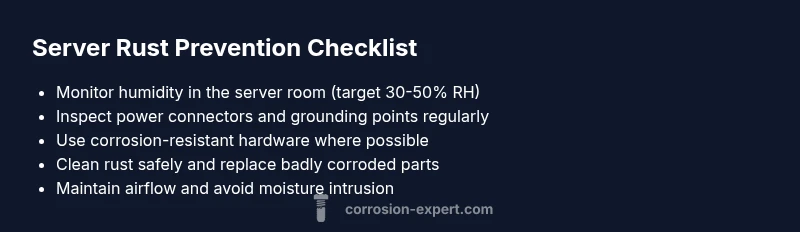
Why Do Rust Servers Restart? Practical Troubleshooting for Corrosion Issues
Why do rust servers restart? Learn how corrosion affects electrical contacts and grounding, with practical steps from Corrosion Expert to diagnose, remove rust, and prevent issues.


Most often, rust on server hardware triggers intermittent restarts by corroding electrical contacts and reducing grounding integrity. The quick fix is to inspect the rack and power connections for visible rust, clean or replace corroded parts, and improve humidity control to slow corrosion. If rust persists, replace affected components and seal the environment to prevent future corrosion.
Why Do Rust Servers Restart? The Connection Between Corrosion and Power Integrity
If you’re wondering, "why do rust servers restart" is a question that points to a common but overlooked culprit: corrosion. When metal surfaces near power paths, grounding points, or connector pins start to oxidize, resistance increases, contacts wear unevenly, and intermittent power drops can trigger restarts. According to Corrosion Expert, the most reliable early signal is visible rust on server chassis, racks, or power connectors. These localized corrosion spots can create micro-arcs, poor contact, and grounding fluctuations that push servers into reset cycles. In homes and small data rooms, humidity and temperature swings accelerate this process, so a dry, stable environment is a critical defense against recurrent restarts.
What this means for DIY enthusiasts is simple: rust isn’t just a surface blemish—it’s an electrical reliability issue that interrupts uptime. The more you ignore rust, the more often power paths degrade, increasing the likelihood of unexpected reboots. Start with a quick visual sweep of the entire system, including power strips, cable terminations, and the back of the server rack. If you spot rust, you’re likely dealing with a repair job that combines cleaning, component replacement, and environmental controls. Corrosion Expert analysis shows that addressing both the symptoms (rusty contacts) and the environment (humidity) yields the most durable results.
Common Signs That Rust Is Causing Restarts
There are several telltale signs that rust is affecting server reliability. Start with hard indicators like sudden resets after a period of normal operation, repeated POST errors, or flaky network connections that recover after reseating cables. More subtle cues include rust halos around connector pins, dark brown residue on metal surfaces, or a visible greenish tone on copper contacts. In many setups, rust is most dangerous where power cables meet metal housings; corrosion there can create resistance and intermittent contact loss, producing restart events. Remember to check grounding bars and the chassis-to-ground connections; a weak or intermittent ground is a classic trigger for unexplained reboots.
If you’re routinely seeing restarts in a room with high humidity, you’re likely battling moisture-driven corrosion. This is where environmental controls become a first line of defense. The Corrosion Expert team notes that even small amounts of moisture can accelerate oxidation at contact points, especially around connectors and surge protections.
Quick Environmental Diagnosis: Humidity, Temperature, and Ventilation
Humidity is a silent driver of rust in server rooms. If the room sits above 50% relative humidity for extended periods, condensation can form on metal surfaces, accelerating rust and making electrical issues more frequent. Temperature swings, especially cooling cycles that draw in warm moist air, worsen this effect. Adequate ventilation reduces stagnant humid air, and dehumidification helps maintain a steady humidity target in the 30–50% range. In small basements or closets where servers live, a simple hygrometer helps you monitor conditions. If you notice rust spots appearing within weeks of humidity spikes, you know you need stronger environmental controls.
Beyond humidity, keep an eye on airflow. Poor ventilation raises chassis temperatures, which can accelerate corrosion on raised contact surfaces and socket pins. A well-ventilated cabinet keeps electronics cooler and moisture moving toward exhaust vents rather than settling on critical components. In short, environmental upkeep is a practical, non-invasive way to reduce restart-causing rust.
As you diagnose, document humidity readings, temperature ranges, and any corrosion you find. This baseline will guide your prevention plan and help you identify seasonal patterns that correlate with restart events.
Safe Rust Removal and Cleaning for Server Hardware
Cleaning rust from server components requires care to avoid damaging sensitive electronics. First, power down completely and unplug the equipment. Use a soft brush to remove loose rust dust, then apply a rust remover or a contact-cleaning solvent designed for electronics along a lint-free cloth or cotton swab. Never spray liquids directly onto connectors or boards. For stubborn rust on bolts or rack rails, gently scrub with a nylon brush after applying a rust remover, then wipe dry immediately.
After cleaning, reseat connectors firmly and clean all grounding points. Inspect power connectors, grounding bars, and interface pins for residual corrosion. If you detect pitting or flaking metal, replace the affected parts rather than reusing them. When done, run a controlled power-on test and monitor voltages and grounding integrity with a multimeter or a professional-grade diagnostic tool. For extra safety, consider protective coatings or corrosion-inhibiting sprays on non-electrical metal surfaces, but avoid coatings on electrical contacts.
How to Protect Your Server Room from Future Rust
Prevention is easier than repair. Start by controlling humidity with a dedicated dehumidifier sized for your space, and seal leaks that introduce moisture. Use stainless steel or corrosion-resistant fasteners and hardware where possible, and keep metal surfaces dry and clean. Implement routine inspections— monthly at first, then quarterly—focusing on connectors, rails, and cable trays. Consider silicone sealants around panels and moisture barriers around entrances to minimize damp air seeping into the equipment area. Regularly change HVAC filters and maintain consistent airflow to reduce condensation risks. By maintaining a stable environment and inspecting for early signs of rust, you dramatically lower the odds of restart-inducing corrosion.
Finally, develop a replacement schedule for worn components and memorize a quick response protocol when rust is discovered. The goal is to act before rust spreads from a single connector to critical power paths. Corrosion Expert’s recommended approach blends proactive maintenance with practical hardware choices to sustain uptime over the long term.
When to Replace Components and Call a Pro
If you observe severe rust on power connectors, grounding bars, or critical rails, replacement is often safer and more cost-effective than repair. Look for visible corrosion that has compromised metal thickness, pitting, or corrosion spread across multiple components. If rust is present on the power supply unit, surge protector, or network interface cards, prioritize replacement of those parts. When in doubt, seek professional help: a small rust issue may appear manageable, but compromised electrical systems can pose safety risks. In residential settings, a licensed electrician can verify grounding integrity and advise on necessary protective measures. For DIYers, replacing rust-affected parts with corrosion-resistant hardware and maintaining an environment that minimizes moisture will often restore reliability.
Step-by-Step: A Practical Fix for Most Common Causes
- Power down and unplug all equipment; disconnect from power and network. 2) Inspect all visible rust, especially around connectors and grounding points. 3) Clean with electronics-safe rust remover and dry thoroughly. 4) Replace corroded connectors or components; reseat all cables firmly. 5) Recheck grounding and measure continuity with a multimeter. 6) Improve humidity control and airflow; set up a permanent dehumidifier and monitor conditions. 7) Test the system under load and watch for any restart patterns. 8) Schedule ongoing inspections every month for the first quarter, then quarterly.
Tip: Keep a maintenance log with dates, readings, and replacements to help trace patterns that lead to restarts. Estimated total time: 45–90 minutes for the initial fix, plus ongoing monitoring.
TIPS & WARNINGS: Safety Notes and Common Mistakes
- PPE: Always wear eye protection and gloves when handling rusted metal and cleaning solvents. - Safety first: De-energize and unplug all gear before starting any cleaning. - Don't spray cleaners directly onto boards; use applicators and wipe away excess moisture. - Avoid applying conductive coatings or oils on electrical contacts; these can insulate or attract dust. - Prevention beats emergency repairs: set up humidity controls and routine inspections to prevent rust growth.
Common mistakes include rushing cleaning, using harsh tools that damage pins, and ignoring environmental controls. By following careful procedures and ensuring proper environmental conditions, you prevent future restarts caused by corrosion.
Key Takeaways
- Inspect and clean rusted electrical connections to restore power integrity.
- Stabilize humidity and airflow in the server room to slow corrosion.
- Replace severely corroded parts and upgrade hardware to corrosion-resistant options.
- Maintain a routine inspection schedule to prevent future rust-related restarts.
- When in doubt, consult a professional to protect safety and uptime.
Steps
Estimated time: 45-90 minutes for initial fix, plus ongoing monitoring
- 1
Power down and unplug
Shut down all equipment and disconnect from power. This prevents electric shock and avoids further damage during inspection.
Tip: Label cables before removing to simplify reassembly. - 2
Inspect for rust and corrosion
Visually scan the chassis, connectors, rails, and grounding points. Note any rust spots and areas with oxidation buildup.
Tip: Document findings with photos for replacement decisions. - 3
Clean or replace affected parts
Use electronics-safe rust remover and a nylon brush to clean metal contacts; replace severely corroded components.
Tip: Avoid liquid spray directly on boards; apply with a cloth. - 4
Test electrical integrity
Reconnect power and test grounding continuity and voltage levels using a multimeter or diagnostic tool.
Tip: If readings drift, stop and replace the faulty component. - 5
Improve environment
Set up a dehumidifier, ensure airflow, and seal gaps where moist air could enter the cabinet.
Tip: Aim for humidity between 30–50% in the server space. - 6
Monitor and plan
Power the system back on and monitor for restarts over the next several days; schedule quarterly checks.
Tip: Maintain a rust prevention log for trend analysis.
Diagnosis: Server restarts intermittently, often in a humid or damp environment
Possible Causes
- highVisible rust on power connectors or grounding points
- mediumMoisture in the server room causing corrosion at contact surfaces
- highLoose or corroded electrical connections
- lowOverheating contributing to accelerated corrosion
Fixes
- easyInspect and clean rust from connectors; reseat cables firmly
- mediumUpgrade corroded components and verify grounding integrity
- easyImprove humidity control and verify proper ventilation
- mediumReplace severely corroded parts and consult a professional if needed
Quick Answers
Why does rust cause servers to restart?
Rust can create resistance and bad connections at power and grounding points, triggering intermittent restarts. Clean and replace corroded parts, and improve the environment to prevent recurrence.
Rust causes restarts by creating resistance at connections; cleaning and replacing corroded parts plus better humidity control can prevent recurrence.
Can humidity alone cause rust on server hardware?
Yes. Elevated humidity accelerates oxidation on metal surfaces, especially near connectors and rails. Use a dehumidifier and monitor RH to reduce rust growth.
Yes, humidity speeds up rust formation, so keep RH in check with a dehumidifier.
Is it safe to remove rust from electronics?
Use electronics-safe cleaners and avoid liquids on circuit boards. If rust has penetrated connectors or boards, replacement is usually safer than cleaning.
Clean rust safely with electronics-safe cleaners, but replace badly corroded parts to be safe.
What tools are needed for rust removal in a server rack?
You’ll need non-abrasive brushes, electronics-safe rust remover, lint-free cloths, gloves, and a multimeter for testing grounding after cleaning.
Grab non-abrasive brushes, electronics-safe rust remover, lint-free cloths, gloves, and a multimeter for tests.
How long before rust prevention takes effect?
Prevention effects begin as soon as the environment is stabilized, but full benefits appear over weeks to months with ongoing maintenance.
Prevention starts immediately, with full benefits showing over weeks to months with maintenance.
When should I replace components instead of cleaning?
Replace components showing deep corrosion, pitting, or compromised electrical performance. Replacements prevent future failures and ensure safety.
Replace severely corroded parts to prevent future failures.
Should I call a professional for rust on electrical systems?
If unsure about grounding, electrical safety, or extensive corrosion, contact a licensed electrician or corrosion technician for assessment and safe remediation.
If in doubt about safety, call a professional for assessment and repair.
Watch Video
Quick Summary
- Inspect rusted connections first for quick wins
- Stabilize humidity to slow corrosion progress
- Replace severely corroded parts to restore reliability
- Document findings and monitor over time
- Consult a professional for grounding and high-risk scenarios