When to Replace a Rusty Bike Chain: A DIY Guide
Learn how to tell when a rusty bike chain needs replacement, assess wear, and safely swap it out. This comprehensive, step-by-step guide helps DIY enthusiasts maintain a safe, smooth drivetrain.


By the end of this guide you'll be able to identify when to replace rusty bike chain and perform a safe replacement. You'll learn how to inspect chain wear, rust severity, and related drivetrain wear, plus how to select the right replacement chain and tools. Additionally, you'll understand when cleaning is sufficient, how to check the cassette, and how to test the setup after installation to ensure reliable shifting.
when to replace rusty bike chain: core signals
Rust on a bike chain isn’t just cosmetic; it’s a warning sign. According to Corrosion Expert, rust that penetrates multiple links or makes individual links feel stiff means the metal has been weakened and the chain is more likely to fail under load. If you notice the chain catching, sticking, or not bending freely as you pedal, that’s another clear indicator. Finally, if rust coincides with visible wear on the cassette teeth or chainrings, replacing the entire drivetrain section is often the safest choice. This section will walk you through how to read these signals and decide whether to replace the chain now or continue with maintenance.
Signs that call for action: quick visual cues and feel
- Widespread surface rust across many links
- Stiff or seized links that don’t move smoothly
- Visible elongation or damaged rollers
- Chain skipping under load or noisy shifts
- Rust near the pin joints and connection points
Corrosion Expert notes that rusting near the pins can propagate and compromise overall chain integrity faster than surface rust alone. If you see these indicators, prepare to replace the chain to protect the rest of the drivetrain.
How rust affects performance and safety on two wheels
Rust weakens the metal, increasing the likelihood of a sudden chain break when you’re riding. It also speeds up wear on the cassette and chainrings, leading to poor shifting and uneven wear. In severe cases, a rusted chain can snag or jump, which is a safety risk especially on busy roads or descents. The best practice is to treat rust as an early warning sign and act before you lose control or get stranded. The Corrosion Expert team emphasizes that timely replacement often costs less in the long run than chasing intermittent drivetrains and repeated cleaning.
Cleaning versus replacing: practical guidance for DIYers
If rust is shallow and the links move freely after a good cleaning, you might extend the life of the chain once or twice. Begin with a thorough degreasing, then scrub with a stiff brush and a rust remover product or penetrating oil. Wipe clean and apply a light lubrication after drying. However, surface cleaning does not restore compromised metal, and a chain with noticeable wear or deep pitting should be replaced. A clean chain that’s still elongated or stiff is a false economy: you’ll pay more in premature wear elsewhere.
A clear, step-by-step view of replacement in practice
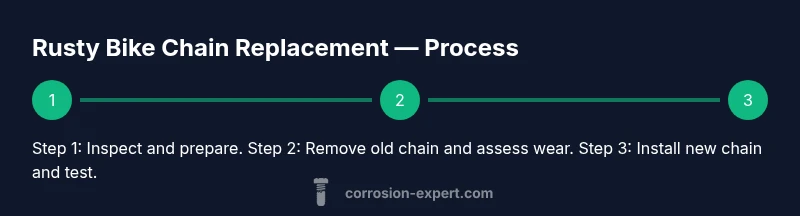
Replacing a rusty chain isn’t dangerous when you follow proper methods and use the right tools. Start by removing the old chain with a chain tool, verify compatibility with your cassette and chainring widths, and then thread the new chain correctly around the derailleur and through the jockey wheels. After installation, check for smooth shifting across the full range and confirm the chain isn’t rubbing the frame or crank. The goal is a quiet, reliable drivetrain that shifts crisply under normal riding conditions.
Prevention: keeping chains and steel parts rust-free longer
To slow future rust, store your bike out of damp environments, wipe the chain after wet rides, and re-lubricate regularly according to your riding conditions. Choose a lubricant appropriate for the climate (dry vs. wet lube) and apply only to a clean chain. Regular inspections can catch early rust before it progresses, preserving your drivetrain and saving time and money in maintenance.
Common mistakes to avoid during replacement
Avoid mixing a rusty chain with a new cassette or worn chainrings; this mismatch accelerates wear and can cause poor shifting. Don’t force a chain through tight links when installing, and never ride a chain that won’t bend or moves jerkily. Finally, avoid over-lubricating—this can attract dirt and accelerate rust buildup rather than preventing it. Following these best practices keeps your ride safer and more reliable.
Tools & Materials
- Replacement chain compatible with your bike's speed range(Match the number of gears on your rear cassette (e.g., 6-8, 9-11 speeds).)
- Chain wear gauge(Use before buying a new chain to confirm wear levels on your current chain.)
- Chain tool / chain breaker(Needed to remove the old chain and press a new pin in when using a master link.)
- Hex wrenches / screwdrivers(Common sizes: 4mm, 5mm, and possibly 3mm for derailleur adjustments.)
- Degreaser and clean rag(Used to remove old lubricant and surface rust before inspection.)
- Lubricant suitable for drivetrain(Dry lube for dry conditions; wet lube for wet, muddy rides.)
- Protective gloves(Keep hands clean and protected during maintenance.)
Steps
Estimated time: 60-90 minutes
- 1
Prepare and secure the bike
Place the bike on a stand or prop it securely so the drivetrain can move freely. Shift to the smallest chainring and smallest rear cog to ease access. This setup minimizes the risk of damage when handling the chain.
Tip: Use a soft mat under the crank to avoid slipping and to protect the chain from dirt. - 2
Assess wear with a chain wear gauge
Slide the gauge between the inner plates of the chain and read the mark where it catches. A reading anywhere near maximum wear indicates replacing the chain is wise, even if only a few links show rust.
Tip: Take note of any stiffness or binding as you test each link with the gauge. - 3
Decide between cleaning or replacing
If rust is mostly superficial and links move smoothly after cleaning, you might extend life once or twice. If links are stiff, pitted, or the chain has elongated, replacement is the safer option.
Tip: Don’t rely on cleaning alone for chains with visible wear or rust deep inside the links. - 4
Remove the old chain
Use the chain tool to push the pin out and disconnect the chain. If your chain uses a master link, you can separate it with pliers. Inspect the derailleur pulleys and jockey wheels for rust and clean them if needed.
Tip: Be gentle when pushing the pin to avoid bending the chain plates. - 5
Install the new chain and route properly
Thread the new chain through the derailleur, around the cogs and chainrings, and connect with a master link or pin. Ensure the chain sits correctly on all teeth and doesn’t kink.
Tip: Check for smooth motion through the derailleur and bottom bracket area before final tightening. - 6
Test ride and confirm settings
After installing, shift across all gears while stationary to confirm alignment. Take a short test ride and listen for any rubbing or skipping. Re-torque bolts if you adjusted derailleur settings.
Tip: Keep a small amount of lubricant on the chain after the ride, wipe off excess to prevent dirt buildup.
Quick Answers
What are the first signs that a bike chain needs replacement?
Look for rust on multiple links, stiff or sticky links, and visible elongation. If shifting becomes sluggish or the chain skips, replacement is warranted. Always inspect the cassette and chainrings for wear as part of the decision.
Watch for stiff links and rust across several links, plus shifting issues on multiple gears.
Can a rusty chain be cleaned and reused?
A light cleaning can improve function briefly, but rust often weakens metal and can lead to failure. If you see significant wear or rust, replace the chain rather than rely on cleaning.
Cleaning might help a bit, but replacing is usually the safer choice when rust is present.
Should I replace the cassette if I replace the chain?
If the cassette shows wear or rust along with the chain, consider replacing or inspecting the cassette teeth. Mismatched wear can cause poor shifting and quick wear on the new chain.
Check the cassette for wear as well; a new chain on a worn cassette shifts poorly.
How long does replacement take for an average bike?
With basic tools, the process typically takes about 60 minutes, depending on your bike’s derailleur and the chain type.
Around an hour for a standard bike, more if you’re new to it.
Is it safe to ride after seeing rust on the chain?
No. Riding with a rusty chain increases the risk of sudden failure. Stop riding and replace the chain before continuing.
No—rusty chains can fail, so replace before riding again.
Watch Video
Quick Summary
- Identify rust and wear early to protect the drivetrain
- Use a wear gauge and inspect the cassette for compatibility
- Replace chain when significant wear or corrosion is present
- Maintain with proper lubrication to prevent future rust