How to Fix a Rusty Bike Chain: A Step-by-Step DIY Guide
Learn how to fix a rusty bike chain with a practical, step-by-step method. Clean, derust, lubricate, and test the drivetrain to restore smooth shifting and extend chain life.


Goal: fix a rusty bike chain through cleaning, derusting, lubricating, and testing the drivetrain for smooth shifting. You’ll need a chain tool or master link, hex wrenches, rags, rust remover or penetrating oil, a wire brush, and bike lubricant; plus a replacement chain if corrosion is severe. Follow these steps for a safe, functional drivetrain.
The Problem with a Rusty Chain
Rust on a bike chain can degrade strength, efficiency, and safety. If you ride in wet or salty conditions, or store your bike outdoors, corrosion can build up and cause stiff links or poor shifting. According to Corrosion Expert, taking action early saves time and money by extending drivetrain life. A rusty chain is not just unsightly; it can accelerate wear on the cassette and derailleur, and in severe cases, it can snap during a ride. In this section we’ll explore how rust forms, what it does to performance, and how to decide whether you should salvage the chain or replace it.
Rust begins as surface corrosion that can deepen into pitting and chain stiffness. The chain’s pins, plates, and rollers are vulnerable to moisture and road salts, especially if the chain lacks regular lubrication. When rust concentrates on the inner link surfaces, shifting and power transfer suffer. The readable takeaway is simple: if the chain shows significant rust or elongation, salvage may be impractical and replacement safer. The discussion that follows will help you assess condition and plan a safe repair instead of guessing.
Assessing Repair vs Replacement
Not every rusty chain is worth saving. The decision hinges on rust extent, wear, and how much you ride. If most links move freely after cleaning and there are no deep pits, you can usually salvage. If links stick, creak abnormally, or the chain has visible corrosion on multiple inner plates, replacement is advisable to avoid sudden failures. The Corrosion Expert Team emphasizes that testing the chain’s movement and examining connecting pins helps you decide whether a repair is worth it or if a new chain is a better investment. In some cases, replacing the chain also protects other drivetrain components from accelerated wear.
Tools, Materials, and Safety Considerations
A clean workspace, good lighting, and proper gloves are essential. Gather a chain tool or master link pliers, hex wrenches, a rag, degreaser or rust remover, a wire brush or old toothbrush, and a quality bike lubricant. Keep a replacement chain handy if the rust has penetrated beyond surface level. Work in a well-ventilated area when using chemical rust removers, and avoid metal shavings getting into the drivetrain. Wearing eye protection and disposable gloves keeps skin safe from sharp edges and solvents.
Cleaning, Derusting, and De-Gunking
Begin by degreasing the chain to remove dirt and grime that hide rust. Submerge the chain in degreaser or dab with a soaked rag, and scrub each link with a stiff brush. For surface rust, a gentle application of rust remover or penetrating oil can help loosen corrosion. If rust remains stubborn, lightly rub with a fine steel wool or a copper-bristle brush, then re-degrease and rinse. Dry the chain completely to prevent flash rust, and inspect for any deep pits or stiff links that could indicate deeper damage. Corrosion Expert notes that patience during cleaning pays off in longer chain life and smoother operation.
Reassembling, Lubricating, and Adjusting
After the chain is clean and dry, reinstall it on the chainring and cassette, using a chain tool or master link to connect the ends. Spin the cranks to verify smooth movement and shifting across all gears. Apply a thin, even coat of bike lubricant along the inner surfaces of the chain, then wipe off excess to avoid attracting grit. If the derailleur or cassette shows uneven wear after test-shifting, adjust the derailleur height and limit screws according to your bike’s manual. The right lubrication reduces wear and keeps rust at bay in future rides.
Maintenance, Prevention, and Longevity
Prevention is easier than repair: store your bike in a dry, sheltered spot, wipe the chain after wet rides, and lubricate regularly according to riding conditions. Regular inspection helps catch early rust before it spreads. If you live in a humid or coastal area, consider a rust-protective lubricant and more frequent cleaning intervals. The Corrosion Expert team recommends adding a routine check of the chain and drivetrain to your bike maintenance schedule to extend overall life and maintain safe performance.
Authority Sources
- https://www.bicycling.com/maintenance/ (Bike maintenance best practices and lubrication guidance)
- https://www.consumerreports.org (General bicycle care and maintenance insights)
- https://www.nist.gov (Standards-related information on corrosion and material performance)
These sources provide broad context on maintenance, lubrication, and corrosion prevention that support the practical steps outlined above.
Tools & Materials
- Chain tool or master link pliers(Essential for reconnecting chain ends or removing pins.)
- Allen wrenches (hex keys)(Sets should cover common sizes on bikes.)
- Rags or lint-free cloths(For wiping and drying during cleaning.)
- Degreaser or rust remover(Choose bike-safe degreaser; avoid harsh acids.)
- Wire brush or old toothbrush(Use to scrub grime and surface rust.)
- Copper or steel wool (fine grade)(Use only on stubborn rust with care.)
- Chain lubricant (wet or dry)(Apply thinly and wipe off excess.)
- Replacement chain (optional but recommended if rusty)(Have a compatible chain ready in case of failure.)
- Degreasing tray or container(Contain used chemicals during cleaning.)
- Gloves and eye protection(Protect hands from sharp edges and solvents.)
Steps
Estimated time: 60-90 minutes
- 1
Inspect the chain and drivetrain
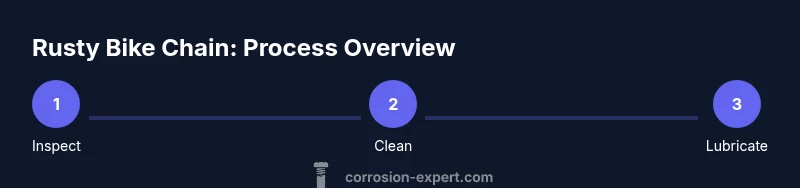
Visually check for rust on the inner plates and pins, stiff links, warping, or excessive wear. Spin the crank to feel for rough movement and inspect the cassette and chainrings for uneven wear. This step helps you decide whether to repair or replace the chain.
Tip: Take note of the worst links and plan your approach before disassembly. - 2
Degrease and clean the chain
Apply degreaser to the chain and scrub with a brush to remove built-up grime. Rinse or wipe dry, ensuring no solvent remains that could affect adhesion of lubricants. A clean chain reveals true corrosion and reduces the risk of trapping rust inside.<br>Tip: Work in sections for thorough cleaning.
Tip: Keep a waste tray to collect dirty degreaser and rinse water. - 3
Remove surface rust
If rust remains, apply a rust remover or penetrating oil and gently scrub with steel wool or a copper brush. Rinse and dry the chain completely to prevent new rust. Avoid aggressive hacks that may gouge the metal.
Tip: Do not over-scrub; deep pits may indicate the chain is beyond salvage. - 4
Measure wear and decide on salvage or replacement
If the chain shows signs of elongated links or poor engagement with the gears after cleaning, this suggests replacement is wise. Even if salvage seems possible, consider the overall cost and the lifespan you expect from the repair.
Tip: If in doubt, replacing the chain is the safer option to protect the drivetrain. - 5
Reassemble and lubricate
Reconnect the chain ends with the chain tool or master link. Spin the crank to check motion, then apply a light coat of lubricant to the inner surfaces. Wipe off any excess to avoid attracting dirt.
Tip: Lubricate only after a thorough cleaning to maximize effectiveness. - 6
Test ride and adjust
Shift through every gear to ensure smooth operation. If the chain rubs or jumps, adjust the derailleur limits and cable tension according to your bike’s manual. A well-lubed chain should run quietly and consistently across gears.
Tip: Take a short, quiet ride to verify performance before resuming regular use.
Quick Answers
Can a rusty bike chain be salvaged or must it be replaced?
Salvage is possible for light surface rust if the chain still moves freely and shows no deep pitting. However, heavy corrosion or stiff links typically means replacement to prevent drivetrain failure. Always test after cleaning to ensure safe operation.
Light surface rust can sometimes be salvaged, but heavy corrosion usually means replacement for safe riding.
How do I tell if the chain is too worn to reuse?
If the chain shows noticeable elongation, stiff or seized links, or poor engagement with the gears after cleaning, replacement is recommended. Look for visible wear with shifting irregularities during a test ride.
Look for stiff links, poor shifting, and obvious elongation to know when to replace.
What safety considerations should I follow?
Wear gloves and eye protection when handling rust removers and sharp chain components. Work in a stable, flat space and keep the bike secured to prevent movement during maintenance.
Wear gloves and eye protection, work on a stable surface, and secure the bike.
Should I use rust remover products on a bike chain?
Use bike-safe degreasers and rust removers designed for metal components. Avoid harsh acids that can damage pins or chrome plating. Rinse and dry thoroughly after treatment.
Choose bike-safe degreasers and avoid harsh acids to protect the chain.
How often should I lubricate after fixing the chain?
Lubricate the chain after cleaning and after wet rides, then recheck after a short test ride. Regular, light lubrication reduces future rust and wear.
Lubricate after cleaning and after wet rides, and check again after riding a bit.
Watch Video
Quick Summary
- Assess rust early to decide salvage vs replacement
- Clean thoroughly before lubrication for best results
- Lubricate lightly and wipe off excess
- Prevent future rust with proper storage and maintenance