What to Do with Crude Oil Rust: A Practical How-To
Learn practical steps to address rust in crude oil systems—from inspection and removal to coatings and prevention. Aimed at DIY enthusiasts and homeowners, guided by Corrosion Expert analysis.


This guide helps you address rust in crude oil equipment—from tanks to pipelines—by outlining safe inspection, removal, treatment, and ongoing prevention. You’ll learn practical, step-by-step actions and safety considerations designed for DIY enthusiasts and homeowners working in or around crude oil handling environments.
What is rust in crude oil systems?
In the context of crude oil handling, rust is the iron oxide that forms on steel components when iron is exposed to moisture, oxygen, or water-in-crude mixtures. Common surfaces include storage tanks, pipelines, valves, and fittings made of carbon steel or low-alloy steels. Rust can start as a cosmetic stain but often progresses to pitting and thinning of the metal, which may lead to leaks or particle contamination in the crude stream. For DIY enthusiasts and homeowners, understanding what to do with crude oil rust begins with recognizing that rust is a corrosion process with real safety and economic implications. Early detection—combined with a structured restoration and prevention plan—saves time, money, and risk in oil-handling environments. According to Corrosion Expert, recognizing and acting on rust early is the most cost-effective approach to extending the life of critical equipment.
How rust forms in crude oil storage and pipelines
Rust forms when moisture intrudes into the metal surface and combines with oxygen to create iron oxides over time. In crude oil systems, water can be present as free water, entrained droplets, or condensate that accumulates in bottom sludges or headers. Additionally, impurities in crude, temperature changes, and stray currents can accelerate corrosion. The presence of certain ions or contaminants in crude oil can catalyze rust formation on steel surfaces, especially where protective coatings have degraded. While some rust is superficial, deeper corrosion can compromise wall thickness and integrity. Proper planning, routine inspection, and inhibitors are essential to slow or halt this progression, particularly in aging or high-use systems.
Assessing rust damage in crude oil equipment
Damage assessment combines visual inspection with simple measurements and, when possible, non-destructive testing. Look for flaking paint, surface scales, reddish-brown discoloration, and pitting. Document locations with photos and notes on exposure conditions. For critical assessments, ultrasonic thickness gauges can quantify wall loss, while dye penetrant tests reveal surface-breaking cracks. Corrosion protection plans should categorize damage as cosmetic, superficial, or structural, guiding whether repair, coating, or component replacement is required. Accurate assessment helps you determine whether maintenance can be performed in place or if replacement is safer and more economical in the long run.
Cleaning options: mechanical vs chemical approaches
Mechanical cleaning removes loose rust and scale using hand tools (wire brushes, scrapers) or powered equipment (angle grinders with suitable discs). It’s fast and doesn’t introduce new chemicals, but it risks abrading sound metal if not controlled. Chemical rust removers and rust converters offer deeper rust treatment by dissolving or chemically stabilizing oxides. When selecting chemicals, choose products compatible with the specific steel grade and with any residual crude oil or coatings. Always follow label instructions, ensure adequate ventilation, and prevent chemical contact with live systems. After cleaning, a thorough rinse, dry, and inspection are essential to prevent re-oxidation.
Preventing future rust: coatings, inhibitors, and maintenance
Prevention focuses on creating a durable barrier between steel and moisture. Apply barrier coatings (epoxy or polyurethane-based systems) suitable for oil-in-contact environments and ensure proper surface preparation for adhesion. Consider corrosion inhibitors or rust-inhibiting treatments compatible with crude oil systems; maintain-dosing may be required for pipelines or tanks with circulating fluids. Regular preventative maintenance includes moisture control, drain-down schedules, and keeping storage areas dry. Cathodic protection is an option for large pipelines, providing ongoing protection against corrosion. A well-planned program, using coatings, inhibitors, and monitoring, dramatically reduces rust risk over time.
Safe handling and safety considerations when dealing with rust in oil environments
Dealing with rust in crude oil contexts demands strict safety discipline. Wear appropriate PPE: chemical-resistant gloves, eye protection, and a suitable respirator when fumes or dust are present. Ensure the area is well-ventilated and that systems are isolated and depressurized before any work begins. Never work on energized equipment or in areas with residual crude or water pressure. Follow lockout-tagout procedures and keep spill kits, absorbents, and spill response plans readily available. Be mindful of heat, sparks, and incompatible chemicals that could ignite vapors from crude oil residues.
Step-by-step approach for tanks and pipelines
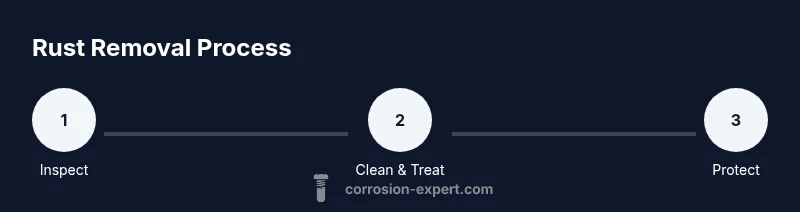
This section provides a practical overview that complements the detailed Step-by-Step instructions. Start with a careful inspection to document the rust extent, followed by isolation and draining where feasible. Mechanically remove loose rust, then apply a rust converter or a compatible rust remover to address deeper oxides. Rinse, dry, and apply a protective coating or inhibitor to create a lasting barrier. Finally, schedule regular inspections, monitor coating integrity, and adjust maintenance intervals based on exposure and service conditions.
Real-world case considerations and limitations
In real-world scenarios, some rust is unavoidable, especially in aging tanks and long pipelines. Deep pits or thinning beyond a safe margin require component replacement to avoid leaks or failures. When rust is detected near welds, flanges, or critical joints, consult a professional for assessment and potentially more robust repairs. Regulatory requirements may mandate specific testing, coatings, or corrosion-management programs for oil facilities. Always document rust status and maintenance actions to support compliance and future planning.
Tools & Materials
- Safety goggles(Impact-resistant; worn during all handling and cleaning steps)
- Chemical-resistant gloves(Nitrile or neoprene; ensure double protection when using rust removers)
- Respirator with organic vapor cartridges(For work with solvents and rust removers; fit-tested)
- Protective coveralls or apron(To keep skin and clothing clean and dry)
- Wire brushes and scrapers(High-carbon steel brushes; choose sizes for tight areas)
- Putty knife / scrapers(Flexible edge for lifting loose rust without gouging)
- Angle grinder with flap discs(Use with caution; avoid excessive metal removal)
- Industrial degreaser or solvent(For degreasing surfaces before coating)
- Rags and absorbent pads(Wipe and clean residues; dispose of safely)
- Rust converter or phosphoric acid-based remover(Select compatible product for steel surfaces)
- Epoxy or polyurethane protective coating(Apply as per manufacturer; ensure proper cure time)
- Coating applicator (roller/brush)(Keep a clean edge for adhesion; avoid air bubbles)
Steps
Estimated time: 3-6 hours (plus cure time per coating)
- 1
Inspect and document
Visually inspect the rust areas and record extent, location, and any oil/water exposure. Take photos from multiple angles and note any pits or cracks. This baseline helps plan the cleaning and coatings and aids future monitoring.
Tip: Use a flashlight and a borescope for hard-to-reach spots; document patch areas with measurements. - 2
Isolate and prep the area
Ground and drain the section if safe; ensure there is no live crude oil or pressure in the system. Clean the surface with an industrial degreaser to remove oil, grime, and residues that could interfere with coating adhesion.
Tip: Ventilate adequately and verify there is no residual moisture before proceeding. - 3
Remove loose rust mechanically
Use wire brushes, scrapers, and if needed a grinder with a flap disc to remove loose rust and scale. Work gradually to avoid gouging sound metal or damaging welds. Stop once the surface shows a uniform, clean metal appearance.
Tip: Keep strokes steady and use protective gloves; wear eye protection for flying debris. - 4
Apply rust converter or rust remover
Apply a rust converter to stabilize oxides and form a protective layer, or use a rust remover to dissolve deeper oxides as directed by the product label. Follow exposure and dwell times exactly as stated and avoid over-application.
Tip: Do not mix products; a clean, dry surface yields better converter adhesion. - 5
Rinse, dry, and inspect
Rinse the treated area to remove residues, then thoroughly dry the surface. Re-inspect for any remaining rust or moisture pockets before coating. Residual moisture will compromise coating life.
Tip: Use heat or desiccants to accelerate drying in humid environments. - 6
Apply protective coating or inhibitor
Coat the prepared surface with an appropriate barrier coating; apply in thin, even layers and allow full cure time per the manufacturer. If using inhibitors, apply them as a supplemental step in the recommended sequence.
Tip: Avoid thin spots and air bubbles; ensure the coating reaches all crevices and welds. - 7
Monitor and maintain
Schedule follow-up inspections to check coating integrity and rust progression. Maintain a log of maintenance actions, exposure conditions, and any detected indicators of corrosion activity.
Tip: Set reminders for re-inspection to prevent unnoticed deterioration.
Quick Answers
Is it safe to use chemical rust removers near crude oil equipment?
Chemical rust removers should be used only when the system is isolated and depressurized, with proper ventilation and PPE. Choose products compatible with steel surfaces and downstream contents, and follow manufacturer instructions precisely to avoid fumes or residues that could affect crude quality.
Use removers only when the system is shut down and well-ventilated; follow the product directions for safety and compatibility.
Can rust be fully removed from thick-walled pipelines?
Surface rust can often be cleaned, but deep pits or severe corrosion may require part replacement or structural repair. An assessment by a qualified technician helps determine feasibility and safety.
Surface rust is often removable, but deep pits may require replacement. Get a professional assessment for safety-critical components.
What are best practices for rust prevention in oil pipelines?
Best practices include applying suitable barrier coatings, using corrosion inhibitors where appropriate, controlling moisture, and scheduling regular inspections. For large pipelines, cathodic protection can provide long-term defense against corrosion.
Apply coatings, add inhibitors where appropriate, keep things dry, and inspect regularly; cathodic protection can help for big pipelines.
What risks arise from ignoring rust in crude oil equipment?
Ignoring rust increases the risk of leaks, contamination of crude oil, degraded equipment integrity, and potential safety incidents. Proactive rust management reduces downtime and extends service life.
Rust left unchecked can lead to leaks and safety hazards; proactive maintenance reduces downtime.
How should rust thickness be measured safely?
Use ultrasonic thickness gauges or other non-destructive methods to estimate wall loss. Compare readings to original specifications and track changes over time to decide on repair or replacement.
Ultrasonic gauges give wall-loss data; compare to baseline and monitor trends.
Should DIY rust removal be performed on critical equipment?
For critical equipment, especially near valves, welds, or regulatory components, consult a professional. DIY steps should be limited to non-critical areas and always follow safety protocols and legal requirements.
Consult a pro for critical components; DIY is best limited to non-critical areas with safety rules followed.
Watch Video
Quick Summary
- Inspect early and document rust thoroughly
- Mechanically remove loose rust before chemical treatments
- Dry surfaces completely before coating to ensure adhesion
- Choose compatible coatings and inhibitors for crude-oil environments
- Implement a routine monitoring plan to catch early rust signs