What Gets Rust Off Concrete: A DIY Removal Guide
Learn proven methods to remove rust stains from concrete surfaces. This step-by-step guide covers mechanical cleaning, chemical removers, and prevention from Corrosion Expert.


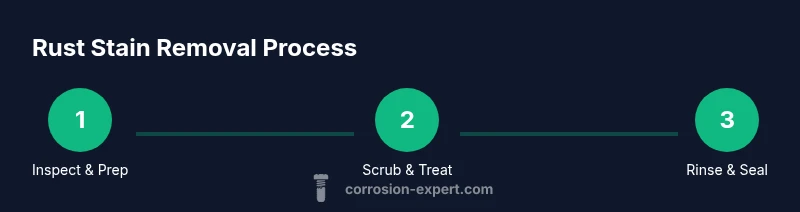
You can remove rust from concrete using a combination of mechanical cleaning and chemical rust removers. Start with a stiff-bristle scrub and a stain pretreatment, then apply a rust remover or poultice, rinse, and repeat as needed. For best results, protect surrounding surfaces, test a hidden spot first, and seal the area after cleaning to slow future staining.
What gets rust off of concrete and why stains appear
The question 'what gets rust off of concrete' is common among homeowners. Rust stains originate when iron-bearing water, corroded metal fixtures, or nearby rebar leach into cement, creating reddish-brown marks that can seep into the porous surface. The Corrosion Expert team notes that rust stains are not just pigment; they are chemical deposits that require both abrasion and chemistry. This means you need a two-pronged approach: mechanical cleaning to lift loose material and a rust-specific chemical treatment to dissolve iron compounds.
According to Corrosion Expert, rust stains on concrete respond best to targeted chemical agents paired with careful scrubbing. A two-step process—abrasive cleaning plus rust remover—will usually move the stain from the surface and into the cleaner, making it easier to rinse away. When done correctly, you can restore the appearance of the concrete without harming surrounding landscaping or plants.
Safety and prep considerations
Before you begin, protect yourself and the environment. Put on chemical-resistant gloves, safety glasses, and long sleeves. Work in a well-ventilated area and avoid mixing cleaners with ammonia or bleach. Create a clean work zone by covering nearby plants and grass with plastic sheeting; set up a bucket and hose for rinsing.
Start with a patch test on an inconspicuous area to verify that your chosen method does not damage the concrete or alter its color. If you see color changes or edge halos, stop and adjust the approach. For outdoor surfaces, consider using a spray bottle to apply cleaner rather than pooling it, which can spread the stain. The goal is controlled cleaning that minimizes runoff into soil or vegetation. According to Corrosion Expert, testing a small area first helps prevent broader damage and ensures you choose the right remover for the stain.
Cleaning options: mechanical cleaning, acid-based removers, and natural poultices
Mechanical cleaning is the first line of defense. Use a stiff-bristled brush or nylon-scour pad with water and a mild detergent to lift surface rust. This method is safe on most concrete and reduces the load on chemical removers. For heavier stains, move to a rust remover labeled for concrete and follow the product instructions precisely; many rely on oxalic acid or chelating agents that target iron compounds without damaging the stone.
Natural poultices, such as lemon juice with salt or white vinegar with salt, can work on lighter stains but are slower and less predictable. If you choose chemical options, always read the label, test on a small area, and apply evenly to avoid streaks. Avoid mixing cleaners with bleach or ammonia, as dangerous gases can form; ensure good ventilation when working indoors or in enclosed spaces. This section blends practical, safe techniques with options that suit different stain severities and budgets.
Sealing and prevention after rust removal
Once the stain is removed, sealing the concrete helps prevent future rust deposits from penetrating the surface again. Choose a penetrating silane/siloxane sealant or a high-quality acrylic sealer suitable for outdoor concrete. Apply according to the manufacturer’s directions, typically after the surface is fully dry, and reapply as recommended. Regularly cleaning the area and addressing any metal sources nearby—like irrigation hardware or unprotected rebar—will dramatically reduce recurrence. Corrosion Expert emphasizes that a good sealant plus routine maintenance is the best defense against new stains.
Tools & Materials
- Stiff-bristled brush(Hard bristles help lift rust without scratching the concrete.)
- Plastic scraper or putty knife(Use gently to lift stuck material without gouging.)
- Bucket and hose(For mixing, applying cleaners, and rinsing.)
- Mild detergent or pH-neutral cleaner(Begin with safe cleaners before stronger chemicals.)
- Oxalic acid-based rust remover or chelating rust remover(Follow label instructions and wear protection.)
- Protective gloves and safety glasses(Prevent skin and eye contact with cleaners.)
- Plastic sheeting or drop cloth(Protect nearby plants and surfaces.)
- Sealant compatible with concrete(Apply after drying to prevent recurrence.)
- Painter's tape or masking tape(Optional for protecting adjacent areas.)
- Old towels or rags(For wiping and quick cleanup.)
Steps
Estimated time: Active work 60-120 minutes; 24-48 hours drying before sealing (variable by product).
- 1
Inspect area and prep
Survey the stained area, identify nearby metal sources, and clear debris. Protect plants and adjacent surfaces with plastic sheeting. Gather all tools and materials before starting.
Tip: Set up a dedicated workspace to prevent cross-contamination. - 2
Test a small patch
Choose an invisible corner to test your cleaner. Wait the time specified on the product label and observe for color changes or damage. If there is no adverse effect, you’re ready to proceed.
Tip: Testing first avoids wide-scale damage and color changes. - 3
Initial mechanical cleaning
Scrub the stained area with a stiff brush and mild detergent using firm, circular motions. Rinse thoroughly with clean water and check progress. Repeat if the stain remains visible.
Tip: Keep the area wet during scrubbing to prevent dust mobilization. - 4
Apply rust remover or poultice
Apply the rust remover or a poultice evenly over the stain. Let it sit for the time recommended by the label (usually several minutes). Gently scrub again and rinse with plenty of water.
Tip: Do not let the chemical dry on the surface; re-wet as needed. - 5
Rinse and re-evaluate
Rinse the area completely and assess stain reduction. If traces remain, repeat the cleaning cycle or consider a second agent suitable for the stain depth.
Tip: Avoid pooling cleaners; rinse from the outside toward the center to prevent spreading. - 6
Seal the surface
Once the surface is dry, apply a penetrating sealant designed for exterior concrete. This forms a protective barrier and slows future staining.
Tip: Follow curing times on the sealant label for best results. - 7
Drying and final checks
Allow the surface to dry completely before use; some sealants require 24-48 hours. Reassess any nearby metal sources that may cause future stains and plan preventive sealing.
Tip: Keep kids and pets off the area during curing.
Quick Answers
What causes rust stains on concrete?
Rust stains on concrete are typically caused by iron in water, leaking metal fixtures, or corroded rebar near the surface. The iron reacts and creates iron oxide, which forms the reddish-brown stain. Understanding the source helps you choose the right cleaner and approach.
Rust stains come from iron in water or corroded metal near the surface. Identifying the source guides your cleaning method.
Is it safe to use oxalic acid-based rust removers on concrete?
Oxalic acid-based removers are effective for iron stains when used as directed. Always wear protective gear, avoid prolonged contact with skin, and rinse thoroughly. Avoid applying on painted or sealed concrete without testing first.
Oxalic acid removers work well with rust stains when you follow the product directions and test first.
Will rust stains reappear after sealing?
Sealing reduces absorbency and helps prevent new rust from penetrating the concrete, but it does not stop continuing rust sources. Address any ongoing metal leaks or exposed rebar to minimize recurrence.
Sealing helps, but managing the rust source is also important to stop future stains.
Can household items like vinegar remove rust from concrete?
White vinegar and lemon juice can help with light stains, but they are slower and less predictable than commercial rust removers. For stubborn stains, consider a dedicated rust remover following label directions.
Household acids may help light stains, but for tough stains, use a proper rust remover.
How long does the rust removal process take on large areas?
Time varies with stain severity. Plan for multiple cleaning passes and possible drying time between steps. For large areas, allocate several hours of active work plus 24 hours for drying before sealing.
Large stains take multiple rounds and drying time before sealing.
Should I sand the stain or grind concrete to remove it?
Sanding or grinding can damage the surface and should be avoided unless stain removal is not possible by less invasive methods. These are generally a last resort and may require professional assistance.
Only consider sanding or grinding if gentler methods fail and you understand the risks.
Watch Video
Quick Summary
- Identify the stain and choose a method.
- Test patches before full application.
- Combine mechanical cleaning with chemistry for best results.
- Seal after cleaning to prevent recurrence.