Rust Repair Near Me: A Practical Guide to Fixing Corrosion
Find rust repair near you with practical tips, cost ranges, and steps from Corrosion Expert. DIY options, professional services, and prevention to protect metal.


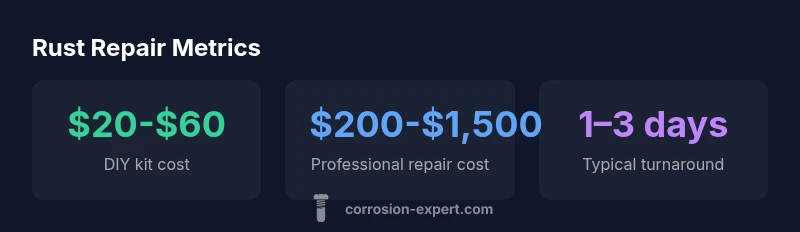
Find rust repair near you by checking local auto body shops, metal restoration pros, and mobile services. According to Corrosion Expert Analysis, 2026, costs vary with rust depth and surface area. DIY kits run roughly $20–$60, while professional repairs commonly range from $200–$1,500 depending on extent and access. Shopping around for quotes helps balance cost and durability.
Why rust repair near you matters
Rust is a progressive problem; neglecting it can lead to structural integrity issues and safety concerns for any metal surface, from house gutters to vehicle frames. In many cases, rust repairs are not just about cosmetic improvement; they restore protective coatings and prevent further corrosion that could compromise the metal's strength. According to Corrosion Expert, early intervention can save material, time, and money, especially when you catch rust in its earliest stages. Local repairs may be more convenient and faster, but you should still verify the technician's approach to avoid resealing moisture or leaving hidden pockets of corrosion. By choosing the right method for your situation—surface cleaning, rust converters, abrasive removal, or panel replacement—you can maintain aesthetics and function while extending the life of the metal. When you start researching, prioritize shops that explain their process, show evidence of results (photos or case studies), and offer a written scope of work.
How rust forms and what to repair
Rust forms when iron or steel interacts with moisture and oxygen, a reaction accelerated by salts and contaminants. Surface rust often responds to cleaning, abrasion, and protective coatings, but deeper pitting or through-thickness rust can compromise structural integrity and require more extensive treatment. The decision to repair depends on location, use, and exposure. For outdoor metal, corrosion control must address ongoing moisture, while indoor metal might be saved with proper drying and sealing. A quick inspection should distinguish between superficial rust that can be sanded off and deep corrosion that might require patching, replacement, or weld repair. Remember, even small patches can propagate if left untreated, so fix early.
DIY rust repair basics: tools and steps
DIY rust repair can be effective for small patches or cosmetic restoration. Gather basics: safety gear, wire brush or grinder, sandpaper, rust converter or remover, epoxy primer, and topcoat paint. Steps: 1) Dry and clean the surface; 2) Remove loose rust with brushing or grinding; 3) Apply rust converter if needed to neutralize remaining rust; 4) Fill pits with appropriate filler or perform spot weld for larger areas; 5) Prime and paint to seal. For complex shapes or structural components, consider consultation with a professional to avoid compromising strength. Note that DIY methods may not restore structural integrity in severely corroded parts and may require a professional to prevent future failures.
Professional rust repair: what to expect
Professional rust repair typically centers on larger areas or structural concerns. A shop will inspect the extent of corrosion, decide on removal method, and often perform mechanical grinding or chemical rust removal, followed by substrate treatment to prevent re-oxidation. Depending on severity, they may reseal with primer and protective coatings, or replace compromised sections. Expect a written estimate, a defined scope, and a warranty on workmanship or coatings. If the rust has reached structural members, factory-grade repair or panel replacement may be recommended to ensure long-term safety. Safety considerations include ventilation when applying chemicals and proper containment of rust waste.
How to evaluate local rust repair pros
To choose a reliable local pro, start with credentials and experience; request a portfolio showing before/after photos; and read customer reviews. Ask about methods (grinding vs. chemical treatment, welding) and whether they offer guarantees or maintenance plans. Confirm turnaround time, and compare quotes that include materials and labor. A good provider will clearly explain the trade-offs between cost, durability, and aesthetics.
Rust prevention to extend lifespan
Prevention cuts future costs. After repair, use rust-inhibiting primers, rust-proof paints, and protective coatings. Regular inspections, moisture control, and prompt touch-ups help. For outdoor metal, consider sealing joints and applying corrosion inhibitors at high-risk zones. The key is consistency: a small habit now prevents larger problems later.
5-step practical workflow for at-home rust spots
- assess the corrosion area and determine severity; 2) prepare the surface by cleaning and drying; 3) remove as much rust as possible with brushing or light grinding; 4) apply rust converter or inhibitor and let cure; 5) finish with primer and protective topcoat. This simple workflow balances effort and durability for common rust spots around the home.
Real-world case study and decision guide
A homeowner found surface rust on a wrought-iron railing. They started with a DIY approach using a rust converter and epoxy primer, then sealed with weatherproof paint. The finish held up for several years, illustrating that for small, accessible areas a DIY path can work well. For harder-to-reach spots or critical infrastructure, a local pro can ensure thorough rust removal and lasting protection.
Authority sources
- Britannica: Corrosion overview https://www.britannica.com/science/corrosion
- NIST: Corrosion topics https://www.nist.gov/topics/corrosion
- OSHA: Corrosion safety guidelines https://www.osha.gov
Cost and turnaround comparison for rust repairs
| Option | Typical Cost | Typical Turnaround | Notes |
|---|---|---|---|
| DIY rust repair at home | $20–$60 (kits) or $60–$200 materials | 2–6 hours | Requires skill; best for small patches |
| Local shop rust repair | $200–$1,500 | 1–3 days | Professional finish; larger areas |
| Mobile rust repair service | $300–$1,200 | 1–2 days | Convenient; minimizes disruption |
Quick Answers
What counts as 'rust repair near me'?
Rust repair near you can involve DIY fixes for small areas or professional services for larger patches. The best choice depends on severity, location, and safety considerations. Always verify the method and warranty before starting.
Rust repair near you can be DIY for small spots or professional for bigger areas. Check methods and warranties before starting.
Are DIY rust repair kits effective for large areas?
DIY kits work best for limited, non-structural rust. For large areas or structural components, professional repair ensures complete rust removal and proper restoration of strength.
DIY kits are usually better for small spots; big areas deserve a pro.
How long does rust repair typically take?
DIY repairs may take a few hours for small patches, while professional repairs can take one to three days, depending on scope and scheduling. Larger jobs may require additional curing time for coatings.
Most DIY jobs finish in hours; pros may take a few days.
Is rust prevention cheaper than repair?
Yes. Prevention—through coatings and regular maintenance—usually costs less than repeated repairs. A small preventive application now can prevent expensive corrosion later.
Prevention saves money over time.
What should I look for in a local rust repair shop?
Look for certifications, a written warranty, a clear scope of work, before/after photos, and transparent quotes. Ask about safety procedures for chemicals and environmental controls.
Seek certified shops with clear warranties and evidence of past work.
Can rust return after repair?
Rust can reappear if underlying moisture, damage, or protective coatings fail. Proper surface prep, sealing, and ongoing maintenance reduce the risk.
Rust can come back if the protection fails; maintenance helps prevent it.
“Rust repair isn't a one-size-fits-all task; evaluating corrosion depth, accessibility, and future use should guide your approach.”
Quick Summary
- Assess rust severity before choosing a method
- Compare DIY and professional options to balance cost and durability
- Ask about guarantees and maintenance for durability
- Prioritize prevention to extend metal life