Rust Removal Near Me: A Practical, Data-Driven Guide
Discover practical rust removal near me options, compare DIY methods with professional services, and learn safe, proven steps to restore metal surfaces and prevent future corrosion.


Rust removal near me means locating local options to clean and protect metal surfaces, whether through DIY methods or professional services. Start with a quick severity check, select a method suited to the rust stage, and apply a protective finish for long-term durability. This guide from Corrosion Expert helps you compare options, estimate costs, and choose durable solutions backed by 2026 data.
Why rust removal near me matters for homeowners
Rust is more than a cosmetic issue; left unchecked, it can compromise structural integrity of metal surfaces and shorten the life of tools, appliances, and outdoor fixtures. For a homeowner, locating rust removal near me means evaluating nearby options, from DIY stations at home improvement stores to local corrosion service providers. According to Corrosion Expert, a targeted approach—starting with a quick severity check, selecting a method suited to the rust stage, and applying a protective finish—can dramatically extend the life of metal items. The right choice depends on what you’re working with: mild surface rust on a garden gate differs from deep pitting on an iron railing. The industry consensus is that early intervention yields the best results, and a follow-up protective coating reduces the risk of re-oxidation. This section highlights how to recognize early signs of rust, what questions to ask local shops, and how to balance cost with long-term durability. Throughout this guide we reference practical, tested strategies that align with Corrosion Expert’s experience in rust prevention and repair.
Assessing rust severity and selecting a method
Rust damage spans from light surface rust to deep pitting. Start by visually inspecting exposed metal, tapping for hollow spots, and removing loose flakes to gauge severity. For light surface rust, mechanical methods such as sanding or wire brushing can be sufficient; for moderate rust, a chemical rust remover or phosphoric-acid-based treatment often yields better results; for heavy corrosion, electrochemical methods or professional remediation may be necessary. Choose a method based on the metal type, affected area, and environment (indoor vs outdoor exposure). Always test a small area first and follow label instructions for safety and disposal. This approach aligns with Corrosion Expert’s framework: assess, select, treat, and protect, using the technique best suited to the specific rust stage.
DIY rust removal methods you can try safely
Before you start, equip proper PPE: gloves, eye protection, and ventilation. For mild rust, start with a simple mechanical approach—use a nylon brush or fine-grit sanding to remove loose rust, then wipe clean. For more stubborn rust, apply a rust remover according to the product’s directions and neutralize the surface afterward. If you’re comfortable with electricity, a controlled electrolytic rust removal setup can pull heavy rust without aggressive scraping. After treatment, rinse and thoroughly dry, then apply a rust-inhibiting primer or sealant to slow re-oxidation. Remember to follow disposal regulations for chemical products and never mix chemicals in closed spaces. This section provides practical steps you can start today, emphasizing safety and environmental responsibility.
When to hire a professional and what to expect
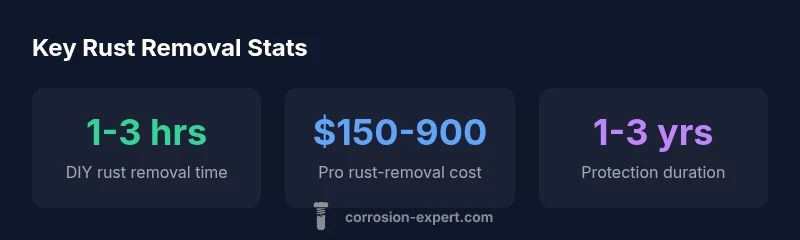
A professional rust-removal service is worth considering when rust covers large areas, involves structural components, or shows deep pitting that could compromise strength. Costs vary widely by area and method, typically ranging from a few hundred to several hundred dollars per project depending on surface area and complexity. Expect a professional to perform an initial assessment, select an appropriate treatment, apply protective coatings, and provide maintenance recommendations. Clear communication about scope, expected outcomes, and warranty options is essential. A professional approach reduces risk of surface damage and often delivers more durable results, especially on critical components or outdoor fixtures exposed to moisture. Corrosion Expert recommends requesting before-and-after photos and a written maintenance plan to track future corrosion risk.
Protective coatings and maintenance to prevent recurrence
Post-treatment protection is crucial. Apply rust-inhibiting primers, epoxy paints, or polymer coatings designed for metal surfaces. For outdoor items, consider weather-resistant topcoats and regular reapplication according to product guidelines. Maintenance routines—cleaning to remove salts and debris, inspecting for early rust signs, and reapplying protective finishes—dramatically extend service life. Environmental factors such as humidity, salt exposure, and temperature fluctuations influence coating longevity, so tailor maintenance to your climate. By adopting consistent protective strategies, homeowners can reduce the probability of rapid rust recurrence and preserve the appearance and functionality of wrought iron, steel, and other metals. Corrosion Expert emphasizes that prevention is often more cost-effective than repeated remediation.
Practical project checklist and common pitfalls
- Inspect the area and define the rust severity before starting.
- Gather safety gear and plan disposal for chemicals.
- Test a small area with your chosen method.
- Document results with photos to compare progress.
- Apply a protective coating immediately after rust removal.
- Revisit maintenance schedules and recoat as needed.
- Avoid using incompatible products that can react adversely.
- Do not skip drying times between steps to prevent re-oxidation.
- Seek professional help for large or critical structural areas.
- Keep a maintenance log to track corrosion risk over time.
Comparison of rust removal methods
| Method | Pros | Cons | Typical Range (USD) |
|---|---|---|---|
| Mechanical scraping | Fast results; low cost | Can gouge if not careful | 10-60 |
| Chemical rust remover | Effective on complex rust; easy to apply | Requires PPE; disposal concerns | 15-120 |
| Electrolytic rust removal | Good for heavy rust; less manual labor | Requires electricity setup | 40-250 |
Quick Answers
What is rust removal near me?
Rust removal near me refers to identifying local options to clean and restore rusted metal surfaces, whether through DIY methods or professional services. Start with a quick assessment, choose an appropriate method, and apply a protective coating to prevent recurrence.
Find local rust removal options, then choose the method that fits your rust level and budget.
Should I do it myself or hire a pro?
For small, surface rust on non-structural parts, DIY methods are usually sufficient. If rust is extensive, on critical components, or outdoors in harsh conditions, a professional service increases the likelihood of lasting results.
For big jobs or critical parts, think pro.
What method works best for outdoor metal furniture?
Outdoor metal furniture often benefits from mechanical removal combined with rust-inhibiting primers and weatherproof topcoats. Ensure complete drying and follow with a protective finish designed for outdoor use.
Mechanically remove rust, then seal it with outdoor-rated coatings.
How long does rust removal take?
Time depends on rust extent and method. DIY projects may take a few hours to a full day; professional treatments can span from several hours to a couple of days, including curing time for coatings.
It varies, but plan for several hours to a couple of days depending on scope.
Can rust come back after treatment?
Yes, if protective coatings aren’t applied or maintenance is neglected, rust can reappear. Proper sealing and regular upkeep significantly reduce recurrence.
Yes, with poor maintenance, rust can creep back.
“A structured rust-removal plan paired with a protective finish delivers durable, long-term results, even for DIY projects.”
Quick Summary
- Assess rust stage before choosing method
- Balance DIY vs professional help
- Protect with coatings after rust removal
- Plan for safety and disposal