Rust Removal Solution: Safe, Effective DIY Guide
Learn a practical rust removal solution approach for DIYers. Compare chemicals and mechanical options, apply safely, and protect surfaces with sealing and prevention techniques.


Learn how to remove rust effectively using a ready-to-use rust removal solution. This guide covers choosing the right chemical or chelant, applying it safely, and preventing future corrosion. You’ll know when to scrub, how long to wait, and how to seal surfaces for lasting protection. Expect practical safety tips, common pitfalls, and real-world examples for metal tools, automotive components, and household fixtures.
What is a rust removal solution?
A rust removal solution is a treatment designed to dissolve or convert iron oxide (rust) so the underlying metal is restored and prepared for protection. There are two broad categories: chemical rust removers that dissolve or chelate rust, and conversion coatings that change the rust layer into a stable, paintable film. A good rust removal solution should be compatible with your metal type (steel, cast iron, stainless steel) and the environment where the item lives. As the Corrosion Expert team notes, selecting the right rust removal solution begins with understanding the metal’s chemistry and how it will interact with the product you’re treating. Always check the label for metal compatibility, dwell time, and safety warnings before applying.
Key ideas:
- Chemical rust removers use acids, chelants, or chelating buffers to break down rust.
- Conversion products create a protective layer that reduces future rust formation.
- Compatibility with substrate matters for pitting risk and finish quality.
For DIYers, start with mild, user-friendly products for household items and reserve harsher formulas for heavily pitted components. Safety and ventilation are essential when using any chemical rust remover.
Types of rust removal solutions
Rust removal solutions fall into several families, each with distinct advantages and cautions. Water-based chelants are typically safer and easier to rinse, while acid-based removers work faster on heavy rust but demand careful handling and thorough neutralization. Phosphoric acid-based products are common for steel and provide a dual action: rust dissolution and a passivation effect that slows future corrosion. Chelants like citric acid or EDTA-based formulations are gentler but may require longer dwell times. Conversion coatings, such as tannin-based or tannic acid products, transform rust into a stable film that can be painted over.
Choosing the right option depends on:
- The severity and extent of rust
- The metal type and its background (treated or untreated)
- The environment (indoors vs. outdoors) and desired finish
- Tolerance for odor, fumes, and cleanup effort
Corrosion Expert emphasizes testing on a small, inconspicuous area first to observe any adverse reactions and to verify that the product does not affect plating, coatings, or corrosion resistance. When in doubt, start with a milder formula and escalate only if needed.
Mechanical rust removal options
Not every rust problem requires chemicals. Mechanical methods involve physically removing rust through abrasion, which is often faster for small projects and avoids chemical residues. Tools include nylon brushes, wire wheels, sanding sponges, and sanding discs. Vibratory tumblers or bead blasting can tackle larger areas or deeply pitted surfaces but may require professional setup. Mechanical methods are especially suitable for parts that cannot be exposed to liquids or where precise tolerances must be preserved.
Benefits of mechanical rust removal:
- Quick physical removal of surface rust
- Minimal chemical exposure and cleanup
- Compatible with most metals when done gently
Drawbacks:
- Risk of gouging or removing healthy metal if not careful
- Sometimes leaves a rough surface needing refinishing
In practice, many DIYers use a combination: mechanical removal to unblock the surface, followed by a rust removal solution for stubborn spots and finally protective sealing.
How to choose the right method for your project
Selecting the best approach depends on project scope, material, accessibility, and the final treatment plan. For household items like tools, fast-dissolving chemical rust removers paired with a neutral rinse can be ideal, followed by drying and re-coating. Automotive parts may benefit from a two-step approach: a rust removal solution for heavy spots, then primer and paint to seal. Delicate surfaces, such as cast iron cookware or decorative hardware, often respond well to milder chelants and careful rinsing.
Key decision factors:
- Accessibility: inside corners and crevices may require spray or gel formulations.
- Substrate: soft metals may scratch easily with aggressive abrasives.
- Finish: if you plan to repaint or plate, ensure compatibility with primers and coatings.
- Safety: for enclosed spaces, ensure ventilation and PPE.
Corrosion Expert recommends starting with a test patch to observe any adverse interactions and adjusting your approach if finish or texture changes occur.
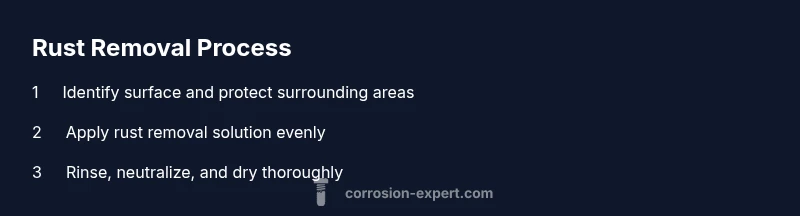
Step-by-step: using a rust removal solution safely
This section outlines a practical workflow for applying a rust removal solution while maintaining safety and effectiveness. Although steps are presented here for clarity, always follow the product label and PPE recommendations.
- Prep the area and PPE: Set up a ventilated workspace, lay down drop cloths, and wear nitrile gloves, goggles, and a respirator if fumes are present.
- Clean the surface: Remove loose flakes, dust, and oils with a stiff brush or solvent recommended by the product.
- Apply the solution: Apply evenly to rusted areas, ensuring full contact. Use a brush or sponge to reach corners.
- Wait the dwell time: Let it sit according to label guidance (often minutes to hours). Avoid letting it dry completely on the surface.
- Agitate and rinse: Lightly agitate with a brush to loosen residue, then rinse with clean water or the specified rinse.
- Neutralize and dry: Neutralize if required by the product guidelines, then thoroughly dry to prevent flash rust.
- Inspect and repeat if needed: Reassess the surface; repeat steps if rust remains in pits or crevices.
- Protect the area: Apply a primer, paint, or sealant to deter future rust.
Why this matters: Following a structured sequence minimizes chemical exposure, reduces residues, and improves coating adhesion. Always test on a small area first and observe any color changes or pitting after treatment. Result-oriented DIY projects rely on consistency and patience rather than brute force.
Tip: After treatment, store chemicals safely and keep them away from children or pets. This approach aligns with best practices from Corrosion Expert and other authorities.
Safety and PPE essentials
Chemical rust removers can irritate skin, eyes, and lungs. Always wear protective gear and ensure adequate ventilation. Key PPE includes chemical-resistant gloves (nitrile or neoprene), splash goggles, and a respirator suitable for the chemical's volatility. If you’re working in a small or poorly ventilated space, consider an exhaust fan or outdoor workspace. Read the product label for specific PPE requirements, as fumes from some acids or solvents can be harmful even with short exposure. Keep a bottle of water for minor eye exposure and have baking soda or another neutralizer ready if the product requires neutralization. Improper handling can lead to chemical burns or respiratory irritation.
Safety reminders:
- Never mix chemicals unless the label explicitly allows it.
- Keep containers closed when not in use to prevent fumes.
- Store products out of reach of children and pets.
Corrosion Expert highlights that a cautious, methodical approach with proper PPE yields safer, more predictable results and reduces cleanup time after the job is done.
Verifying rust removal success and next steps
Before moving to finish work, confirm that the rust is removed to the desired level. Visual inspection should show a clean, uniform surface with no orange-reddish staining. Wipe the area with a clean rag to check for any remaining residue and rub lightly with a metal polish on smooth surfaces to reveal the true surface condition. For heavily corroded parts, you may need to repeat the treatment or consider professional refinishing. After successful removal, ensure the surface is completely dry to prevent flash rust. Apply a corrosion-inhibiting primer or protective coating promptly to maximize longevity. If the item will be used in outdoor or humid environments, select a coating with adequate UV and moisture resistance and re-coat as needed according to the manufacturer’s schedule.
Expert tip: Keep records of the product used, dwell times, and coat types for future maintenance cycles and to compare results across similar projects. Corrosion Expert recommends documenting outcomes for ongoing rust prevention planning.
Long-term prevention after rust removal
Prevention is the best cure for rust. After you’ve removed the rust, start with a robust protective layer. Choose a primer designed for the material and consider rust-inhibiting paints or powder coatings for outdoor items. For tools and equipment stored in damp basements or garages, dehumidification, silica gel packs, and proper storage conditions dramatically reduce future rust risk. Regular inspections—especially after winter months or exposure to salted environments—will help catch early signs of rust before it becomes a larger issue. Consider implementing a routine: clean, treat, seal, and store. The investment in prevention saves time and money over the long run.
Brand note: The Corrosion Expert team stresses that prevention is often simpler than repair, and choosing the right rust removal solution is the first step toward lasting protection.
Authority sources and further reading
For more technical guidance on rust and corrosion control, consult authoritative sources:
- Occupational Safety and Health Administration (OSHA): https://www.osha.gov
- National Institute of Standards and Technology (NIST): https://www.nist.gov
- Centers for Disease Control and Prevention (CDC): https://www.cdc.gov
These sources provide safety guidelines, chemical exposure information, and standards that underpin best practices in rust prevention and treatment. Always cross-check product labels and follow manufacturer recommendations in addition to these references. Corrosion Expert endorses using vetted sources to inform your DIY projects and ensure safe, durable results.
Tools & Materials
- Rust removal solution (chemical product)(Choose a safe chelant or rust remover compatible with the metal and finish)
- Personal protective equipment (PPE)(Nitrile gloves, splash goggles, respirator/mask as needed)
- Ventilation setup(Window fan or portable exhaust if indoors)
- Plastic or stainless steel brush(Nylon brushes for delicate surfaces; wire brushes for heavy rust)
- Non-scratch applicator (foam brush or sponge)(For even application of gel or liquid products)
- Clean water supply(Rinse thoroughly after treatment)
- Neutralizer or pH adjuster (if required by product)(Use only if recommended on label)
- Rags or lint-free cloths(For wiping and drying surfaces)
- Protective coating (primer/paint or sealant)(Choose a rust-inhibiting primer or topcoat compatible with the surface)
Steps
Estimated time: 45-75 minutes
- 1
Identify project and prep area
Assess the rusted area and mask nearby parts to avoid contact with chemicals. Set up a clean, ventilated workspace and lay down protective coverings for the floor. Gather PPE and materials before starting.
Tip: Test a small patch first to observe any adverse reactions on the metal. - 2
Choose your rust removal solution
Select a rust removal product suited to the metal type and the rust severity. Read the label for safety, dwell time, and disposal instructions. If unsure, start with a milder chelant.
Tip: Consider corrosion resistance needs of the finished surface when choosing a product. - 3
Apply the solution
Apply evenly to the rusted area using the recommended applicator. Ensure full contact, especially in crevices and pits.
Tip: Avoid pooling; spread evenly to prevent uneven whitening or discoloration. - 4
Wait the dwell time
Let the solution work for the manufacturer-recommended period. Do not let it dry completely; rewet if necessary.
Tip: Use a timer to track dwell time and prevent overexposure. - 5
Agitate and rinse
Gently scrub with a brush to loosen rust, then rinse with clean water. Inspect for remaining rust and repeat if needed.
Tip: Rinse thoroughly to avoid residue that can affect adhesion of coatings. - 6
Neutralize and dry
If required by the product, neutralize the surface and dry completely. Any moisture left can accelerate new rust formation.
Tip: Use a hair dryer or heat source to ensure complete drying on intricate parts. - 7
Protective coating
Apply a rust-inhibiting primer or paint to seal the surface. Follow with recommended topcoat or sealant for outdoor or high-humidity environments.
Tip: Allow adequate curing time before handling to avoid smudges. - 8
Inspect and store materials
Check the finish and store leftover products properly out of reach of children. Record the product used for future maintenance.
Tip: Label containers with date and outcome for future reference. - 9
Cleanup and maintenance plan
Clean tools, dispose of waste according to local regulations, and schedule regular inspections to prevent recurrence.
Tip: Keep a small dehumidifier in damp areas to minimize future rust risk.
Quick Answers
What is a rust removal solution and when should I use one?
A rust removal solution chemically dissolves or converts rust on metal surfaces so you can restore the original finish. Use it for moderate to heavy surface rust, especially when mechanical removal alone would be slow or destructive.
A rust removal solution chemically dissolves rust so you can restore the surface efficiently and safely.
Is it safe to use rust removers on automotive parts?
Yes, but select a product compatible with automotive finishes and follow the label for dwell time and rinsing. For painted or coated parts, consider testing in a hidden area and avoid aggressive formulas that could strip coatings.
Yes, but test first and follow the product instructions to protect coatings.
How long should I wait after applying a rust removal solution?
Dwell times vary by product. Always follow the label; typical durations range from a few minutes to several hours. Do not rely on guesswork—timing affects effectiveness.
Follow the product’s suggested dwell time closely for best results.
Can I reuse leftover rust remover?
Most rust removers are designed for single-use exposure. Do not reuse leftover solution on another area unless the label explicitly allows it. Proper disposal helps safety and effectiveness.
Don’t reuse leftover remover unless the label says it’s okay.
Should I seal metal after rust removal, and why?
Yes. Sealing with primer and topcoat or a protective sealer prevents re-oxidation and extends the life of the repair. Pick products compatible with the substrate and environment.
Sealing is essential to prevent rust from returning.
What PPE is essential when using rust removers?
Wear gloves, eye protection, and an appropriate mask. Ensure ventilation and follow label-specified PPE requirements for chemical exposure and fumes.
Use gloves, goggles, and a mask; ventilate well.
Watch Video
Quick Summary
- Choose the right rust removal solution for your metal type
- Follow label directions and PPE requirements
- Rinse, neutralize, and seal to prevent recurrence
- Test on a patch before full application
- Preventive coating extends lifespan