Restore Rust: A DIY Guide to Metal Preservation
Learn to restore rust on metal safely with practical, expert-backed methods. This guide covers surface assessment, product choices, a step-by-step workflow, and long-term protection.


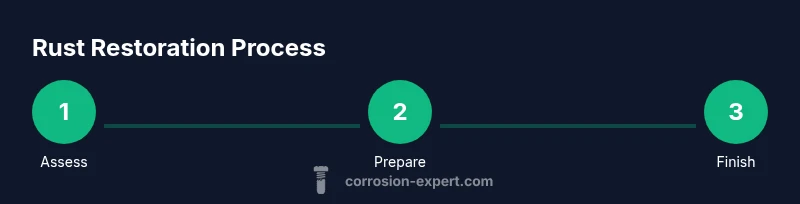
To restore rust on metal, start by safely removing corrosion, choose a restoration approach (abrasive cleaning, rust remover, or rust converter), and then seal with primer and a protective finish. Begin with a clean, well-ventilated workspace, wear PPE, and gather basic tools. Plan for periodic maintenance to slow future corrosion.
The science behind rust and what it takes to restore
Rust forms when iron or steel is exposed to moisture and oxygen, yielding iron oxide that flakes away and weakens the metal over time. Restoring rust is a practical process that focuses on removing the oxide layer, stabilizing the surface, and applying barriers to slow future corrosion. When you set out to restore rust, you start with a clear plan, the right safety gear, and realistic expectations for the metal’s condition. DIY restoration isn’t about returning metal to factory-new strength for every application; instead it aims to extend service life, improve appearance, and protect the underlying structure. By understanding the chemistry—how moisture, salts, and pollutants accelerate oxidation—you’ll choose methods that minimize damage while delivering durable results. This approach aligns with Corrosion Expert principles: assess, treat, and protect with materials that resist future corrosion, not just remove the current layer.
Practical takeaway
- Rust is a surface phenomenon that can often be reversed on light to moderate oxidation.
- Deeper damage may require professional assessment or replacement.
Quick tip
- Always document the rust level with photos before you begin, so you can measure progress and justify your product choices.
Tools & Materials
- Safety gear (gloves, goggles, respirator)(NIOSH-approved respirator for solvents; chemical gloves for cleaners)
- Wire brush(Stiff brush for removing loose rust)
- Sanding block or orbital sander(Coarse to medium grits (60-120) for initial rust removal)
- Abrasive discs or sandpaper(Keep a progression from coarse to fine (60-120 for rust removal, 180-320 for finishing))
- Angle grinder with wire wheel attachment(Useful for larger surfaces and embedded rust)
- Rust remover product (acid-based or chelating)(Choose based on rust severity and metal type)
- Rust converter product(Converts iron oxide to a stable layer; may serve as a primer)
- Metal primer (rust-inhibiting)(Follow label for compatibility with your topcoat)
- Metal paint or protective coating(A topcoat with rust protection for long life)
- Degreaser or mineral spirits(Remove oil/grease before rust treatment)
- Drop cloths/plastic sheeting(Contain debris and drips)
- Clean rags and brushes(Keep solvents and cleaners handy)
- Ventilation fan (optional)(Improve air flow for solvent use)
Steps
Estimated time: 2-4 hours
- 1
Assess rust extent and plan
Inspect the surface to determine whether rust is superficial or penetrating. Decide whether you’ll use mechanical removal, a rust remover, or a rust converter. Document the area with photos to track progress and set realistic expectations.
Tip: Take before-and-after photos to verify results and refine your method if needed. - 2
Prepare the workspace
Lay down drop cloths, remove nearby items, and ensure good ventilation. Put on PPE, and set up lighting so you can see all the rust clearly. Protect surrounding finishes from splatter and dust.
Tip: Keep a container of water nearby to cool metal during grinding if heat buildup occurs. - 3
Remove loose rust
Use a stiff wire brush or a grinder with a wire wheel to remove loose rust and scale. Work in small sections, applying steady pressure and keeping the tool at a low angle to minimize gouging.
Tip: Avoid digging deep; heavy gouges can invite future corrosion and pitting. - 4
Clean and degrease the surface
Wipe the area with a degreaser or mineral spirits to remove oil, grease, and residues. Rinse with clean water if the product requires, then let dry completely before proceeding.
Tip: A dry surface is essential for primers to adhere properly; moisture will trap solvents. - 5
Choose restoration approach
For light surface rust, a rust converter or mechanical cleaning may suffice. For heavier rust, consider a rust remover followed by a converter or primer. Align your choice with the metal type and intended use.
Tip: If you’re unsure, start with a test patch in a hidden area. - 6
Apply rust remover or converter
Follow product directions for application and dwell time. Mechanical cleaners follow same general principle: lift oxide, then neutralize if required. Ensure complete coverage and keep the surface wet as directed.
Tip: Wear splash protection and work in a well-ventilated space; some removers can be corrosive. - 7
Rinse, dry, and inspect
Rinse off residues as instructed and dry thoroughly. Inspect for remaining rust and re-treat as needed. If the rust has penetrated deeply, plan additional repair or replacement.
Tip: A moisture meter or simple palm test (dust-free) helps confirm dryness. - 8
Prime the surface
Apply a metal primer that contains rust-inhibiting properties. Use thin, even coats and allow proper drying between layers. Priming creates a barrier and improves topcoat adhesion.
Tip: Lightly scuff between coats to promote better bonding if the product requires it. - 9
Finish with paint or protective coating
Apply your chosen topcoat according to the product label. Consider multiple thin coats for durable coverage. Allow full cure time before reuse, and inspect annually for any signs of new rust.
Tip: Choose a topcoat appropriate for indoor vs outdoor exposure to maximize life.
Quick Answers
What does restori ng rust really involve in DIY practice?
Rust restoration involves removing oxidation, stabilizing the surface, and applying a protective barrier to slow future corrosion. It requires choosing appropriate methods based on rust severity and the metal type, then protecting the treated area with primer and a topcoat.
Rust restoration means removing rust, stabilizing the surface, and sealing it to slow future corrosion.
Is rust removal necessary before painting metal surfaces?
Yes. Paint adhesion relies on a clean, rust-free surface. If rust remains, paint will peel or fail prematurely, exposing the metal to further corrosion.
Yes—remove rust before painting to ensure good adhesion and long-term protection.
What products are best for rust restoration?
For most projects, use a rust remover for heavier oxidation, or a rust converter for light surface rust. Follow label directions and consider a rust-inhibiting primer for best results.
Use rust remover for heavy rust or a converter for light rust, then seal with primer.
Can all metal types be restored to look like new?
Most surface rust on common metals can be improved, but deeply pitted or structurally compromised metal may need replacement or professional repair.
Most surface rust can be improved, but severe damage may require replacement.
How long does rust restoration take?
Time varies with the size of the piece and rust severity. Small items may take a few hours; larger items or difficult corrosion can stretch to a full day or more.
It varies; small projects can be finished in hours, larger pieces take longer.
Is rust converter safe for indoor use?
Many rust converters are suitable indoors if you provide ventilation and follow the label. Always confirm fumes and curing times before bringing items indoors.
Check the label and ensure proper ventilation when using a converter indoors.
Watch Video
Quick Summary
- Plan before starting and document rust severity.
- Choose the restoration method based on rust depth and metal type.
- Prioritize safety and proper ventilation throughout.
- Seal the surface with primer and protective coating after treatment.
- Perform regular maintenance to extend restoration life.