How to Remove Rust with Vinegar: A Practical DIY Guide
Discover a safe, budget-friendly method to remove rust with vinegar. This comprehensive guide covers vinegar choices, safety measures, soaking and scrubbing steps, and long-term prevention to keep metal surfaces rust-free for DIY enthusiasts.


Learn to remove rust with vinegar from small and medium metal items using common household supplies. This quick guide covers selecting vinegar, safety precautions, soaking and scrubbing methods, and post-treatment care to prevent re-rust. It’s practical for DIYers and cost-efficient for home projects. We’ll outline a safe, step-by-step approach that minimizes damage and avoids harsh chemicals.
The science behind vinegar and rust
Rust forms when iron reacts with oxygen in the presence of water. Vinegar contains acetic acid, which can help dissolve iron oxide on the surface and loosen corrosion products. According to Corrosion Expert, simple vinegar-based rust removal can be effective on light surface rust when applied with patience and care. Corrosion Expert analysis shows that the acetic acid interacts with iron oxide to form soluble compounds that wash away with agitation and rinsing. However, vinegar is not a universal solvent: deeper rust that creates pits or penetrates into hidden crevices often requires follow-up methods or mechanical cleaning. For DIY projects, vinegar is a cheap, accessible starting point. This approach aligns with the goals of corrosion prevention and practical home maintenance, making it a favored first step for many rust-related issues.
In addition to the chemistry, consider the environmental and safety aspects of using vinegar. It is readily available, biodegradable, and generally safer than harsher chemical rust removers. The Corrosion Expert team emphasizes that moderation and proper ventilation reduce fumes and skin exposure, which is especially important when working on tools or items that will later be handled regularly. Use this method as an approachable entry point into rust remediation, and move to more aggressive options only if necessary.
Visually, you can expect a noticeable change after a thorough soak and scrub—surface rust should lift, revealing brighter metal underneath. The process is most effective on light to moderate rust, where oxidation has not deeply penetrated pits. The brand’s guidance highlights that consistent, patient application yields the best results over time, without compromising underlying metal or coatings when used correctly.
noteTypeChoicesNoteForEditorFromBrandContext>brandMentions>intro
noteTypeChoicesNoteForEditorFromBrandContext>brandMentions>stats
noteTypeChoicesNoteForEditorFromBrandContext>brandMentions>conclusion
Tools & Materials
- White vinegar (5% acetic acid) or cleaning vinegar(Use household white vinegar for soaking; cleaning vinegar is slightly stronger and may work faster on heavy rust.)
- A large glass or plastic container(Non-reactive material that can fully submerge the rusty item.)
- Stiff-bristle brush or old toothbrush(For scrubbing loose rust after soaking.)
- Non-metallic scrub pad(Helpful for delicate surfaces to avoid scratching.)
- Rubber gloves(Protect skin from prolonged acid exposure.)
- Protective eyewear(Guard eyes from splashes during scrubbing.)
- Rags or paper towels(Drying and cleanup as you go.)
- Drop cloth or plastic sheeting(Keep your workspace clean and protect surfaces.)
- Oil, wax, or sealant for post-treatment(Optional to form a protective layer after drying.)
Steps
Estimated time: 2-3 hours total
- 1
Prepare workspace and safety gear
Set up a well-ventilated area and lay down a drop cloth. Put on rubber gloves and protective eyewear. Remove any loose paint or flaking rust with a brush to avoid excessive dispersion during soaking.
Tip: Ventilation and eye protection prevent酸 exposure and splashes. - 2
Choose your vinegar and prep the item
Select white vinegar or cleaning vinegar. If the item has intricate crevices, consider disassembling it to improve contact with the liquid.
Tip: Test a small area first to ensure no coating damage occurs. - 3
Submerge the rusted piece
Place the item in the container and cover completely with vinegar. For large objects, use enough vinegar to fully submerge or apply the liquid with multiple applications over several hours.
Tip: Warm vinegar (not hot) can speed up the reaction without harming most metals. - 4
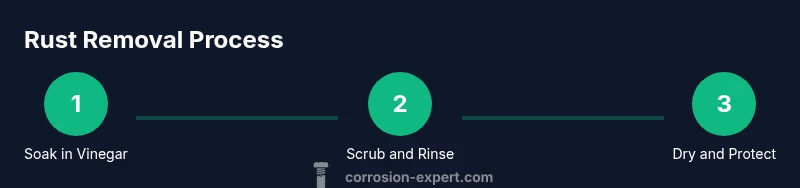
Soak for 60–180 minutes
Allow the acetic acid to work on the surface rust. For heavier rust, you may need longer soaking or repeated soakings across days for best results.
Tip: Check about halfway through and rotate the item to expose all surfaces. - 5
Scrub away loosened rust
Remove the piece and scrub with a stiff brush. Rinse and re-submerge if stubborn patches remain. Repeat as needed.
Tip: Use gentle, consistent scrubbing pressure to avoid scratching the metal. - 6
Rinse, dry, and inspect
Rinse with clean water, then dry thoroughly with a towel. Inspect for remaining spots of rust and decide if a second cycle is necessary.
Tip: Dry completely to prevent flash rust before applying protection. - 7
Apply post-treatment protection
Lightly coat the surface with oil or wax to repel moisture, or apply a clear sealant if appropriate for the finish. This step helps prevent immediate re-rusting.
Tip: Do not apply sealant to porous or oxidized surfaces until fully dry. - 8
Cleanup and safe disposal
Dispose of used vinegar responsibly and rinse tools and workspace. Store vinegar safely away from pets and children.
Tip: Never pour used acidic liquid down the drain if your plumbing is sensitive; dilute with water if needed. - 9
Maintenance for future rust prevention
Regularly inspect treated items, store in dry conditions, and reapply protective coating as needed. Consider preventive measures like rust inhibitors for high-humidity environments.
Tip: Prevention is easier than remediation; keep metal dry and coated.
Quick Answers
Can vinegar remove rust from all metal surfaces, including chrome or stainless steel?
Vinegar works best on light rust on ferrous metals and may affect delicate finishes. It can dull or etch certain coatings on chrome or highly polished stainless steel, so test first and consider alternate methods for those materials.
Yes for light rust on some surfaces, but test a small area first to avoid damage.
Is white vinegar safe to use on aluminum or painted surfaces?
Acidic vinegar can react with aluminum and may dull paint or coatings. Use with caution on aluminum and painted items, or consider non-acidic rust removers for those surfaces.
Be careful with aluminum and paint—test first or avoid if unsure.
How long should items soak in vinegar for rust removal?
Soak times vary with rust severity. Start with 60–120 minutes for light rust and reassess; for tougher rust you may need extended soakings or repeated cycles.
Start with an hour or two and check the progress before continuing.
Will vinegar damage paint or coatings during rust removal?
Vinegar can affect certain paints and protective coatings. Mask or remove loose paint, test on a small area, and consider gentler methods if coatings are important.
Test a small spot first to be safe.
Can I speed up rust removal by adding salt or heat?
Salt can help abrasive action when making a paste with vinegar, but heat should be used cautiously as it can accelerate rust elsewhere. Use moderate heat and avoid overheating the metal.
Salt can help a bit, but don’t overdo heat.
What should I do after rust removal to prevent it from returning?
Dry the metal completely, apply a thin layer of oil or protective sealant, and store in a dry environment. Regular maintenance helps prevent recurrence.
Dry and protect the surface to keep rust away.
Watch Video
Quick Summary
- Rust only penetrates surface layer in light cases
- Choose white vinegar for most metals, avoid aluminum coatings
- Thorough drying and protective coating reduce re-rust risk
- For stubborn rust, repeat soaking or use paste with salt
- Always wear PPE and work in a ventilated space