How to Remove Rust Stains from Fabric: Step-by-Step
Learn safe, effective methods to remove rust stains from fabric and clothing. This step-by-step guide covers colorfast testing, gentle remedies, stronger cleaners, and prevention to keep fabrics stain-free.


How to remove rust stains from fabric safely? This guide explains how to remove rust stains from fabric using practical, at-home methods. You’ll learn colorfast testing, mild remedies for light stains, stronger rust removers for stubborn spots, and a step-by-step plan plus prevention tips to keep fabrics rust-free.
Why rust stains happen on fabrics
Rust stains on fabric occur when iron-rich rust particles transfer from metal items—like a hanging iron, a garden tool, or a leaky appliance—onto textiles. Water can accelerate the transfer, and iron oxide binds to fibers, leaving a reddish-brown discoloration that is stubborn to remove. According to Corrosion Expert, rust stains are typically iron oxide deposits that cling to fibers more tenaciously than many dye stains. The good news is that most rust stains are removable with prompt action and the right combination of acidity and abrasion. The method you choose depends on fabric type (cotton and linen often respond well) and the stain’s age. Fresh stains are easier to lift than set-in marks, which may require repeated treatments. Always start with caution: test cleaners on a hidden seam or hem to avoid color loss or damage. This preparation helps protect delicate fabrics and sets you up for success with subsequent steps.
Pre-treatment checks: colorfastness and fabric compatibility
Before applying any rust-removal method, verify the fabric’s colorfastness and fiber composition. Natural fibers such as cotton or linen generally tolerate mild acids like lemon juice or white vinegar when used sparingly. Synthetic blends may respond differently, so check care labels and run a spot test first. If the fabric shows signs of dye bleeding, proceed with gentler options or skip chemical treatments altogether. Additionally, confirm the item’s washing temperature and care instructions. If you’re uncertain, opt for a professional cleaner for delicate garments to avoid permanent damage.
Natural remedies for light rust stains
For light stains on colorfast fabrics, natural remedies can lift rust without harsh chemicals. A classic approach is lemon juice mixed with salt to create a mild bleaching action. Apply the paste to the stain, place the item in bright sunlight for 1–3 hours, then rinse thoroughly and launder as usual. White vinegar is another friendly option: dab neat vinegar on the stain, let it sit for 15 minutes, rinse, and wash. A baking soda paste (baking soda + water) can also help with mild rust marks when gently rubbed. Always rinse well to remove acidic residues that could irritate skin or weaken fibers. These methods are affordable, widely available, and appropriate for cotton, linen, and poly-cotton blends.
Chemical remedies for tougher rust stains
Stubborn stains may require stronger cleaners designed for rust on fabrics. Start with a rust remover labeled safe for textiles and follow the product directions precisely. Some options use citric acid or oxalic acid in controlled concentrations; apply to the stain, wait the recommended time, then rinse and launder. If you prefer a gentler approach, hydrogen peroxide (3%) combined with a pinch of cream of tartar can act as a mild oxidizing treatment on certain fabrics. Avoid chlorine bleach, which can intensify rust coloration and damage fibers. For delicate fabrics like silk, wool, or velvet, skip strong acids and consider professional cleaning. After treatment, launder with a mild detergent and air-dry away from direct sunlight to prevent color fade. The Corrosion Expert emphasizes testing and adhering to fabric-specific guidelines to minimize risk.
Washing, drying, and aftercare
Rinse thoroughly after any treatment to remove residues that could cause future spots. Wash in the hottest water allowed by the care label with a color-safe detergent. Do not use the dryer until you are sure the stain is gone; heat can set remaining rust. If color loss occurs, repeat the treatment using a milder method or switch to an alternative remedy. Dry flat or hang dry away from direct sun. For whites and colorfast fabrics, you may consider a second wash cycle with a rust-inhibiting laundry booster if the product is designed for fabrics, following product directions. Keeping metal items away from laundry, drying racks, and washing machines will help prevent future rust transfers.
Safety reminders and when to seek professional cleaning
Always wear gloves and work in a well-ventilated space when using acidic cleaners or rust removers. Read and follow label warnings, and keep cleaners out of reach of children. If the item is valuable, heavily stained, or made of delicate materials (silk, wool, leather), seek professional cleaning to avoid permanent damage. Quick action, proper testing, and selecting the right method based on fabric type will maximize your chances of complete rust stain removal.
Tools & Materials
- Rubber gloves (nitrile or latex)(protect skin from acids and cleaners)
- Mild cleaners (lemon juice, white vinegar)(gentle options for light stains)
- Lemon juice(for lemon-based paste)
- Salt(helps mild bleaching when used with lemon)
- White vinegar(acidic cleaner for spot treatment)
- Baking soda(paste with water for mild rust)
- Cream of tartar(with peroxide for gentle mix)
- Rust remover safe for fabrics(follow label directions)
- Oxalic acid-based rust remover (fabric-safe)(for stubborn stains; follow safety guidelines)
- Soft clean cloths or cotton swabs(apply and blot)
- Old toothbrush(gentle agitation)
- Measuring spoons(for mixing pastes)
- Plastic bowl or container(for mixing solutions)
- Access to running water(for rinsing)
- Drying rack or clothesline(to air-dry away from sun)
Steps
Estimated time: Total: 60-90 minutes plus drying time
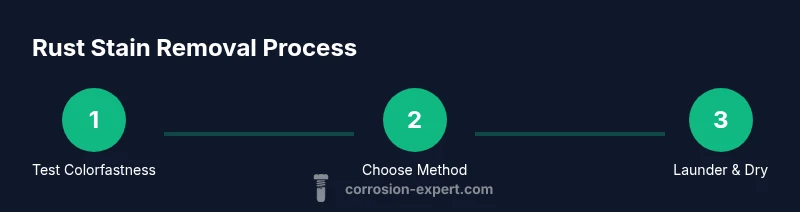
- 1
Test fabric colorfastness
Dab a small amount of cleaner on an inconspicuous area and wait 5-10 minutes to observe any color change or fiber damage. If there is color loss or fiber distortion, stop and switch to a milder method.
Tip: Always test first on hidden areas before treating visible stains. - 2
Identify stain type and plan method
Assess whether the stain is fresh and how severe it is. Choose natural remedies for light stains or a rust remover for tougher spots, based on fabric type and colorfastness.
Tip: Begin with the mildest option that fits the fabric and stain. - 3
Apply chosen cleaner to stain
Apply the cleaner to the stain using a cloth or cotton swab, ensuring you cover the entire area without oversaturating the fabric.
Tip: Blot to lift rust particles rather than rubbing to avoid spreading. - 4
Gently agitate and wait as directed
Let the cleaner work for the recommended time (5–15 minutes depending on product). Do not let acidic cleaners sit too long.
Tip: Keep product away from edges to prevent color loss on seams. - 5
Rinse thoroughly
Rinse under running water until the liquid runs clear and no cleaner residue remains.
Tip: Blot with a clean cloth to remove moisture and avoid spreading the stain. - 6
Launder and air-dry
Wash as per the care label with a color-safe detergent, then air-dry away from direct sun until you confirm the stain is gone.
Tip: Check the stain before using heat; heat can set remaining rust. - 7
Repeat if necessary
If the stain persists, repeat the steps with a milder method or switch to a different approach suitable for the fabric.
Tip: Avoid aggressive scrubbing in a single pass to protect fibers. - 8
Dispose safely and clean tools
Rinse and store tools properly, and dispose of any disposable wipes responsibly.
Tip: Wipe down containers and brushes after use to prevent cross-contamination.
Quick Answers
Can rust stains be removed from all fabrics?
Most cotton and linen fabrics respond well to rust stain removal when treated promptly. Delicate fabrics like silk or wool may require gentler methods or professional cleaning to avoid damage.
Most fabrics respond well, but delicate materials may need professional care.
Is chlorine bleach safe to use on rust stains?
Chlorine bleach can worsen rust stains and damage fibers. Use acid-based cleaners or rust removers designed for textiles and always test first.
Bleach is risky for rust stains; test before use.
What is the best natural remedy for rust stains?
Lemon juice with salt and sunlight can lift light rust stains on colorfast fabrics. White vinegar and baking soda paste are also effective for milder stains without harsh chemicals.
Lemon and salt can help light stains; other natural options exist.
Can I use commercial rust removers on clothing?
Yes, but choose textile-safe products and follow the label. Always test on a hidden area first to prevent color loss or fiber damage.
Yes, but test first and pick fabric-safe products.
Should I wash immediately after treatment?
Rinse and launder as soon as possible after treatment to prevent re-staining and set-in rust. Avoid heat until you confirm the stain is removed.
Rinse and launder promptly, then avoid heat until resolved.
How can I prevent rust stains from forming in the future?
Keep metal items away from fabrics and check washers, hoses, and pipes for rust. Treat new stains quickly to prevent set-in coloration.
Limit contact with metals and address stains quickly.
Watch Video
Quick Summary
- Test colorfastness before treating any stain.
- Start with mild, fabric-safe remedies for light rust.
- Escalate to dedicated rust removers only if needed.
- Rinse and air-dry before applying heat to avoid set-in stains.
- When in doubt, seek professional cleaning for delicate fabrics.