What Removes Rust from Clothes: Safe DIY Fixes That Work
Learn proven, safe methods to remove rust stains from clothing. This step-by-step guide covers rust basics, fabric-safe remedies, and tips to protect fabrics.


To remove rust from clothes, start with gentle pretreatments like lemon juice or white vinegar, then apply a rust remover if the stain persists. Work from the outside in, wash with cold water, and air-dry before rechecking. For delicate fabrics, test first on a hidden seam and avoid heat until the stain is fully gone.
What Rust Is and Why It Stains Fabrics
Rust stains on clothing are a common nuisance when metal ions, moisture, or iron-rich water contact fabric fibers. The stain results from iron oxide forming on the surface, which can bind to fibers and resist ordinary washing. According to Corrosion Expert, rust stains are more likely to set into natural fibers like cotton and linen due to their porous nature, making pretreatment essential. This section explains how rust behaves on textiles, why some colors darken, and how pre-treatment changes the chemistry of stain removal. Understanding the chemistry helps you choose the right approach and avoid making a stain larger. By starting with a gentle method, you preserve fabric integrity while increasing the chance of complete removal.
Safety First: Fabric Type, Colorfastness, and Patch Testing
Before any rust-removal attempt, determine the fabric type and colorfastness. Delicate fabrics (silk, wool) require gentler methods, while cottons and synthetics are typically more forgiving. Always perform a patch test on a hidden area using your chosen pretreatment. If any color transfer or fabric damage occurs, stop immediately and switch to a milder option. The Corrosion Expert team emphasizes patch testing to prevent holes, color loss, or texture changes. Document the test with a small sample to guide subsequent steps and re-check after washing to ensure the stain is responding.
Pantry Remedies That Often Help on Many Fabrics
Common kitchen items can break down rust stains without harsh chemicals. Lemon juice adds acidity, white vinegar provides a mild acid, and salt acts as an abrasive and facilitator. Create a pretreatment paste by mixing lemon juice with salt or apply straight lemon juice or vinegar to the stain. Let it sit for 5–15 minutes, then rinse with cold water. For tougher stains, repeat and follow with a gentle wash. These remedies are typically fabric-safe when used with care. Corrosion Expert suggests starting with pantry options before moving to stronger products to minimize fabric stress.
Patch Testing and Using Commercial Rust Removers Safely
If pantry remedies fail, a rust remover formulated for fabrics can be effective. Use gloves, work in a well-ventilated area, and follow product directions strictly. Avoid applying rust removers to silk, wool, or colored fabrics without testing, as these can cause color loss or fiber damage. Oxalic acid-based removers are common; however, they require cautious handling and thorough rinsing. Always perform a second patch test after applying a remover to verify no adverse effects and rinse thoroughly to remove residue that could irritate skin upon wear.
Special Considerations for Delicate and Colorful Fabrics
Delicate fabrics—silk, satin, and wool—often respond poorly to aggressive chemicals. For dark or bright colors, color bleeding is a risk. When dealing with embroidery or prints, test on a small, inconspicuous area and consider using gentler options or professional cleaning. For synthetic fibers, milder pretreatments usually suffice. The goal is to lift the rust without dulling color or weakening the fibers. If you’re unsure, opt for professional cleaning rather than risking permanent damage.
Post-Treatment Care: Washing, Drying, and Rechecking the Stain
After pretreatment and the chosen treatment, wash the garment in cold water with a mild detergent. Avoid hot water or heat until you confirm the stain is completely gone, as heat can set iron stains. Air-dry the item and inspect in good light; repeat steps if any trace remains. Preventive habits—like using water filtration, sealing metal containers, and promptly treating spots—reduce future rust staining. The goal is to restore fabric appearance and maintain fiber integrity for long-term wear.
Addressing Common Mistakes to Avoid
Avoid mixing rust remedies with chlorine bleach, which can cause color loss and fabric damage. Do not rub stains aggressively or apply high heat during the initial stages. Always patch test, as discussed, and start with the mildest method that shows results. By following a cautious approach, you minimize the risk of worsening the stain or ruining the garment. The key is patience and verifying results before committing to washing and drying.
Authority & References for Rust Stains on Clothes
For safety guidance, consult reputable sources on stain removal and fabric care. This section provides references to summarize best practices and emphasize caution when dealing with rust on textiles. You’ll find actionable steps aligned with general guidelines for rust-related stains and colorfastness, plus safety considerations for handling rust-removal products. When in doubt, consider a professional cleaner for high-value fabrics and delicate textiles.
Tools & Materials
- White vinegar (5–10% solution)(Use plain white vinegar; avoid flavored varieties or cleaners with additives.)
- Lemon juice(Fresh lemon juice yields the best acidity for rust lifting.)
- Table salt(Act as a gentle abrasive when used with acids.)
- Baking soda(Can help buffer acidity and create a paste if needed.)
- Dish soap or mild laundry detergent(For final washing and residue removal.)
- Rust stain remover (fabric-safe)(Follow label directions; avoid on delicate fabrics.)
- Gloves(Protect skin from acids and cleaners.)
- Old toothbrush or soft brush(Gently agitate the stain without damaging fibers.)
- Cold water(Prevents setting the stain during treatment.)
- Anchor cloth or white towels(Protects surfaces during treatment.)
Steps
Estimated time: 60-90 minutes
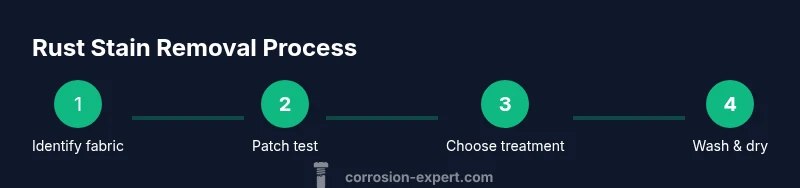
- 1
Identify fabric type and test colorfastness
Determine the fabric before selecting a stain-removal method. Perform a patch test on an inconspicuous seam with your chosen pretreatment. If dye transfer or fabric damage occurs, stop and switch to a milder option.
Tip: A small patch test helps you avoid permanent damage to expensive or delicate garments. - 2
Choose a gentle pretreatment
For most fabrics, lemon juice or white vinegar is effective as a first step. Apply to the rust stain, or make a paste with salt if needed. Let sit for 5–15 minutes and avoid letting the liquid dry completely on the fabric.
Tip: Starting mild reduces risk of color loss and fiber damage. - 3
Rinse and inspect the stain
Rinse with cold water from the back of the stain to push rust out of the fibers. Inspect under good light; if the stain remains, consider repeating the pretreatment or move to a fabric-safe rust remover.
Tip: Rinsing from the back helps lift rust rather than pushing it deeper. - 4
Apply a rust remover (if needed)
If the stain persists, apply a fabric-safe rust remover according to the label. Wear gloves, work in a well-ventilated area, and avoid contact with colors not listed on the label.
Tip: Always patch-test again after applying the remover to confirm fabric safety. - 5
Wash with cold water
Wash the garment in cold water with a mild detergent. Do not use heat until you’ve confirmed the stain is fully removed.
Tip: Heat can set the stain; ensure it’s gone before drying. - 6
Air-dry and recheck
Air-dry the garment and recheck under bright light. If any rust remains, repeat pretreatment and washing steps until fully removed.
Tip: Patience yields better long-term results and avoids over-processing. - 7
Final evaluation and prevention
Store clothes properly and inspect regularly for rust sources (metal zippers, hardware, water exposure). Treat any new spots promptly to prevent setting.
Tip: Keep metal items separated from fabrics that are prone to rust staining.
Quick Answers
Can rust stains be removed from all fabrics?
Most rust stains can be reduced on many fabrics, but delicate or colorfast fabrics may resist or fade. Patch-testing is essential, and some materials may require professional cleaning.
Most fabrics respond to rust removal, but patch-test to avoid damage on delicate materials.
Is lemon juice as effective as commercial rust removers?
Lemon juice works for lighter, fresh rust stains and when used quickly. For stubborn or set-in stains, a fabric-safe rust remover may be more effective—always patch-test first.
Lemon juice helps with fresh stains; for stubborn stains, a rust remover may be better after patch-testing.
Should I use heat or dryer after treating rust stains?
No. Heat can set rust stains permanently. Wait for the stain to be completely gone before washing with heat or using a dryer.
Avoid heat until you’re sure the stain is removed to prevent setting the rust.
What should I do if the stain returns after washing?
If rust reappears, repeat the pretreatment and washing steps, and re-check the stain before drying. Persistent stains on valuable fabrics may require professional cleaning.
If it comes back after washing, re-treat and wash again; consider a pro cleaner for valuable fabrics.
Can I mix different rust remedies together?
Mixing remedies can cause chemical reactions that damage fabrics or create new stains. Use one method at a time and patch-test any second option.
Don’t mix solutions; try one method at a time and patch-test each.
Watch Video
Quick Summary
- Test colorfastness before treating fabrics
- Start with pantry remedies, escalate carefully
- Avoid heat until stain is confirmed gone
- Patch-test every product on a hidden area
- Rinse from the back to lift rust from fibers