How to Remove Rust Nuts: A Practical DIY Guide
Learn proven methods to safely remove rusted nuts with a step-by-step workflow, essential tools, and prevention tips for lasting hardware—ideal for DIYers and homeowners.


To remove rust nuts, start with safety and the right tools, then choose a method based on how seized the nut is. Begin with penetrating oil, allow it to soak, and apply steady torque with the correct size wrench. If needed, use heat or light tapping to break the rust bond, followed by cleaning and prevention.
Why Nuts Seize Up and How to Predict It
If you're wondering how to remove rust nuts, it helps to understand what causes corrosion in the first place. Rust forms when moisture and oxygen attack iron or steel fasteners, creating iron oxides that roughen the surface of threads. Over time, this buildup binds the nut to the bolt, causing seizing, binding, and eventual galling that resists turning. Recognizing the signs—tightness, stickiness, or a gritty feel when turning—lets you tailor your approach before you risk snapping the bolt. In most cases, a seized nut results from a combination of corrosion, debris in the threads, and thermal cycling that expands and contracts metals at different rates. By predicting these patterns, you can choose the least invasive method that has the highest chance of success while protecting the surrounding hardware.
Safety First: Gear, Workspace, and Best Practices
Working with rusted nuts can create sharp edges and unpredictable outcomes. Always wear safety glasses and heavy gloves to protect your hands from metal shards and splinters. Work in a well-ventilated area, especially if you plan to use solvents or heat. Secure the workpiece on a stable, flat surface, and keep bystanders away. Before you start the removal process, unplug power tools, remove nearby flexible hoses, and ensure there’s no fuel source or flammable material within reach. A clean workspace reduces the risk of slips and accidental injuries, and it helps you keep track of tools and fasteners as you progress.
Tools and Materials You’ll Use
Having the right tools on hand makes a big difference when removing rust nuts. Essential items include: penetrating oil or rust-dissolving solvent, a set of correctly sized wrenches or sockets, a wire brush for threads, and a sturdy vise or clamp to hold the workpiece. Optional but helpful tools are a heat source (such as a heat gun or propane torch) for stubborn rust, a small hammer or dead-blow mallet for gentle taps, and anti-corrosion spray for aftercare. Always pair tools with proper PPE: gloves, eye protection, and a dust mask if blasting debris or producing fumes. A clean rag or shop towel helps wipe off loosened rust and excess solvent.
Choosing the Right Method Based on Severity
Not every rusted nut requires the same approach. Surface rust on exposed fasteners can often be cleaned with penetrating oil and gentle torque. If the nut is deeply corroded or embedded, you may need heat to expand the bolt slightly and break the bond, followed by mechanical leverage. Extremely seized fasteners might demand more advanced steps, such as controlled grinding to expose fresh metal for grip or, in rare cases, replacement of the bolt altogether. Start with the least invasive method and escalate carefully only as needed.
Penetrating Oils and Rust Dissolvers: How They Work
Penetrating oils seep into the microscopic voids between threads, lubricating and loosening rust bonds. The longer you allow soaking time, the more effective they become at reducing friction. Rust dissolvers containing acids or chelating agents can help break down mineralized rust, but they require careful handling—read the label, work in a ventilated space, and wash hands after use. If the area around the nut is painted or coated, apply solvent to the exterior to prevent paint from clogging the nut’s edges. Remember, penetrating oils are the first line of attack and often the simplest win for lightly seized fasteners.
Heat, Mechanical Leverage, and Mechanical Aids
Heat can loosen seized nuts by expanding the metal threads at different rates, but apply heat only when nearby materials won’t be damaged and there are no fuel sources nearby. Use steady, controlled heat (not an oxy-acetylene flame) and test for ease of turning after cooling slightly. Pair heat with the correct-size wrench or socket, and apply slow, consistent torque rather than blasting the nut with force. If the nut refuses to budge, use a small hammer tap near the bolt head to deliver a micro-shock that can help overcome the rust bond without damaging the threads.
These mechanical actions should be performed with patience. For stubborn cases, consider a mechanical extractor or a bolt-removal tool designed to grip rusted fasteners more securely. Always monitor for rounding of the nut corners; if you see rounded edges, stop and re-evaluate the tool size or technique to avoid further damage.
Alternative Methods: Old-School Tricks and Chemical Rust Removers
In some situations, traditional tricks like applying a rust penetrant and then gently tapping with a hammer can free a stuck nut without tools that cause damage. For metal hardware with stubborn corrosion, a commercial rust remover or a safe chemical rust remover can be used, but follow all safety instructions and avoid using harsh acids on chrome, galvanized, or plated surfaces. Some DIYers use a light rust-removal paste on the exterior threads to rinse away corrosion before reassembly. Always test on a small area first to avoid altering thread dimensions or surface coatings.
Step-by-Step Practical Workflow (Overview)
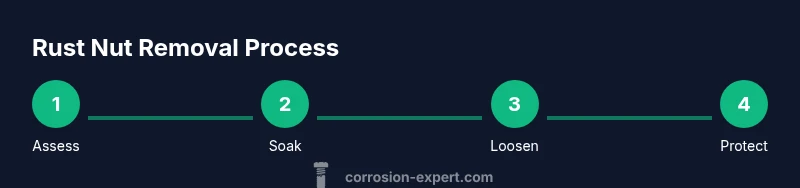
A practical workflow begins with safety, proceeds to application of a penetrating agent, then careful mechanical loosening, and ends with cleaning and protection. Start by tying up loose clothing and securing the workpiece. Apply penetrating oil and wait for the recommended soak time. Fit the correct tool and apply steady torque, incorporating heat or tapping only if needed. Once loosened, remove the nut gently and inspect the threads for wear or damage. Finish by cleaning the threads and applying a rust-preventive coating to deter future corrosion.
Cleaning and Re-Treatment to Prevent Recurrence
After removing a rust nut, clean the threads with a wire brush and wipe away debris. If the bolt threads are damaged, consider replacing the bolt and nut pair to ensure a reliable fit. Apply a light rust-preventive spray or anti-seize compound to the threads to minimize future seizing. For exterior fasteners, consider a sealant or protective coating to shield against moisture. Store spare hardware in a dry environment to reduce future corrosion risk.
Special Cases: Stubborn Nuts and Bolts
Some fasteners are exposed to harsh conditions (marine environments, salt exposure, or high humidity) and may require repeated treatments. In these cases, you might need to apply solvent, repeat soaking, and attempt multiple gentle loosening attempts over several sessions. If a nut remains stubborn after multiple approaches, avoid power tools that could snap the bolt. Instead, replace the fastener or seek professional help to avoid damage to surrounding parts.
Long-Term Prevention and Maintenance
Preventing rust on nuts starts with choosing corrosion-resistant fasteners for the environment and applying protective coatings or anti-seize products. Regular inspections and cleaning after exposure to moisture help extend fastener life. When reassembling, do not overtighten—applied torque should meet manufacturer recommendations. For outdoor or humid areas, consider fitting with stainless steel or coated fasteners and sealing metal joints to reduce moisture infiltration. Proper storage for spare hardware is essential to keeping corrosion at bay.
The Bottom Line: Easy Wins to Remember
Easy wins include using penetrating oil early, selecting the correct wrench size, and applying controlled torque. Heat and tapping are tools of last resort to minimize thread damage. Finish with a protective coating to discourage future rust and keep a small maintenance kit handy for quick rust-address needs.
Tools & Materials
- penetrating oil or rust-dissolving solvent(Apply to threads and allow soak time per product instructions (typically 5-15 minutes).)
- set of correctly sized wrenches or sockets(Choose the exact size to avoid rounding the nut corners.)
- wire brush or old toothbrush(Use on exterior and interior threads to remove loose rust.)
- rag or shop towel(Wipe away excess solvent and debris before attempting removal.)
- screwdriver or punch (optional for prying gently or aligning parts)(Only used for alignment or light leverage after main looseness is achieved.)
- heat source (heated air gun or small propane torch)(Use with caution and never near flammable materials.)
- dead-blow mallet or rubber hammer(For delivering controlled impact to break rust bonds without damaging threads.)
- anti-seize lubricant or rust-preventive spray(Apply after removal to reduce future seizing.)
- safety gear (gloves, eye protection, dust mask)(Protect hands, eyes, and lungs from debris and chemical fumes.)
Steps
Estimated time: 60-90 minutes
- 1
Assess safety and environment
Inspect the area for flammables, ensure the workpiece is secure, and put on protective gear. Clear the workspace and plan a safe path for tool use. This minimizes risk and sets the stage for a successful removal.
Tip: Double-check that nearby hoses or cables won't be damaged by heat or torque. - 2
Apply penetrating oil and wait
Coat the nut and immediate threads with penetrating oil. Allow the solvent to soak for 5-15 minutes, reapplying if needed. This breaks down rust and lubricates the contact surfaces.
Tip: Wipe away excess oil before attempting to turn the nut to improve grip. - 3
Select the correct tool and grip
Choose the socket or wrench that perfectly fits the nut. Position it square to the fastener to avoid rounding and maintain even pressure.
Tip: Hold the wrench steady and apply pressure in a smooth, gradual motion rather than sudden jolts. - 4
Apply steady torque
Begin turning with steady, even pressure. If the nut moves, continue gradually until it frees. If it stalls, stop and reapply oil.
Tip: If you feel the nut start to slip, stop and refit the tool to a safe bite; avoid twisting off the bolt head. - 5
Use heat if needed
If the nut remains stuck after oiling, apply controlled heat to the nut and surrounding area. Do not overheat, and allow it to cool before retrying.
Tip: Keep flames away from painted surfaces and plastics; use short bursts of heat rather than continuous application. - 6
Deliver a micro-shock with a mallet
Lightly tap the wrench or bolt head with a dead-blow mallet to break the rust bond. Do not strike with excessive force.
Tip: Aim the tap on the edge of the bolt head or the wrench handle to avoid damaging threads. - 7
Remove and inspect threads
Once the nut loosens, finish unscrewing by hand and inspect the bolt and nut threads for wear. Replace damaged fasteners as needed.
Tip: If the bolt spins freely with the nut, hold the bolt head with pliers to prevent turning the bolt body. - 8
Clean and protect after removal
Wipe threads clean, brush away rust residues, and apply a rust-preventive spray or anti-seize compound before reassembly.
Tip: Lubrication reduces future seizing and makes future maintenance easier.
Quick Answers
What is the best way to remove a deeply rusted nut?
For deeply rusted nuts, start with penetrating oil and gentle torque, then add heat and controlled taps if needed. If resistance remains, consider replacing the fastener or seeking professional help to avoid damaging surrounding parts.
For deeply rusted nuts, start with penetrating oil and gentle turning, then add heat and careful taps if necessary. If it stays stuck, think about replacing the fastener or getting professional help.
Can I reuse bolts after removing rust nuts?
Whether a bolt is reusable depends on thread condition after removal. If the threads show wear, cross-threading, or deformation, replace both bolt and nut to ensure safe fastening.
Whether you can reuse a bolt depends on the thread condition after removal. If there’s wear or deformation, replace it to ensure a safe fit.
Is it safe to apply heat near fuel lines or batteries?
Avoid applying heat near flammable materials, fuel lines, or electrical components. If heat is necessary, use a small controlled flame and maintain distance from hazardous areas.
Avoid heat near fuel or electrical parts. Use gentle, controlled heat and keep a safe distance from hazards.
How can I prevent rust on nuts in the future?
Choose corrosion-resistant fasteners for the environment, apply anti-seize or protective coatings, and store spare hardware in a dry place to minimize future rust.
Use corrosion-resistant fasteners, apply anti-seize, and store spares dry to prevent rust.
What tools are essential for stubborn rusted nuts?
A good socket set, penetrating oil, a wire brush, and a heat source are essential. Add a torque wrench or impact tool if needed for stubborn cases.
Essential tools are a socket set, penetrating oil, a wire brush, and a heat source; add torque tools if needed.
Should I use chemical rust removers on hardware?
Chemical rust removers can help, but handle them with care and follow label instructions. They’re best for heavily corroded parts but may affect coatings.
Chemical rust removers can help, but follow the label and use on corrosion-prone parts carefully.
Watch Video
Quick Summary
- Assess the nut’s condition before choosing a method.
- Apply penetrating oil and wait for it to soak.
- Use the correct tool size to prevent rounding.
- Use heat or tapping only when safe.
- Clean and protect threads after removal.