How to Get Out Rusted Bolts: A Practical Guide
Learn proven, safe methods to remove rusted bolts, from penetrating oils to heat and extraction tools. This step-by-step guide covers assessment, lubrication, mechanical techniques, and prevention to minimize damage and future rust.


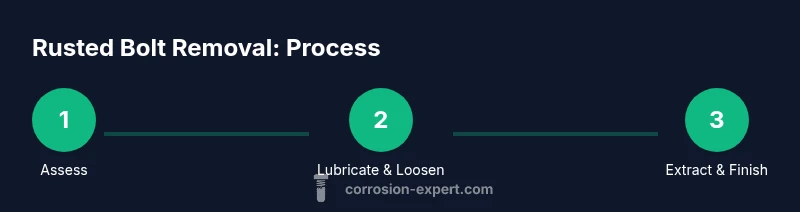
You can remove rusted bolts by following a methodical approach: assess the bolt, apply penetrating oil and wait, use the right wrench or extractor, and if needed apply controlled heat. Start with lubrication, then gradual torque, and finish with thread cleaning and anti-seize to prevent recurrence. This 60–90 minute process works for most common scenarios.
Understanding Why Rusted Bolts Seize
Rusted bolts seize when moisture and oxygen drive corrosion at the threads, locking the bolt to the nut or threaded hole. Over time, rust can expand and roughen thread surfaces, dramatically increasing friction. According to Corrosion Expert, the vast majority of seized fasteners stem from this corrosion phenomenon in damp environments. The first move is to assess whether the bolt is merely stuck or if the surrounding threads are damaged enough to require replacement. This upfront check saves time and protects the rest of the assembly.
Assess the Bolt and Surrounding Threads
Look for rounded bolt heads, stripped nuts, or split threads in the surrounding material. If the hole or nut threads are heavily damaged, attempting to force the bolt free can worsen the damage and lead to a failed component. Corrosion Expert analysis shows that the condition of the threads often predicts whether removal is possible without repair. Document any deformation, rust depth, and nearby material integrity so you can choose the safest course of action. If the thread wear is extreme, replacement rather than extraction is the prudent path.
Penetrating Oils and Lubricants: Choosing and Using
Penetrating oil helps the bolt's threads break the bond created by rust. Choose a light to medium viscosity penetrant and apply generously along the bolt threads, allowing it to creep into the interface. For stubborn rust, a longer soak may be needed. The recommended practice is to apply the oil, wait 10–30 minutes, wipe away excess, and reapply as needed. Avoid mixing solvents unless you fully understand their compatibility with the bolts and surrounding materials.
Mechanical Extraction Techniques
Begin with manual loosening using a snug-fitting wrench or socket and a steady, controlled motion to avoid rounding the head. If there is little movement, switch to a breaker bar for extra leverage or an impact driver for a rapid impulse. For stubborn bolts, a bolt extractor set can bite into the head and back out the bolt as you apply consistent torque. Avoid jerky, high-torque shocks that can snap the bolt or damage the threads. Maintain alignment to prevent cross-threading during removal.
Heat and Cooling: When to Use and How to Do It Safely
Heating the bolt can expand the metal and break the rust bond. Use a propane torch or heat gun to apply heat to the bolt head and nearby area, avoiding plastic parts or nearby flammables. After heating, reapply penetrating oil and attempt removal while the metal is hot. In some cases, a quick cooling step (spraying with water after heating) can create a thermal shock that helps release the bond, but only if nearby components can tolerate it. Safety first: keep a safe distance from any fuel sources.
Finishing Prep: Cleaning, Re-tapping, and Prevention
After removal, clean the threads with a wire brush to remove residue and inspect for damage. If thread walls are compromised, retapping or repair may be necessary. Before reassembly, apply anti-seize compound or a thread lubricant to reduce future corrosion and facilitate future removal. When reusing hardware, consider using coated or stainless bolts in high-moisture environments to minimize future rust. This finishing step preserves the joint’s integrity and extends service life.
Safety Considerations and Common Pitfalls
Always wear safety glasses and gloves, and work in a well-ventilated area when solvents or heat are involved. Keep flammables away from ignition sources and have a fire extinguisher nearby when using a torch. Common mistakes include skipping the soak time, using excessive force, and neglecting thread damage assessment. If the bolt head rounds off or the hole is damaged, reassess the plan rather than forcing the bolt free—forcing can ruin threads or hardware.
Tools & Materials
- Penetrating oil or rust penetrant(Choose a light/medium viscosity and apply liberally along threads)
- Wire brush(Brass or steel wire brush for de-rusting; avoid aggressive tools that scratch threads)
- Bolt extractor set(Select compatible extractors for bolt head size)
- Adjustable wrench or socket set(Fit snugly to avoid rounding the bolt head)
- Breaker bar or torque wrench(Provide controlled, gradual torque)
- Heat source (propane torch or heat gun)(Only if safe and nearby materials allow)
- Safety gear (gloves, safety glasses)(Protect hands and eyes during operations)
- Anti-seize compound or thread lubricant(Apply during reassembly to prevent future seizure)
- Rags and solvent for cleanup(Keep workspace tidy and prevent slips)
- Retapping kit or replacement bolt(Have on hand if threads are damaged)
Steps
Estimated time: 60-120 minutes
- 1
Inspect and assess the bolt
Visually inspect the bolt and surrounding threads for damage, rounded heads, or stripped nuts. Decide whether extraction is feasible or if replacement is safer. Make a quick plan based on observed damage.
Tip: Take a quick photo of the bolt and threads for reference during reassembly. - 2
Gather tools and materials
Lay out penetrant oil, brush, extractor set, wrenches, and safety gear within easy reach. Check bolt head size and ensure you have the proper extractor and socket.
Tip: Organize tools on a tray to avoid misplacing anything mid-task. - 3
Clean and prep the threads
Use a wire brush to remove loose rust and debris from the bolt and surrounding threads. This improves oil penetration and reduces resistance when loosening.
Tip: For stubborn rust, lightly scrub with a brass brush to avoid embedding metal shavings in the threads. - 4
Apply penetrating oil and wait
Coat the bolt thoroughly and let the oil seep into the interface. For heavy rust, reapply after 10–15 minutes and allow additional soaking time.
Tip: Keep the area clear of heat sources during soaking to avoid solvent evaporation. - 5
Gently loosen with manual torque
Attach the correct socket and apply steady, even torque starting with a small amount and increasing gradually. If there is movement, continue; if not, stop to prevent head rounding.
Tip: Use a breaker bar for extra leverage, but avoid sudden shocks. - 6
Use a bolt extractor if needed
If the bolt remains stuck, switch to an extractor designed for seized hardware. Follow the tool’s instructions and apply controlled torque to avoid breaking the extractor.
Tip: Ensure the extractor bit fits the bolt head precisely to prevent slippage. - 7
Apply heat cautiously if stuck
If needed, apply light heat to the bolt head area to expand metal and break the bond. Do not heat plastic components or nearby flammable materials.
Tip: Never heat too aggressively; monitor temperature and move away if you smell burning. - 8
Remove, inspect, and finish
Once the bolt turns, back it out slowly and inspect threads for damage. Clean threads and apply anti-seize before reassembly to prevent future rust.
Tip: If the threads are damaged, plan for retapping or replacing the bolt and component. - 9
Reassemble with protection
Reinstall using anti-seize or thread lubricant and tighten to spec. Replace with coated or stainless fasteners in high-moisture areas to reduce future rust.
Tip: Document the hardware type and maintenance steps for future reference.
Quick Answers
What is the best starting method for stuck bolts?
Begin with cleaning, then apply penetrating oil and allow time to soak. Avoid forcing the bolt immediately; lubrication often yields movement with minimal damage.
Start with cleaning and penetrating oil, then wait before applying torque. Lubrication often frees a seized bolt with less risk of damage.
Is it safe to heat rusted bolts?
Heat can help break the bond, but you must avoid plastics, rubber, and flammables nearby. Use steady, controlled heat and monitor temperature closely.
Yes, heat can help, but keep plastics and flammables away and use controlled heat instead of blasting.
How long should penetrating oil soak before trying to turn?
Allow the penetrating oil to soak for at least 10–30 minutes, and longer for heavy rust. Reapply if necessary and test for movement gently.
Let the oil soak for 10 to 30 minutes, or longer for heavy rust, then test gently.
What if the bolt head strips or shears off?
If the head strips or the bolt breaks, stop and reassess. You may need a bolt extractor or replacement hardware and possible thread repair.
If the head strips, stop. You might need an extractor or replacement hardware and possibly repair the threads.
Can I reuse bolts after removal?
Reuse is not recommended after heavy rust or damage. Inspect threads and consider coated or stainless replacements to reduce future rust.
Reuse isn’t advised if rust or damage is present; use proper replacements instead.
Should I retap threads after removal?
If threads are damaged, retapping or repairing the hole is often necessary. Replace with compatible hardware to ensure a proper fit.
If threads are damaged, retap or repair the hole and replace the bolt as needed.
Watch Video
Quick Summary
- Assess damage before forcefully removing the bolt.
- Penetrating oil is your ally; soak, wait, and reapply as needed.
- Use the right tool and apply controlled torque to prevent head breakage.
- When all else fails, heat can help—safely and sparingly.
- Finish with cleaning and anti-seize to prevent future rust.