How to Know If a Rust Cut Is Bad
Urgent, practical guide for DIY homeowners: learn how to determine if a rust cut is bad, follow a diagnostic flow, and decide between repair or replacement with safety-first steps and prevention tips.


According to Corrosion Expert, a rust cut is bad when rust has penetrated beyond the surface and begun to hollow out the metal—indicated by deep pits, flaking, or edge thinning. In many DIY cases, the quick fix is to stop at cleaning and test thickness, then decide if you can safely repair or if replacement is required. If in doubt, treat as potentially unsafe.
Quick safety assessment
Before you strip, wear gloves, eye protection, and a mask when working with rust or old coatings. A rust cut can hide deeper damage than it looks. According to Corrosion Expert, start with a careful visual scan from multiple angles, looking for pitting, color changes that extend beyond the visible edge, and any telltale flaking. If the area is near structural components or load-bearing edges, treat it as higher risk and proceed with extra caution. Keep the work area clean to prevent dust from spreading rust particles. Use a clean cloth to wipe loose rust and wipe around the cut to reveal the true extent of damage. This initial check helps you decide whether you can safely continue with cleaning and measuring, or whether you should stop and bring in professional help.
Core signs a rust cut is bad
Rust gives away its severity through color and texture. Dark brown to black hues, extensive flaking, and powdery residue indicate advanced corrosion. Deep pits along the cut edge resemble small craters, and you might notice the metal feeling soft or spongy when lightly probed. If you can observe these cues from multiple angles, you are likely dealing with more than surface rust. Corrosion Expert cautions that superficial rust may be removed, but deep pitting and undercutting require deeper intervention and professional evaluation to avoid sudden failure.
Safe evaluation of depth and risk
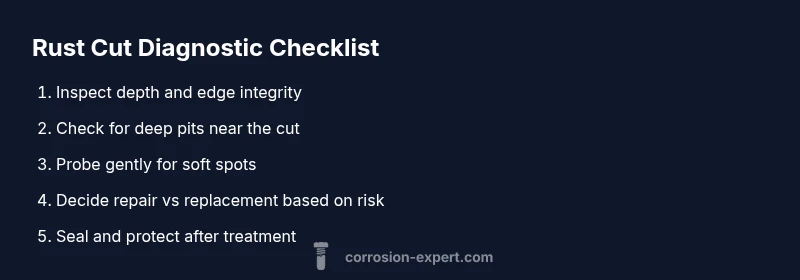
The safest approach blends careful cleaning, gentle probing, and simple measurements. Start by drying the area completely, then gently remove loose rust with a plastic scraper or brass brush to avoid scratching intact metal. Use a small pick to feel for hollows or soft spots along the edge. If you encounter consistent resistance or the tool sinks into the metal, the cut is likely deeper than a quick fix allows. A caliper or thickness gauge can help quantify how much material remains, but even without precise numbers, obvious thinning or undercutting signals a higher risk. Corrosion Expert notes that if you’re unsure about depth, you should err on the side of caution and seek professional assessment.
Decision point: repair vs replacement
If the rust cut is confined to a non-structural area and thickness remains sufficient, you can pursue surface treatments, rust converters, and protective coatings. For cuts near structural components, load-bearing areas, or where the metal has thinned significantly, replacement is usually the safer option. The cost of a premature failure can exceed the price of a proper repair or replacement. Always weigh safety and function over aesthetic fixes.
Safe cleaning and treatment options
After assessment, you can take controlled steps to stabilize the area: remove loose rust, apply a rust converter to neutralize iron oxide and create a primer-ready surface, and seal with a compatible paint or coating. For non-structural surfaces, a patch or mechanical repair may suffice. If you decide to weld or patch, ensure you have proper ventilation and follow metalworking safety practices. Corrosion Expert emphasizes documenting the repair and monitoring for new signs of rust after treatment.
Prevention and maintenance reminders
Prevention is the best defense. Keep metal surfaces dry, repair leaks promptly, and apply a protective coating or rust-inhibiting primer regularly. Inspect frequently, especially in damp environments or areas with temperature swings. Store tools and outdoor metal items in dry, ventilated spaces and re-treat susceptible areas seasonally to minimize future rust accumulation.
Steps
Estimated time: 90-120 minutes
- 1
Gather safety gear
Put on gloves, eye protection, and a mask. Ensure the workspace is ventilated and clear of flammable materials. This reduces the risk of injury and inhalation of rust particles.
Tip: Double-check PPE before you touch the rust to avoid splinters and skin exposure. - 2
Clean and inspect the area
Wipe away loose rust with a clean cloth and remove any coatings around the cut. A clean surface helps reveal the true extent of damage and prevents false readings from debris.
Tip: Use a plastic scraper or brass brush to avoid scratching good metal. - 3
Visual survey from multiple angles
Light the area from different directions and look for pits, flaking, or color changes that extend beyond the obvious edge. Document any suspicious spots for later comparison.
Tip: Take photos for reference before you start any treatment. - 4
Probe the depth safely
Gently probe with a small pick or awl to feel for soft spots or hollows. Do not force the tool into the metal—stop if it sinks or you hear a dull thud.
Tip: If you can feel hollow spaces or the edge feels like it’s bending, the rust cut is likely deep. - 5
Measure thickness and assess risk
If you have a caliper or thickness gauge, measure at the cut and compare with the surrounding material. If you don’t have measurement tools, estimate by how much material is missing and how the edge looks.
Tip: Don’t rely on a single reading; compare to adjacent areas. - 6
Decide on repair vs replacement
If the cut is shallow and non-structural, you may repair. For deep pits near critical parts, replacement is safer. Consider long-term reliability over short-term fix.
Tip: When in doubt, consult a professional before proceeding. - 7
Apply stabilization or patch
For non-structural rust, apply a rust converter per manufacturer instructions and seal with a protective coating. For structural zones, consider a patch or weld with proper technique.
Tip: Follow curing times strictly to ensure coating adhesion. - 8
Final check and maintenance
Reinspect after treatment, monitor for new rust, and schedule periodic maintenance. Document the process for future reference and store items in dry areas to reduce humidity exposure.
Tip: Set a reminder to re-check every few months.
Diagnosis: Visible rust cut on metal surface (tool, appliance, railing, etc.)
Possible Causes
- highSurface rust that has progressed into the cut
- mediumPre-existing corrosion under coatings
- highMoisture intrusion at the edge
- lowMechanical damage introducing a cut
Fixes
- easyClean the area and remove loose rust
- easyApply rust converter to stabilize remaining rust
- hardPatch or weld to restore structural integrity
- hardReplace the component if structural integrity is compromised
Quick Answers
What counts as a rust cut and when is it bad?
A rust cut is a damaged area where rust has penetrated the metal, creating a groove or notch. Bad cuts show deep pits, thinning, or spreading corrosion, indicating potential structural risk.
A rust cut is rust damage that can go deep; bad cuts have pits or thinning near structural areas.
How can I tell if rust has compromised structural integrity?
Look for deep pits, thinning at the edge, or soft, crumbling metal when you probe. If the area affects load-bearing zones or resembles a cradle for further rust, it may be structurally compromised.
Probe gently for softness or hollows; significant edge thinning usually means structural risk.
What safe tests can I perform at home to gauge depth?
Clean, inspect from multiple angles, and lightly probe with a non-metallic tool. Use a caliper if available to estimate remaining thickness, and compare with surrounding metal. If you detect deep hollows, stop and seek professional guidance.
Gentle probing and simple measurements help, but deep hollows warrant professional input.
Is rust converter a good option for deep rust cuts?
Rust converters stabilize rust and prepare surfaces for coatings, but they do not restore metal thickness. For deep pits or structural concerns, converters are a supplementary step, not a fix.
Converters are protective but won’t fix deep damage; assess structural risk first.
When should I replace the item instead of repairing?
If the cut has seriously compromised structural integrity, safety hinges on replacement. For cosmetic or non-structural rust, a proper repair with coatings can be sufficient.
If it’s structurally unsafe, replacement is the best option.
How can I prevent rust cuts from spreading in the future?
Keep surfaces dry, fix leaks, and apply protective coatings. Regular maintenance and prompt repairs of any new rust reduce the chance of deep cuts developing.
Preventive care and prompt fixes keep rust from spreading.
Watch Video
Quick Summary
- Assess rust depth before rushing to fix
- Deep pits and edge thinning signal higher risk
- Repair only if the metal retains structural integrity
- Use rust converters with caution and protect with coatings
- Monitor treated areas regularly to prevent recurrence