Fabric Rust Stain Remover: Safe Removal Guide
Learn proven methods to remove rust stains from fabric safely with fabric rust stain remover, and get tips for delicate fabrics and prevention. Practical DIY guidance for DIYers.


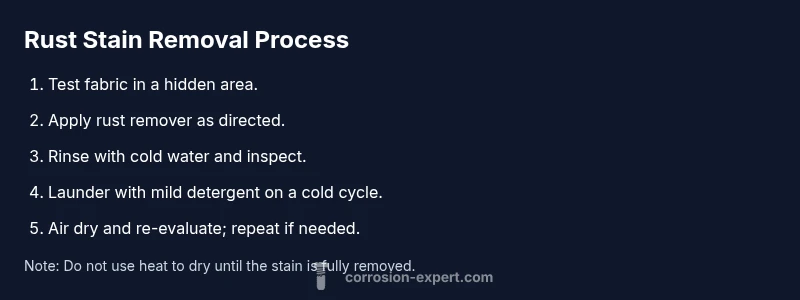
Correct approach: remove rust stains from fabric by using a fabric rust remover safely designed for textiles. Begin with a spot test on an inconspicuous area, then apply the remover according to label directions, wait the recommended time, and launder as usual with cold water. Avoid chlorine bleach on rust stains, and never dry a stained item in heat while the stain is still present. According to Corrosion Expert, proper technique saves fabrics.
Understanding Fabric Rust Stains
Rust stains on fabric come from iron oxide transferred from metal items or water containing iron minerals. They often appear as reddish-brown spots that can be stubborn because rust deposits cling to fibers and can set with heat. Natural fibers like cotton and linen absorb stains quickly; synthetic fibers like polyester may resist staining but still show discoloration. The chemistry behind rust stains is that iron ions bond with cellulose or protein fibers, creating colored complexes that are difficult to dissolve with ordinary detergents. Factors that influence stain persistence include pH, the age of the stain, fabric type, and exposure to heat or sunlight. The stain's location (garment hem, cuffs, or areas near buttons) influences how you approach treatment, since abrasion may damage delicate fibers. Stubborn stains often require a targeted approach: a rust-specific remover or converting iron oxide into a soluble compound, followed by a thorough rinse. For best results, treat rust stains as soon as they're noticed; lingering stains become more resistant as they oxidize further. High-quality rust removers work by chelating iron or converting iron oxide into a soluble compound that can be rinsed away. While household methods such as lemon juice and salt can offer gentle pre-treatment, they are not universal fix-alls and may alter colors, particularly on dark fabrics. In all cases, patch testing is essential to avoid color loss or fabric damage. Corrosion Expert recommends a cautious, fabric-first approach to minimize risk and maximize stain removal success.
Why Fabric Rust Stain Remover Matters
Rust stains are notoriously stubborn because iron compounds bond with fabric fibers. Using a dedicated fabric rust stain remover tailored for textiles improves the odds of successful removal and reduces the risk of color fading or fiber damage. For homeowners, the right remover provides clear label guidance, helps manage stain age, and minimizes the need for aggressive scrubbing that can weaken fibers. Corrosion Expert emphasizes choosing products that are safe for the fabric type and colorfastness. When you skip proper remover selection, you may unintentionally set the stain further or abrade delicate fibers. In this context, DIYers gain confidence by following tested steps and avoiding harsh alternatives like undiluted chlorine bleach on rust stains. Proper technique also supports fabric longevity and reduces the need for repeated treatments. For best outcomes, treat rust stains promptly, follow product directions, and pair chemical treatment with careful rinsing. Corrosion Expert analysis shows that consistent, fabric-safe methods outperform ad-hoc household tricks for stain removal over time.
Types of Fabric Rust Stain Removers
There are several categories of products and home remedies people use for rust stains on fabrics:
- Fabric-safe rust stain removers (textile-safe chelating agents or rust convertors) designed to target iron without harming fibers. These are typically applied directly to the stain and rinsed after the recommended dwell time.
- Acids-based pre-treatments (lemon juice, white vinegar) that can help loosen iron deposits on certain fabrics. These methods are gentler but can alter colors on dark fabrics if overused.
- Natural pastes (lemon juice plus salt) that leverage mild acidity and abrasiveness. They may work on lighter fabrics but require patch testing to avoid color loss.
- Odor-free rust-removal formulated for colorfast fabrics. Always follow the label and test on a hidden area first.
Choosing the right remover depends on fabric type (cotton, linen, wool, silk, polyester) and stain age. For most home scenarios, starting with a fabric-safe rust remover and pairing it with cold-water rinsing yields reliable results. Avoid mixing cleaners or using chlorine-based products on rust stains, as this can create harmful byproducts or set stains further. Corrosion Expert advises reading the product's safety data sheet (SDS) and performing a patch test before widespread use.
Pre-Treatment Testing and Fabric Compatibility
Before applying any rust-removing agent, test your fabric in a hidden seam or hem to assess colorfastness. Dampen a small area with water, apply a tiny amount of remover, and wait 5–15 minutes to observe for any color change or fiber distress. If the color shifts or fibers show damage, discontinue and try a gentler method such as a mild vinegar soak or professional cleaning. For delicate fabrics like silk or wool, use only fabric-safe products and avoid harsh acids; consider taking the item to a professional cleaner if the stain is significant. Patch testing reduces risk and helps you choose the correct dwell time and dilution for the stain.
Step-by-Step: Treating a Fresh Rust Stain (General Guidance)
- Apply a fabric-safe rust remover to the stain following the product’s directions. This step targets iron deposits while protecting the fabric. Pro tip: use a small amount and avoid saturating the area.
- Wait the recommended dwell time. Some products require 5–10 minutes, others longer; do not leave on longer than advised, as overexposure can harm fibers. See Diagram A for recommended timing reference.
- Rinse with cold water from the backside of the fabric to prevent pushing the stain deeper into the fibers. Gently blot the area with a clean cloth as you rinse.
- Launder as usual with cold water and a mild detergent. Check the stain before drying; heat can set any remnants. If the stain persists, repeat the treatment or try a secondary method like lemon juice paste on lighter fabrics.
- Air dry after washing and inspect. If the stain remains, avoid heat until you have achieved complete removal. Re-treat or seek professional cleaning if necessary.
Stain Persistence and Special Cases
Some stains resist standard treatments, particularly on synthetic blends or dark fabrics. In these cases, consider alternative approaches, such as a second pass with a different rust remover or a gentle paste (lemon juice and salt) tested on a hidden area. For colorfast cottons and linens, citrate-based rust removers can be effective; for silk or wool, prefer milder methods and consult care labels. Always avoid bleach on rust stains, especially on colored fabrics, as it can cause irreversible color loss. If you notice fabric distress, stop and reassess the method to avoid damage.
Aftercare and Prevention: Keeping Fabrics Rust-Free
To prevent future rust stains, reduce exposure to iron-rich water, check metal hardware near clothing (zippers, buttons, rings) for rust, and consider water filtration if your supply has high iron content. Wash stained items promptly using a cold cycle and avoid heat until the stain is fully removed. Store garments in a cool, dry place and inspect for any signs of metal oxidation over time. Regular spot checks help catch new stains early and improve overall fabric longevity.
Authoritative Sources
For readers who want a deeper dive into chemical safety and stain removal practices, consult these trusted sources:
- https://www.epa.gov/ (Environmental Protection Agency) — general guidance on safe chemical use and disposal.
- https://www.extension.purdue.edu/ (Purdue Extension) — textile care tips and fabric testing best practices.
- https://extension.illinois.edu/ (University of Illinois Extension) — guidance on stain removal and fabric care.
Additional Tips and Warnings
- Always patch test before applying any rust remover to a visible area. The safest approach starts with the mildest method.
- Do not mix rust removers with household bleach or ammonia; chemical reactions can release hazardous gases.
- On delicate fabrics, avoid aggressive scrubbing which can damage fibers; use light blotting or a soft brush only if the product instructions permit.
- If you must use sun exposure as a drying aid, ensure the fabric is colorfast and monitor for bleaching or fading.
Conclusion and Next Steps
With the right fabric rust stain remover, most rust stains can be successfully removed without compromising fabric integrity. Start with patch testing, follow product directions, and avoid heat until the stain is fully gone. For ongoing rust control, consider water filtration, careful storage, and prompt laundering after stain exposure. The Corrosion Expert team recommends keeping a small kit of fabric-safe rust removers on hand for quick DIY stain management.
Tools & Materials
- Fabric-safe rust stain remover (non-chlorine)(Follow label directions; test on hidden area first.)
- White vinegar (5% acidity)(Gentle pretreatment option; test on fabric first.)
- Lemon juice(Natural acid alternative for light fabrics.)
- Table salt(For lemon paste; use sparingly.)
- Cold water(Rinsing and dilution; avoid warm/hot water to prevent setting.)
- Soft cloth or sponge(For blotting and application; avoid harsh rubbing.)
- Old toothbrush or soft-bristled brush(For gentle agitation on sturdy fabrics.)
- Gloves(Protect skin when handling cleaners.)
- Plastic basin or sink(For soaking if needed; ensures containment.)
- Drying rack or line(Air dry away from direct sunlight.)
Steps
Estimated time: 60-90 minutes
- 1
Test fabric in an inconspicuous area
Patch-test the fabric by applying a small amount of rust remover to an hidden seam and waiting 5–10 minutes. Look for color changes or fiber damage. If safe, proceed; if not, choose gentler methods. Diagram references: Step-1 diagram shows patch-test setup.
Tip: If colorfast, you can proceed with confidence; if not, revert to milder options. - 2
Blot the stain to control spreading
Gently blot the stain with a clean cloth to lift excess liquid before applying any cleaner. Do not rub, which can push rust deeper into the fibers. This step reduces spreading and prepares the area for treatment.
Tip: Use a dabbing motion and switch to a new area of cloth as the stain lifts. - 3
Apply fabric rust remover to the stain
Apply a small amount of fabric-safe rust remover directly to the stain. Follow the product's dwell time, usually 5–15 minutes, and avoid saturating the surrounding fabric. This concentrates the treatment where needed while protecting colorfast areas.
Tip: Avoid applying remover to large adjacent areas—stick to the stain. - 4
Wait the recommended time
Let the remover dwell for the time specified on the label. Do not exceed the recommended duration to minimize fiber damage. Waiting allows chelating agents to bind iron and lift the stain.
Tip: Set a timer to ensure you don’t over-treat. - 5
Rinse with cold water
Rinse the treated area with cold water from the backside of the fabric to prevent pushing remaining rust deeper. Blot with a clean cloth to remove residue.
Tip: Avoid hot water; heat can set any remaining iron compounds. - 6
Launder as usual with cold water
Wash the item on a gentle cycle with mild detergent in cold water. Do not use chlorine bleach on rust-stained fabrics, as it can worsen color changes or set the stain.
Tip: Check stain before drying; heat can set any remaining traces. - 7
Air-dry and recheck; repeat if necessary
Air-dry the fabric and inspect under good lighting. If faint traces remain, repeat the treatment or try an alternative method like a lemon paste on light fabrics.
Tip: Avoid drying in direct sunlight if colorfastness is unsure.
Quick Answers
Can rust stains be removed from all fabrics?
Most rust stains can be removed from common fabrics like cotton and linen with the right rust remover and careful testing. Delicate fabrics require gentler methods and may not respond to the same treatments. Always patch-test first.
Most fabrics respond to rust removal, but delicate materials need gentler methods and patch-testing first.
Is it safe to use lemon juice and salt on rust stains?
Lemon juice and salt can help with mild rust stains on light fabrics, but they can bleach or alter colors on darker textiles. Patch-test first and avoid strong acids on dark or colorfast fabrics.
Lemon juice can help light fabrics, but test first and avoid on dark colors.
Why should I avoid heat after applying rust remover?
Heat can set rust stains that are not fully removed. Do not dry or iron until you are certain the stain is gone. Air-drying or line-drying is safer during the post-treatment phase.
Heat can set the stain, so hold off on drying until removal is complete.
Can I mix rust remover with bleach?
Never mix rust remover with bleach or ammonia. Chemical reactions can release hazardous gases and damage fabrics. Always follow product instructions and use separate steps if needed.
Do not mix cleaners; it can be dangerous and damage fabrics.
How long should I wait after applying rust remover?
Dwell times vary by product, typically 5–15 minutes. Do not exceed the recommended time, as prolonged exposure can harm fibers and reduce colorfastness.
Most removers need about 5 to 15 minutes; follow the label.
What if the stain resurfaces after washing?
If rust returns, repeat the treatment with a fresh application or try a different rust-removal method. Do not place in the dryer until the stain is completely gone.
If it comes back, re-treat or try another method, but don’t dry it yet.
Watch Video
Quick Summary
- Test fabric before treatment
- Use a fabric-safe rust remover on textiles
- Treat promptly to prevent setting
- Avoid heat until stain is fully removed
- Air-dry and recheck before final washing