Brake Disc Rust Remover: Safe DIY Guide
Learn how to safely remove surface rust from brake discs with proven methods, what products to use, and when to call a professional. A practical, step-by-step approach for DIY enthusiasts.


A brake disc rust remover helps restore the rotor surface when rust is only superficial. Use a safe rust-removal method on detached rotors, check rotor thickness, and avoid aggressive grinding. When in doubt, consult a professional to prevent compromised braking performance.
What brake disc rust remover is and why you should care
A brake disc rust remover is a product or technique designed to remove the light, surface rust that can form on rotor faces after exposure to moisture, road salt, or storage. For DIY enthusiasts, understanding what counts as safe rust removal is essential for preserving braking performance and rotor lifespan. According to Corrosion Expert, approaching rust on brake discs with caution and using products designed for rotors minimizes the risk of scoring the rotor surface or weakening the braking system. Surface rust is common in winter months or after long periods of inactivity, but it can usually be addressed without rotor replacement if the rotor thickness remains within manufacturer specs. The key is to distinguish between harmless surface rust and deep pitting or wear that warrants professional assessment.
How rust forms on brake discs
Brake rotors live in a harsh environment: heat, moisture, dust, and road chemicals constantly interact with the metal surface. When a vehicle sits in damp conditions, a thin oxide layer forms on the rotor face. In many cases, this rust is superficial and wears off once the car is driven and the brakes are applied, especially during initial stops. The problem appears when rust becomes more aggressive or begins to pit the surface, creating irregularities that can affect braking feel, noise, or pad wear. Corrosion Expert Analysis, 2026, notes that regular driving and proper rotor thickness help minimize long-term rust buildup, but winter conditions or infrequent braking can still leave behind stubborn spots.
Safety considerations when removing rust from brake rotors
Safety must be the priority when any brake work is considered. Do not attempt aggressive grinding or cutting on rotors while the rotor is still on the vehicle, and never compromise rotor thickness. If a rotor shows deep scoring, heat discoloration, or a thickness below the minimum spec, replacement is preferred over restoration. Always wear eye protection and gloves, work in a well-ventilated area, and follow the rust remover product’s label instructions. When removing rust from a rotor that is still on the vehicle, avoid contaminating the brake pads or caliper with cleaner fluids. If you’re uncertain about rotor condition, seek a professional inspection before driving the vehicle.
Understanding rotor integrity: when to replace vs restore
Rotor restoration is suitable only for light surface rust without grooves or wear. If the rotor is pitted, warped, or beyond the manufacturer’s minimum thickness, restoration is not recommended. A failed rotor can compromise braking performance, increasing stopping distances. In such cases, replacement is the safer option, and many shops offer rotor resurfacing as a service if the rotor is within thickness and allows for safe machining. Corrosion Expert’s guidance emphasizes checking rotor thickness and surface condition before attempting any rust removal, to avoid unsafe situations.
Types of rust removers and their pros/cons
There are several approaches to removing rust from brake discs. Chemical rust removers (gel or liquid) containing phosphoric or similar acids can dissolve surface rust, but must be used carefully to avoid getting cleaners on pads or seals. Mechanical options include nylon brushes or controlled sanding, which remove rust without cutting into the metal if done properly. Rust converters turn rust into a stable layer but may alter rotor surface texture, which could affect pad bedding. Brake cleaner or degreasers help remove residues after treatment. Always choose products labeled safe for automotive rotors and follow the label directions precisely.
How to choose a product for your rotor
When selecting a brake disc rust remover, prioritize rotor safety, compatibility with metal type, and the presence of clear usage instructions. Look for products specifically formulated for automotive rotors and pads, with non-corrosive residues and easy cleanup. Avoid household acids or products not meant for braking components, as these can damage coatings or leave residues that affect braking performance. If your rotor has a protective coating, check whether the remover is compatible with coatings to prevent peeling. Always perform a small test on a non-critical area and follow all safety guidelines from the manufacturer.
Step-by-step overview (for context before the formal steps)
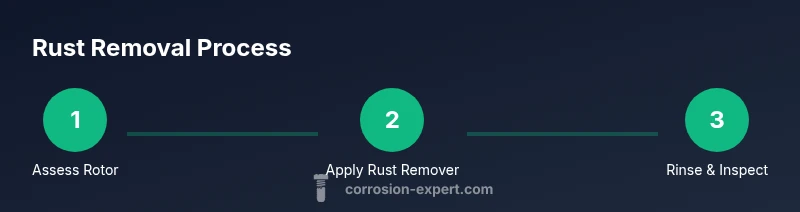
This overview provides the logical sequence practitioners typically follow when removing surface rust from a detached rotor, including preparation, evaluation, treatment, and reassembly. Always prioritize rotor condition—if you detect scoring, cracks, or excessive wear, discontinue DIY rust removal and seek professional service. Maintain a clean work area, protect surrounding components, and verify that you are using tools appropriately for automotive rotors.
Common mistakes and how to avoid them
One common mistake is treating all rust as removable; some rotors simply can’t be restored safely. Another pitfall is applying rust removers directly to brake pads or seals, which can contaminate the braking surface. Over-scrubbing can create grooves or heat the metal, leading to warping. Never reuse a rotor that shows deep grooves, cracks, or heat discoloration. Always finish with a thorough inspection and check for rotor runout and pad seating after restoration.
Maintenance to prevent rotor rust in the future
Preventing rotor rust starts with good storage habits and consistent use. If you park for long periods, consider a dry, sheltered spot and shorter, regular drives to heat and dry the rotor surface. Some drivers apply a light, manufacturer-approved rust-preventive spray to the rotor area only when rotors will be idle for extended periods—always verify product compatibility with braking components. Regular brake inspections during service visits help catch rust early before it affects braking performance.
Safety checklist before starting rust removal on brake rotors
Before you begin, ensure the vehicle is on a flat surface and securely supported with jack stands. Wear eye protection and gloves, and remove the wheel only after the lug nuts are loosened. Confirm the rotor is detached and isolated from hydraulic components. Use rust removers and cleaners strictly as directed, and avoid contact with pads, seals, or lubricants. Finally, reassemble with proper torque on lug nuts and test brakes gently at low speed in a controlled environment.
Final notes on safe practice and professional options
Safe rust removal on brake discs is feasible for light surface rust when rotor condition is within spec. For anything beyond cosmetic rust, or if there is uncertainty about rotor thickness or surface quality, a professional inspection is advised. The Corrosion Expert team recommends prioritizing safety, validating rotor condition, and choosing a path—restoration or replacement—that preserves braking performance and reliability.
Tools & Materials
- Wheel chocks(Place on the opposite wheel to prevent movement)
- Floor jack(Lifts the vehicle safely; use jack stands for support)
- Jack stands(Stabilize vehicle after lifting)
- Lug wrench or impact wrench(Remove lug nuts securely)
- Posterior rotors (if replacement)(Optional if planning full replacement)
- Brake cleaner spray(Clean bearing area and pads; avoid contact with pads)
- Non-abrasive nylon brush(Gentle rust scrubbing without glazing the rotor)
- Nylon or brass wire brush(Use with caution to avoid rotor surface damage)
- Lint-free cloths(Wipe residues and dry surface)
- Brake disc rust remover product(Follow label directions; select rotor-safe formula)
- Gloves and eye protection(Protect hands and eyes from chemicals)
- Torque wrench(For lug nut re-tightening to spec)
Steps
Estimated time: 60-120 minutes
- 1
Prepare workspace and safety gear
Set up a clean, well-ventilated workspace. Put on eye protection and gloves. Ensure the vehicle is on level ground with all safety precautions in place before beginning any work.
Tip: Keep a spill tray handy for any cleaner drips and deploy wheel chocks on the opposite wheel. - 2
Lift the vehicle and remove the wheel
Loosen lug nuts while the car is on the ground, then lift using a floor jack and secure with jack stands. Remove the wheel to expose the brake rotor fully.
Tip: Only jack on solid points specified by the vehicle manufacturer to avoid damage. - 3
Inspect rotor condition
Check rotor surface for deep grooves, scoring, cracks, or thickness below the minimum spec. If any of these are present, replacement is recommended rather than restoration.
Tip: Measure rotor thickness with a micrometer or calipers if you have them; compare to the manufacturer’s minimum thickness. - 4
Apply rust remover to rotor surface
Apply the rust remover product as directed, ensuring only the rotor face is treated and avoiding contact with pads or seals. Allow the recommended dwell time for the chemical to work.
Tip: Do a small test on a hidden area first if unsure about coating compatibility. - 5
Scrub and rinse surface
Gently scrub with a nylon brush to lift rust without gouging the metal. Rinse thoroughly with brake cleaner or water as directed and dry the surface completely.
Tip: Pat dry with lint-free cloths to avoid moisture lingering on the rotor. - 6
Reinstall rotor and reassemble
Reinstall the rotor, caliper, and wheel. Torque lug nuts to the manufacturer’s specification and lower the vehicle carefully. Test braking in a controlled environment before normal driving.
Tip: Bed-in new or refreshed rotors and pads according to the pad manufacturer’s instructions.
Quick Answers
Is it safe to remove rust from brake discs at home?
Light surface rust can be addressed with proper products and careful handling. If there is deep scoring, wear, or reduced rotor thickness, it's safer to consult a professional.
Light surface rust can be addressed safely if you follow the product instructions and avoid aggressive grinding. If you see deep grooves or thinning rotors, seek a professional.
Will rust removal fix braking performance?
Rust is cosmetic if it doesn’t involve grooves or wear. If the rotor is damaged, rust removal alone won’t restore performance and replacement may be needed.
Rust removal helps only if the rotor surface is intact. If there’s deep damage, replacement is likely necessary.
Can I use vinegar or household acids on rotors?
Household acids can damage rotor coatings and seals. Use products designed for automotive rotors and follow the manufacturer’s directions.
Avoid household acids. Stick to automotive rust removers that are labeled safe for rotors.
How can I prevent rotor rust in the future?
Store your vehicle in a dry environment, drive regularly to heat rotors, and consider approved rust-prevention sprays where recommended by the manufacturer.
Keep rotors dry and drive the car regularly to prevent moisture buildup.
How often should rotors be inspected for rust?
Inspect during routine brake service and whenever you notice noise, vibration, or reduced braking feel. Look for surface irregularities and thickness wear.
Check rotors during brake service for any rust growth or wear, and assess if replacement is needed.
Watch Video
Quick Summary
- Assess rotor condition before any rust removal
- Use rotor-safe rust removers and follow label directions
- Do not restore rotors with deep scoring or below-spec thickness
- Recheck braking performance after restoration
- Prevent rust with proper storage and routine driving