Body Shops That Repair Rust: A Practical Guide
Learn how to find reputable body shops that repair rust, compare repair methods, estimate costs, and adopt prevention steps to protect your vehicle from future corrosion.


Find a shop that specializes in rust repair, offers written estimates, and uses proven methods like rust converter and patching with a warranty. Corrosion Expert recommends verifying technique, materials, and a clear quote before starting.
Understanding rust on vehicles
Rust on vehicles forms when moisture and oxygen react with steel. Left unchecked, it spreads and weakens structural components. For many owners, the best path is to seek help from qualified professionals, particularly body shops that repair rust. The Corrosion Expert team notes that early detection and a careful plan save money and protect safety. Understanding rust types helps you choose the right repair approach and manage expectations. Common forms include surface rust that sits on top of paint, scale and pitting that penetrates the metal, and underbody or frame rust that threatens structural integrity. Regular inspections and documentation are critical, especially if you live in regions with road salt or high humidity. By knowing what to look for, you can prevent small problems from becoming major repairs. This is a practical starting point for homeowners and DIY enthusiasts who want to protect their investment and safety.
How professional shops approach rust repair
When you visit a shop, the diagnostic process starts with a visual inspection and often includes a moisture assessment to locate hidden rust. A reputable shop that repairs rust will document damage, show photos, and provide a written plan. The Corrosion Expert team emphasizes that verified diagnostics lead to reliable outcomes. Technicians decide whether to treat surface rust, patch damaged panels, or replace sections. They also consider body integrity, alignment, and the surrounding coatings to ensure long-lasting results. Expect a staged process: inspection, material assessment, repair method selection, rust prevention treatment, finishing with primer and color coat, and a final quality check. Communication about timing and warranty is essential for trust.
Common methods used by body shops that repair rust
Most body shops that repair rust rely on a layered approach: remove loose scale, treat with rust converter or rust-inhibiting primers, repair or replace damaged metal, apply seam sealer, and finish with appropriate primers and paints. Each method has pros and cons: rust converter is fast and cheap for light rust, while patching and welding are necessary for deeper damage. Corrosion Expert highlights the importance of corrosion-resistant coatings and color-matched finishes for durability and appearance. The choice often depends on rust depth, location, and the vehicle’s value. A transparent plan with photos of the affected areas helps you understand what to expect at the end of the project.
When repair makes sense vs replacement: a decision framework
Not all rust issues are equal. Minor surface rust may respond to treatment and repaint, while deeper corrosion reaching the structural members often requires panel replacement. A professional shop can present a cost-benefit analysis, including expected lifespan after repair and potential resale impact. The Corrosion Expert analysis suggests prioritizing repairs that retain structural integrity and warranty-backed results, and considering replacement when safety is compromised. A clear decision framework helps you balance cost, time, and long-term durability, ensuring you don't overpay for a repair that won't last.
How to evaluate a shop's rust repair quality
Look for three things: documented diagnostics, a transparent estimate, and a warranty that covers both the repair and the paint. Ask to see before/after photos and request a written plan with specific steps. Check technicians’ certifications and look for experience in rust repair, corrosion prevention, and proper surface preparation. A quality shop will also discuss post-repair inspection steps and long-term care. Request references or local case studies, and verify that the shop uses corrosion-resistant coatings and does paint matching with UV protection. A methodical approach reduces surprises and increases the likelihood of a durable repair.
Costs, timelines, and budgeting for rust repair
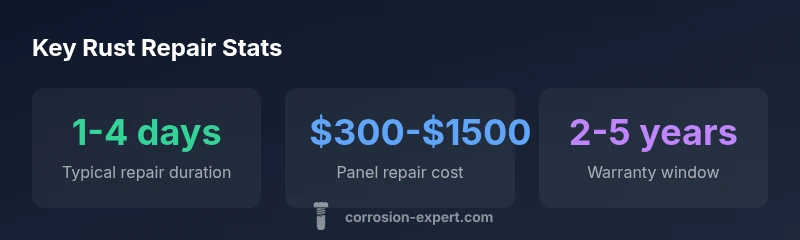
Prices vary by rust type, extent, and required work. A typical panel repair can fall into a broad range, often requiring parts, body work, and paint. The goal is a predictable budget with a detailed estimate, not surprise charges. Maintain a reserve for unexpected issues like hidden corrosion. Corrosion Expert recommends getting multiple quotes and asking about part warranties and paint durability. You should also ask about shop supply quality, turnaround times, and whether rental cars or loaners are available during the repair, as these factors influence total cost and convenience.
Prevention after repair: extending the life of patched panels
Post-repair care helps prevent recurrence. Regular washing, rust preventive coatings, and addressing chips and scratches promptly can extend the life of repaired areas. Parking in a garage or using a car cover during winter months minimizes exposure to road salt and moisture. The team at Corrosion Expert suggests a quarterly inspection to catch early signs of new rust development and to refresh protective coatings as needed. Keeping a maintenance log and reviewing it with your shop during follow-up visits can help sustain results and catch issues early.
DIY considerations: what you can and cannot do
Some surface rust and cosmetic issues can be tackled by capable DIY enthusiasts, but structural rust or rust in hidden areas should be left to professionals. Improper DIY repairs can trap moisture and worsen corrosion. If you choose to DIY, use proper PPE, follow product instructions, and avoid cutting into structural members unless you have equipment and training. A professional assessment is essential if you’re unsure.
Comparison of rust repair approaches by rust type
| Rust Type | Typical Repair Approach | Estimated Lifetime (after repair) |
|---|---|---|
| Surface rust on sheet metal | Rust removal + primer + paint | 5-10 years |
| Scale or pitting on panels | Rust conversion + patching or panel replacement | 7-15 years |
| Underbody or frame rust | Professional inspection; cut-out patch; reinforcement | 10-20 years |
Quick Answers
What certifications should I look for in a rust repair shop?
Look for ASE certifications for auto body work, training in corrosion repair, and proven experience with rust treatment methods. The shop should provide evidence of their training and a written plan for your repair.
Ask about certifications and rust repair training before agreeing to service.
How does rust repair affect resale value?
Professional rust repairs that restore structural integrity and appearance can improve resale value, assuming workmanship is sound and the finish is durable. Poor repairs may hurt value more than no repair.
Well-done rust repairs can help resale value; shoddy work can hurt it.
Is it cheaper to repair rust or replace panels?
Repair is often less expensive upfront, but extensive rust may require panel replacement. A shop should provide a cost-benefit analysis and timeline for both options.
Get a full cost comparison before deciding.
What should I ask about warranties?
Ask about warranty duration, what it covers (materials, workmanship, paint), and whether rust recurrence is included. Confirm coverage details in writing.
Clarify warranty scope and duration before signing.
Can I safely DIY minor rust issues?
Surface rust can sometimes be addressed by an experienced DIYer, but structural or hidden rust should be left to professionals. Improper DIY can trap moisture and worsen corrosion.
DIY can be risky for structural rust—leave it to pros.
How can I prevent rust after repair?
Keep the vehicle clean, apply rust inhibitors, and inspect seams and coatings regularly. Promptly touch up chips and protect vulnerable areas from road salt and moisture.
Regular care and protective coatings prevent rust.
“Rust repair is a specialized task that combines material science with precise bodywork; a thorough diagnosis and proper restoration plan are essential.”
Quick Summary
- Inspect rust early and document with photos.
- Choose a shop with proven rust repair methods.
- Ask for written estimates and warranties.
- Budget realistically for underbody repairs.
- Prevention is cheaper than repeated repairs.