Body Shop Rust Repair: A Complete Step-by-Step Guide for DIYers
Learn to diagnose, repair, and protect rust on auto body panels with a practical, step-by-step approach from Corrosion Expert. This guide covers essential tools, safe techniques, and prevention tips for DIYers.


Goal: Diagnose and repair rust in a vehicle body properly in a shop setting, distinguishing surface rust from structural damage, and restoring strength and finish. You’ll learn to assess scope, choose repair methods, prepare surfaces, patch or weld, apply primer and topcoat, and prevent future rust with proper protection. Follow the steps in this guide for consistent results.
Understanding the scope of body shop rust repair
Rust on a vehicle isn't all the same; there is surface rust that can be sanded away and sealed, and there is material loss where metal has thinned and lost strength. In a body shop rust repair project, the goal is to restore structural integrity, preserve crash performance, and maintain cosmetic finish. Begin by a thorough inspection: photograph the affected areas, wire brush away loose rust to reveal the depth, and measure the extent with a gauge. Decide on repair approach based on access, location, and severity. If rust has perforated the panel or reached critical structural members like frame rails, replacement or professional services may be required. In general, you should differentiate between areas that can be patched with a metal patch and those that need a welded repair. The Corrosion Expert team emphasizes that a methodical plan reduces surprises and cost. This stage also includes determining the temporary seam protection and the sequence of steps to minimize repaint work. The more you understand the rust's pattern—whether it started at a joint, after paint damage, or from road salt—the better you can plan a repair that lasts. When done correctly, body shop rust repair not only restores appearance but also preserves resale value and safety.
Surface rust vs structural rust: how to tell
Surface rust is a thin, flaky oxide that sits on top of the metal. It can often be removed with mechanical abrasion and a rust converter to seal the surface. Structural rust involves deeper corrosion that compromises metal thickness and strength; you may notice pits, flaking, or soft areas under the paint. A careful inspection uses a magnet (to gauge steel thickness in hidden areas), a flashlight, and feel of the metal with a pointed probe. If the metal is significantly weakened, you should plan for a patch or panel replacement rather than a cosmetic fix. For DIYers, distinguishing these types early saves labor and prevents unsafe repairs. Corrosion Expert’s guidelines recommend documenting every damaged region and testing adjacent areas for more subtle rust growth. Remember that cosmetic rust can sometimes mask structural issues, so thorough evaluation is essential before proceeding with any repair.
Preparation and safety considerations
Before you touch any rust, set up a clean, well-ventilated workspace and gather PPE: safety glasses, gloves, a respirator suitable for sanding dust, and protective clothing. Disconnect the vehicle battery if you’ll be near electrical components, and cover nearby components to prevent dust and debris from migrating. Remove trim pieces, loose rust flakes, and any components that could be damaged by dust or sparks. If you will weld, ensure the panel is dry and free of moisture to avoid porosity and weak welds. Ventilation is critical when grinding or welding, so use a shop vacuum or portable ventilation system. Establish a safe workflow to reduce heat buildup and minimize the risk of warping the panel. Corrosion Expert emphasizes that proper safety and surface preparation are the foundations that determine long-term repair success.
Repair workflow: prep, patch, finish
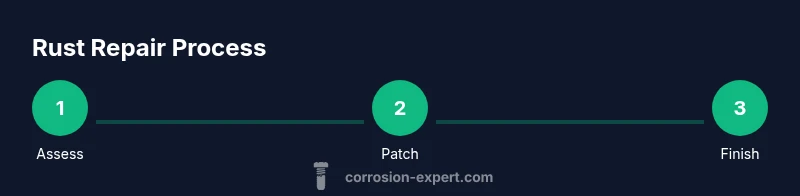
A typical rust repair workflow begins with thorough cleaning, rust removal, and surface profiling. You’ll decide whether to patch with a sheet metal piece or replace the entire panel. After fabricating a patch, you’ll secure it by welding or high-strength fasteners, then treat the bare metal with a rust converter to convert residual corrosion. Once the area is stabilized, you’ll apply a high-build primer, then body filler to smooth slight irregularities. Sanding follows, with progressively finer grits to achieve a surface that accepts paint evenly. Finally, apply a basecoat and clear coat, and cure according to the paint system’s instructions. This sequence minimizes repaint work and helps protect the repaired area from future corrosion. The Corrosion Expert team recommends documenting each step for quality control and future maintenance.
Patching options: patch panel vs full panel replacement
There are several approaches to recover structurally compromised metal. A patch panel, cut to match the opening, is commonly used for localized rust where the surrounding metal is sound. For larger areas, a full panel replacement may be warranted to restore structural integrity and alignment. Welding provides the strongest repair, but it requires skill and proper heat control to avoid warping. Mechanical fasteners or rivets can be a temporary or alternative method when welding is impractical, though they may require additional sealing to prevent water intrusion. In all cases, the patch should be flush with the existing panel, with minimal crowding around corners and joints. When feasible, choose patch materials that match the original metal’s thickness and properties to preserve crash performance. The goal is a seamless repair that remains durable under daily use and exposure to road salt.
Finishing touches: primers, paint, clear coat, and rust inhibitors
After a successful patch, you’ll seal the repair with a corrosion-resistant epoxy primer and a high-build primer to create a stable base. A well-sanded surface ensures paint adhesion and a uniform finish. Apply the color coat in light, even passes, allowing adequate flash times between layers to prevent runs or sags. Finish with a clear coat for UV protection and gloss retention. Some DIYers also apply a rust-inhibiting sealer or wax-based rustproofing to the undersides and any seams that aren’t fully accessible. The finish should blend with the surrounding panels, so color matching and blending techniques are essential. Proper curing time is critical for durability, especially in humid or temperature-variable environments. Corrosion Expert suggests a final inspection and touch-up under lighting that reveals gloss uniformity and edge sealing.
Prevention and maintenance after repair
Prevention starts with a good protective coating and a robust anti-rust strategy. Dry and clean the car after washing and avoid prolonged exposure to road salt or standing moisture. Apply a corrosion inhibitor or wax to hidden areas like rocker panels and wheel wells, and recoat every season as needed. Regular inspection for chips in paint, sealant failures, and moisture buildup around seams helps catch rust early. Consider ceramic or polyurethane coatings for high-traffic areas and top-off any gaps in sealant to minimize water ingress. If you live in regions with heavy salting practices, more frequent inspection and maintenance are warranted. Proactive maintenance is cheaper and less time-consuming than repeated rust repairs and repainting, and it preserves resale value.
When to call a pro and what to expect in a shop
If corrosion is extensive, on load-bearing surfaces, or near critical structural components, professional intervention is wise. A shop can perform precision welds, heat control, frame alignment checks, and panel replacement with factory-like accuracy. Expect a detailed assessment, a written repair plan, and a predicted timeline and cost range. A reputable shop will document the patch method, materials, and test results, and provide aftercare guidance. With complex rust in hidden areas or near sensitive electronics, working with a pro can save time and ensure safety.
Tools & Materials
- Safety gear (gloves, eye protection, respirator)(N95 or higher for dust, chemical-resistant gloves, ANSI-rated goggles)
- Angle grinder with wire cup brush or flap discs(Use 4.5–9 inch discs depending on panel size)
- Sanding blocks or DA sander, assorted grits(Coarse to fine grits (60–400) for body filler and finish)
- Rust converter or encapsulator(Chemical treatment to neutralize residual corrosion)
- Sheet metal patch material (steel or aluminum)(Cut to fit; thickness should match surrounding metal)
- Metal cutting tools (snips, nibbler)(Clean cuts with smooth edges)
- Welding equipment (MIG) and PPE(Only if patch welding is planned; otherwise use rivets or adhesives if permitted)
- Epoxy/urethane primer and high-build primer(Surface preparation is key for adhesion)
- Automotive base coat and clear coat(Color matching may be required for blends)
- Sealant and rust-preventive coatings(Seal seams and vulnerable edges against moisture)
- Masking supplies (tape, paper, foil)(Protect adjacent panels and trim from overspray)
- Degreaser, solvent, and clean cloths(Surface must be free of oil and dust)
- Putty knife and body filler spreader(Smooth application for seamless repairs)
Steps
Estimated time: 4-8 hours
- 1
Inspect and plan
Begin with a thorough assessment of the rust, mapping out the repair strategy. Photograph areas, determine if replacement or patch is required, and identify potential structural concerns. Create a written plan with steps, tools, and a timeline to prevent scope creep.
Tip: Document measurements and take notes on each area to avoid overlooking hidden corrosion. - 2
Set up workspace and safety
Ventilate the area, pull the battery if near electronics, and lay down drop cloths. Wear PPE, disconnect fuel lines if necessary, and prepare a metal-safe area to catch debris. Ensure fire extinguisher is accessible.
Tip: Keep a dedicated waste container and a separate area for grinding dust to minimize contamination. - 3
Remove paint and surface rust
Use a grinder or abrasive discs to remove paint and flaky rust around the affected zone. The goal is a clean, bare metal surface for testing and patching. Keep the heat low to avoid warping and keep the edges crisp.
Tip: Work in small patches to maintain control and prevent heat buildup. - 4
Remove embedded rust and deburr
Continued grinding with finer grits to expose solid metal. Remove loose scale and rust pits to reveal the true depth. Measure the extent of thinning and determine whether patching or replacement is necessary.
Tip: If you see deep pits or thinning, plan for a patch or replacement rather than cosmetic filler. - 5
Fabricate and fit patch
Cut the sheet metal patch to fit the opening with a small overlap. Dry-fit before tacking or welding. Ensure alignment with surrounding panels and maintain consistent thickness.
Tip: Avoid over-stretching the patch; leave a uniform edge around the opening. - 6
Attach patch (welding or fasteners)
Weld the patch with proper heat control or secure with corrosion-resistant rivets/fasteners as a non-welding alternative. Seal edges with seam sealer to prevent moisture intrusion. Allow the patch to cool gradually.
Tip: If welding, practice on scrap metal first to dial in settings and gap control. - 7
Treat, prime, and fill
Apply a rust converter to the surrounding bare metal and re-verify the surface. Then apply epoxy and high-build primer to create a solid base for filler and paint. Smooth with body filler and sand to flatness.
Tip: Apply filler in thin coats, then sand progressively to avoid pinholes. - 8
Finish with paint and protection
Spray base coat in even layers, then clear coat. Blend edges into adjacent panels and cure according to product specs. Finally, apply sealant or rust inhibitor to exposed seams.
Tip: Check for runs and ensure color match by testing a small patch before full application.
Quick Answers
What qualifies as rust for a DIY repair vs. when to call a pro?
If rust has compromised the structural integrity or reached load-bearing areas, or if welding is required near critical components, professional intervention is advised. In all other cases, a careful patch and finish may be feasible for a DIY approach.
If rust affects structure or you need welding near critical parts, get a pro; otherwise, a careful patch and finish can be DIY with proper safety.
Can I repair rust without removing the entire panel?
Localized rust can often be repaired with a patch or cut-out, preserving most of the original panel. Extensive corrosion may require panel replacement for best results.
Localized rust can be patched; extensive rust may require replacing whole panels.
How long does a rust repair last?
Durability depends on the repair quality, climate, and maintenance. A well-executed patch with proper primers and sealants can last many years, while neglect accelerates failure.
A quality patch with proper primers can last for years if well maintained.
Do I need to replace the panel or can I patch it?
Patch panels are suitable for minor to moderate rust; full panel replacement is often better for severe corrosion to restore strength and alignment.
Patch for minor rust; replace the whole panel for severe corrosion.
What maintenance reduces future rust after repair?
Regular wash, especially in winter, wax or rust inhibitors on seams, and periodic inspections help catch early rust and extend repair life.
Keep up with washing, sealing seams, and periodic checks to prevent new rust.
Watch Video
Quick Summary
- Assess damage carefully before starting.
- Choose patching vs replacement based on structural integrity.
- Follow with proper priming and paint to ensure longevity.
- Prevention is cheaper than repeated rust repairs.