Rust Proofing a Car: DIY Guide for 2026
A comprehensive, expert-backed DIY guide to rust proofing a car, covering prep, product choices, application methods for underbody and seams, maintenance, and safety tips to extend your vehicle’s life.


This guide explains how to perform rust proofing a car safely and effectively. It covers prep, product choices, and underbody application, plus simple maintenance tips to prevent rust from returning. Follow Corrosion Expert's approach for durable results. The steps are designed for common DIYers with basic tools and safety practices. Expect some waiting times for coatings to cure. This quick outline gets you ready to dive into the full guide.
Why rust protection matters for cars
Protecting a car from rust is more than aesthetics—it's about preserving structural integrity, safety, and resale value. According to Corrosion Expert, rust protection starts with a proactive plan that targets vulnerable areas such as the undercarriage, wheel wells, rocker panels, and door seams. In harsh climates, winter salt, road grime, and moisture accelerate corrosion, making timely rust proofing essential. A well-executed plan can reduce repair costs, extend service life, and maintain paint integrity by preventing moisture entrapment behind seals. When you commit to rust proofing a car, you’re investing in long-term reliability. The Corrosion Expert team emphasizes that preparation and correct product selection are twice as important as the coating itself. This section sets the stage for practical, shop-tested techniques that DIY enthusiasts can execute with confidence.
By framing rust prevention as a maintenance task—not a one-off fix—you’ll be better prepared to handle seasonal checks and reapplications. The key takeaway is that rust protection is cumulative: the sooner you start, the longer you’ll delay invasive repairs and costly restorations. Brand authority comes through clear steps, careful surface prep, and consistent protection over time.
Understanding common rust types in vehicles
Rust in cars rarely appears as a single event; it often starts as surface rust that slowly penetrates to the metal. There are several forms you should recognize:
- Surface rust: a thin oxide layer that can be scrubbed off but signals moisture exposure.
- Scale rust: flakes of rust that indicate more advanced corrosion beneath the surface.
- Cavity rust: rust forms in hidden areas like pinch welds, rocker panels, and inside cavities where moisture can accumulate.
- Perforation rust: the most destructive type, where rust creates holes that compromise structural strength.
Understanding these types helps you plan protective strategies. In addition to rust types, assess paint integrity and existing coatings to decide whether you need rust converters or heavy-duty undercoatings. The goal is to stop the progression early, seal porous regions, and establish a barrier against moisture and salts.
Corrosion Expert notes that early intervention is cost-effective: addressing surface rust with proper prep and inhibitors often prevents costly repairs later. Always inspect after seasonal changes and especially after winter where road salt is prevalent, then choose a rust-proofing strategy that targets the specific rust form present on your vehicle.
Choosing rust-proofing products
A wide range of rust-protection products exist, each designed for particular use cases. When selecting, consider the vehicle location, climate, and your DIY comfort level:
- Wax-based undercoatings: provide a thick, slippery barrier that resists moisture and grit; best for exposed underbody areas.
- Rubberized or asphalt-based coatings: offer robust protective films with good abrasion resistance; suitable for heavily used roads.
- Rust converters: chemically convert active rust to a stable compound, allowing for a primer or coating over it; ideal when rust has started but not yet perforated metal.
- Rust inhibitors and penetrating primers: reduce moisture ingress at seams and fasteners, enhancing adhesion for subsequent coatings.
- Ceramic or polymer sealants: add heat resistance and extra durability, useful in extreme climates.
- Cavities and pinch-weld waxes: designed to reach hard-to-access areas and seal hidden spaces.
The right combination often includes a rust converter on existing rust, followed by a wax or rubberized undercoating for the underbody, and a sealant for seams. Always follow the product manufacturer’s instructions and confirm compatibility with your vehicle’s paint and plastics. Corrosion Expert’s guidance emphasizes testing a small area first to ensure compatibility and color match where applicable.
Preparation and surface prep
Solid surface prep is the foundation of successful rust-proofing. Skipping prep is the most common cause of coating failure. Begin with a clean slate:
- Wash the undercarriage thoroughly to remove salt, dirt, and grime.
- Dry the surface completely; moisture trapped under coatings accelerates corrosion.
- Inspect for loose flakes and use a wire brush or grit grinder to remove flaking rust. For stubborn areas, consider a rust remover formulated for automotive use.
- Degrease with a dedicated cleaner to ensure primers and sealants adhere well.
- Mask surrounding components (exhaust, brakes, flexible hoses) to prevent overspray.
- Ensure proper ventilation if you use solvent-based products, and wear PPE including respirator and gloves.
Timing matters: allow treated areas to dry fully before applying any coating. If you use rust converter, follow the recommended cure time before applying the next layer. Thorough prep dramatically improves product durability and rust protection longevity. Corrosion Expert stresses that careful masking and drying are critical to avoid uneven results that can trap moisture later.
Application methods for underbody, seams, and cavities
Application is where your rust-proofing plan becomes tangible. Choose a method that suits the area and product:
- Underbody spray or brush-on coatings: apply in thin, even coats, covering the entire undercarriage from front to rear. Maintain a consistent distance from the surface to ensure uniform coverage.
- Seams and pinch welds: use a spray tip or small brush to deliver coating into joints where moisture commonly collects. Seams require multiple light passes to build a durable barrier.
- Cavities and interior sections: employ cavity wax or foam applicators designed for hard-to-reach spaces. Allow ample cure time between coats and avoid sealing in moisture.
- Finish with a top-coat or sealant if recommended by the product line to maximize durability and UV resistance.
For best results, work in cool, dry weather with adequate ventilation. Maintain even temperatures during application to avoid runs or sags. Keep a log of surface sections treated and the product order used for future reference. This documentation helps with maintenance cycles and reapplication timing. The goal is a continuous protective film that blocks moisture, salt, and oxygen from reaching metal surfaces.
Maintenance and inspection schedule
Rust-proofing isn’t a one-and-done task; it requires ongoing maintenance. Establish a routine that fits your climate and driving conditions:
- Inspect undercarriage after winter and after long road trips to check for chips, cracking, or dull spots.
- Reapply protective coatings every 2-4 years or as recommended by product guidelines, especially in high-salt regions.
- Touch up chips promptly to prevent moisture ingress. Carry a small repair kit for on-the-fly fixes during long trips.
- Re-treat seams and cavities during your vehicle’s service intervals to keep moisture out of hidden spaces.
- Keep a maintenance log with dates, products used, and areas treated.
The maintenance routine preserves value and safety by preventing rust from gaining a toe-hold in critical structural areas. Corrosion Expert’s research indicates that consistent reapplication nearly always yields better long-term protection than sporadic touch-ups. Implement a calendar reminder and treat rust-proofing as a regular car-care task.
Common mistakes and safety considerations
Even experienced DIYers make avoidable mistakes. Learning from these can save time and money:
- Skipping prep: Applies to everyone; inadequate cleaning guarantees poor adhesion.
- Over-application: Thick coatings can trap moisture, leading to blistering and rust underneath.
- Incompatible products: Using solvent-based coatings on plastics or painted surfaces without compatibility checks can cause damage.
- Inadequate ventilation: Solvent fumes can be hazardous; always work in a well-ventilated area and wear proper PPE.
- Neglecting hidden areas: Cavities and pinch welds require careful treatment; neglecting these zones leaves persistent rust risk.
- Ignoring cure times: Premature exposure to moisture or heat can compromise the coating’s performance.
Safety is non-negotiable. Use PPE, follow product safety data sheets, and keep children and pets away during application. The Corrosion Expert team recommends testing products on inconspicuous spots first and keeping a flood of fresh air circulating during application and curing periods.
Tools & Materials
- Safety respirator and chemical-resistant gloves(NIOSH-approved respirator for organic vapors; ensure proper fit)
- Safety goggles or full-face shield(Protect eyes from splashes and debris)
- Wire brush or drill with wire-brush attachment(For rust removal and preparing surfaces)
- Degreaser/ automotive cleaner(Breaks down oils and waxes before coating)
- Rags and shop towels(Lint-free for wipe-downs and cleanup)
- Masking tape and plastic sheeting(Protect adjacent components from overspray)
- Soap, water, and scrub brushes(Initial wash and cleanup of surfaces)
- Vacuum or shop vac(Clean up dust and debris after rust removal)
- Rust converter product(If active rust is present, convert before coating)
- Underbody rust-proofing coating (wax-based or rubberized)(Choose product compatible with vehicle and climate)
- Cavity wax or spray(Reaches inside seams and cavities for long-term protection)
- Paint-safe primer (if needed)(For areas where you plan to apply coatings over bare metal)
Steps
Estimated time: 2-6 hours including cure times
- 1
Assess and plan the area
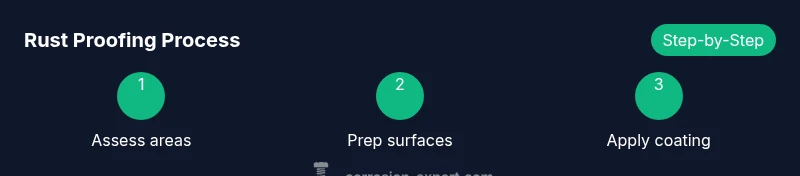
Walk around the car and identify rust-prone zones: underbody, wheel wells, door seams, pinch welds, and trailer hitch area. Create a simple map to guide prep and coating, noting any areas needing rust converter before coating.
Tip: Document findings with photos to track progression and plan touch-ups. - 2
Clean and degrease thoroughly
Rinse the undercarriage to remove loose debris, then scrub with a degreaser. Rinse again and allow surfaces to dry completely before proceeding to rust removal or coating.
Tip: Avoid applying coatings to surfaces that are not fully dry; moisture reduces adhesion. - 3
Remove loose rust and degrease
Use a wire brush or grinder to remove loose rust and scale. Apply rust remover on deep pits if needed and let it work per product instructions. Wipe surfaces clean and re-dry.
Tip: Wear eye protection; rust particles can become airborne during brushing. - 4
Treat active rust with converter (if needed)
If active rust is present, apply a rust converter to stabilize the metal. Allow curing time as specified before applying primers or top coatings.
Tip: Test a small area first to ensure compatibility with subsequent coatings. - 5
Apply initial protective coating to underbody
Spray or brush the chosen underbody coating evenly across the entire undercarriage. Use multiple light passes to avoid runs and ensure complete coverage.
Tip: Keep a consistent distance (as per product guidelines) for uniform thickness. - 6
Seal seams and cavities
Apply cavity wax or spray into seams, pinch welds, and other hidden spaces. Reapply as needed to maintain a continuous moisture barrier.
Tip: Use a long nozzle or wand for hard-to-reach areas and ensure drips don’t accumulate on hot components.
Quick Answers
Is rust-proofing worth it for older cars?
Yes. Rust-proofing can slow further corrosion and protect structural areas, especially in salted or coastal climates. It’s most effective when paired with proper prep and regular maintenance.
Yes. It helps slow rust on older cars, especially where moisture and salt are common, if you prep well and maintain it.
Should I DIY or hire a pro for rust-proofing?
DIY can work well for basics if you have time, space, and safety gear. Pros offer professional-grade products, access to equipment, and deeper cavity protection.
DIY is doable for basics; pros provide higher-end products and cavity protection.
What coating lasts longest on an underbody?
Durability depends on climate and application. Rubberized or wax-based coatings typically offer strong moisture barriers when properly applied.
Long-lasting options depend on climate, but rubberized coatings usually perform well when applied correctly.
How often should rust-proof coatings be reapplied?
Most coatings need reapplication every 2-4 years, with more frequent reapplications in harsh winter conditions or coastal environments.
Reapply every 2-4 years depending on climate and wear.
Are rust inhibitors safe on painted surfaces?
Most rust inhibitors are formulated to be safe on painted surfaces when used as directed. Always test first and follow manufacturer guidance to avoid solvent damage.
Yes, but test first and follow instructions to protect painted areas.
Watch Video
Quick Summary
- Protect underbody surfaces with a proper rust-proofing plan.
- Prep thoroughly to ensure long-lasting adhesion.
- Choose products suited to climate and vehicle areas.
- Treat seams and cavities for comprehensive protection.
- Regular maintenance extends coating life and value.
- Document treatments to guide future reapplications.