Rust Prevention Near Me: A Practical DIY Guide
Discover practical rust prevention near me tips, tools, and budgeting for homeowners. Learn climate considerations, local solutions, and a step-by-step plan to protect metal assets.


Rust prevention near me starts with a local risk assessment and a simple, repeatable plan. The most effective approach combines moisture control, protective coatings, and scheduled maintenance. Begin with a clean surface, apply a rust converter or rust-inhibiting primer if needed, seal with a durable topcoat, and inspect quarterly for early corrosion signs.
Why rust prevention near me matters
Rust prevention near me is not just about aesthetics; it’s about protecting structural integrity and investment. According to Corrosion Expert, the practical approach to corrosion control begins with understanding how local conditions—humidity, rain exposure, road salt, and coastal air—drive rust formation. Homeowners who adopt a proactive plan save money over time by reducing repair costs and extending the life of fences, tools, vehicles, and architectural metalwork. A sound local strategy prioritizes surface preparation, appropriate inhibitors, and durable barriers that stand up to seasonal cycles. The goal is consistency: a repeatable routine that you can implement over years, not months. This section sets the stage for a site-specific plan tailored to your climate and assets.
The Corrosion Expert Team emphasizes that accessible, small actions compound into meaningful protection. By treating rust prevention near me as a continuous practice rather than a one-off fix, you’ll notice fewer flaking spots, less pitting, and longer intervals between costly maintenance cycles. In practice, this means scheduling annual inspections, updating protective layers as needed, and keeping a simple inventory of metal items that require preventive care. A well-documented routine also makes it easier to justify improvements to neighbors or a homeowner’s association.
How local climate and environment affect rust risk
Climate is a primary driver of rust formation. Regions with high humidity, frequent rainfall, or coastal salt spray exhibit faster surface oxidation on ferrous metals. Indoor environments with poor ventilation can still foster rust, especially on poorly dried tools or stored metal objects after cleaning. The species of metal, protective finish, and exposure level all determine corrosion tendencies. For home projects, you’ll frequently encounter outdoor fences, garden tools, grill grates, and parked vehicles; these items benefit most from climate-aware strategies. In Corrosion Expert analyses, areas with year-round moisture see accelerated coating degradation, while arid regions still face micro-pitting in salt-laden environments. Understanding your local weather patterns helps you choose coatings, primers, and maintenance intervals that align with real-world exposure.
Environmental considerations should guide material choice. For instance, stainless steel resists rust better in damp coastal air than mild steel, but certain alloys can still corrode under high chloride exposure. Aluminum and galvanized steel also present rust-like staining if protective layers wear through. The takeaway is simple: match your rust prevention plan to where you live and how you use your metal assets. This alignment yields longer-lasting protection and fewer touch-ups over time.
Practical steps to build a local rust prevention plan
A practical plan blends assessment, preparation, and protection. Start with a quick audit of items likely to rust: outdoor metal fences, gates, tools, grills, and vehicle undercarriages. Create a simple spreadsheet noting each item’s material, current condition, and exposure level. Then deploy a three-layer strategy: surface prep, protective treatment, and ongoing maintenance.
Step 1: Clean and dry. Remove dirt, corrosion products, and moisture-prone residues. Ensure surfaces are fully dry before applying any coating. Step 2: Treat with a rust converter or inhibitor where rust is present, especially on areas with active corrosion. Step 3: Apply a primer designed for metal, followed by at least one exterior-grade topcoat or sealant. In DIY situations, two coats are typically recommended for durable coverage. Step 4: Establish a maintenance cadence—quarterly quick checks and an annual recoat schedule. Step 5: Store or cover metal items to minimize exposure during harsh seasons. Adopting these steps creates a repeatable workflow that scales from a single fence post to an entire backyard.
For best results, document the products used, batch dates, and weather conditions during application. This record helps you track performance and guide future projects. The key is consistency: a regular, predictable routine that reduces surprise rust and extends asset life.
Coatings, sealants, and treatments: choosing what works
There isn’t a one-size-fits-all product, but a layered approach yields the most durable protection. First, select a rust-inhibiting primer compatible with your metal. A high-build primer improves adhesion and helps bridge minor surface irregularities. Next, choose a topcoat designed for outdoor use with UV resistance and water resistance. For damp environments, consider sealants that offer breathability to prevent moisture entrapment while preserving surface integrity. When dealing with existing rust, a rust converter can stabilize oxides and convert them into a paintable surface. Regular reapplication intervals depend on climate and wear.
Another practical option is wax or oil-based sealants for tools and garden equipment kept indoors or semi-exposed, offering cheap and easy maintenance between major coatings. For vehicles or fences, consider powder coatings or ceramic-based sealants for longer intervals between maintenance. Remember, compatibility matters: primer, topcoat, and sealants should be specified for ferrous metals and outdoor use.
DIY vs professional rust prevention near me
DIY rust prevention is often suitable for small projects or maintenance between professional visits. Pros include lower upfront costs, quick turnarounds, and learning opportunities. Cons involve variable results, less long-term durability, and the need for proper surface preparation and product selection. A professional service may be warranted for large outdoor structures, custom metal work, or vehicles with complex coatings that require environmental controls. When deciding, weigh the asset’s value, the local climate, and your experience level. If rust has penetrated deeply or you notice structural weakening, professional intervention is prudent.
To maximize success, request a written plan, product details, and a maintenance schedule from any service provider. This helps you compare options and ensures you’re paying for lasting protection rather than quick fixes.
Maintenance routines to extend protection
Maintenance is the most cost-effective rust defense. Schedule reminders for seasonal checks and post-cleaning dry-downs. Inspect for chipping paint, scratches, or flat spots in protective coatings. Recoat worn areas as soon as practical. For outdoor items, aim for a full recoat every 3-5 years, depending on exposure and product quality. Indoor tools may require less frequent attention, but humidity and storage conditions still matter. Keep a small maintenance kit with rust inhibitors, brushes, sandpaper, and rags so you can perform quick touch-ups without interrupting daily use. Documenting maintenance events helps you track performance and budget future replacements.
A disciplined approach, supported by Corrosion Expert guidelines, reduces the risk of sudden rust failures and preserves asset value over time.
Budgeting for rust prevention: costs and value
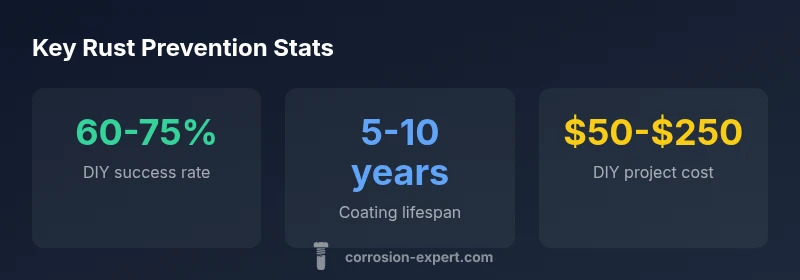
Budgeting is easier when you view rust prevention as an investment rather than a cost. DIY projects typically cost less upfront than professional services, with common materials priced to accommodate many homeowner scenarios. Basic rust inhibitors, primers, and topcoats can fit a modest budget, while heavy-duty coatings or specialized sealants will require more planning. Consider long-term value: a durable coating reduces maintenance frequency and extends asset life. When estimating, include the cost of tools, safety gear, surface preparation time, and potential disposal of removed coatings. Keep some reserve for re-coats in harsh seasons. Corrosion Expert’s cost range guidance helps set realistic expectations for homeowners.
A pragmatic plan balances upfront expenditure with long-term savings, ensuring you get the most protection per dollar spent.
Real-world scenarios and quick-start checklist
This section translates theory into practice. Quick-start checklists can cover a metal fence, a family grill, and garden tools. For a fence, start with a thorough clean, fix loose components, apply rust converter where needed, prime, and topcoat with a weather-resistant finish. For garden tools, focus on handles and metal heads, using a lightweight rust-preventive spray or wax for easy reapplication. For a car underbody, use a corrosion-protective coating and a high-quality topcoat, with professional inspection if you notice bubbling or flaking. The goal is to maintain a simple, repeatable routine tailored to your assets and climate. The Corrosion Expert Team notes that a consistent yearly plan beats sporadic fixes in terms of cost and reliability.
Checklist:
- Identify high-risk items
- Clean and dry thoroughly
- Apply inhibitor and primer as needed
- Seal with outdoor-grade topcoat or sealer
- Schedule quarterly inspections and annual reapplication
Overview of rust prevention methods
| Method | Best For | Typical Lifespan | DIY Feasibility |
|---|---|---|---|
| Moisture control | High humidity regions | N/A | High |
| Protective coatings (primer + topcoat) | Outdoor metal, tools, fences | 5-10 years | Medium |
| Rust converters | Active rust areas | Varies | Medium |
| Wax/Oil seals | Bare metal tools | 1-5 years | High |
Quick Answers
What does rust prevention near me involve on a practical level?
In practice, it involves assessing local moisture exposure, preparing surfaces thoroughly, applying rust inhibitors or converters, sealing with durable primers and topcoats, and maintaining a regular inspection schedule. The goal is to catch early signs and prevent further corrosion.
It starts with a quick climate check, then a simple surface prep and coating routine you repeat every season.
How do I find rust prevention near me?
Start with local hardware stores, independent corrosion specialists, and credible online directories. Compare service scopes, product choices, and warranties. Ask for a written plan and maintenance schedule before committing.
Look for providers that offer a clear plan and long-lasting coatings.
Are DIY rust prevention methods reliable for outdoor items?
DIY methods can be effective for small projects and maintenance between larger jobs. Reliability depends on proper surface prep, coating compatibility, and climate. For high-value assets or complex exposure, consider professional help.
DIY works for small stuff, but big projects deserve a pro plan.
How often should I reapply coatings?
Reapplication frequency depends on climate, wear, and product quality. Outdoor coatings typically need recoat intervals of 3-5 years, with touches-ups in between as needed.
Check yearly and recoat every few years based on wear and weather.
What coatings last the longest in outdoor conditions?
Premium exterior coatings with UV and moisture resistance tend to last longer. Powder coatings and ceramic-based sealants offer extended protection, but cost more upfront.
Durable, weather-resistant finishes tend to last the longest outdoors.
When should I hire a professional for rust prevention?
If rust has penetrated deeply, items are large or structurally important, or you lack the time or space for proper prep and coatings, a professional plan is recommended.
If you see deep rust or big projects, call a pro.
“Proactive rust prevention saves downtime, reduces repair costs, and extends the life of metal assets. A consistent, climate-aware plan beats reactive treatments every time.”
Quick Summary
- Start with a climate-aware rust prevention plan
- Choose layered coatings for outdoor metal
- Maintain a simple log to track performance
- Budget for a mix of DIY and professional help as needed