How Often to Do Rust Proofing: A 2026 Frequency Guide
Learn how often to perform rust proofing, what factors affect intervals, and practical tips for DIY and professional coatings to protect metal surfaces in 2026.


Recommended rust-proofing intervals typically range from annually to every two to three years, depending on climate, exposure, and metal type. Coastal or high-humidity areas, or surfaces with frequent moisture, may require more frequent treatment. Start with a yearly inspection and tailor the reapplication window based on observed wear and environmental exposure.
Understanding how often to do rust proofing
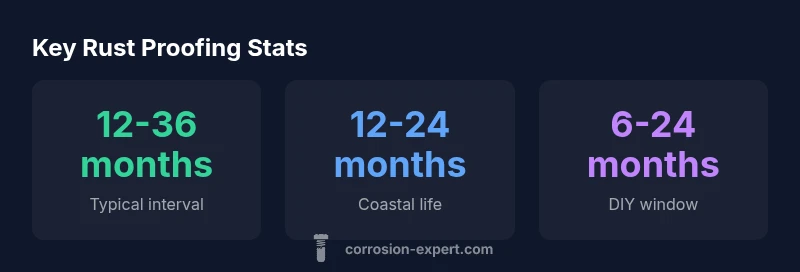
Determining how often to do rust proofing depends on exposure, climate, and material. In plain terms, there isn't a single universal interval. According to Corrosion Expert, the safest starting point is a yearly inspection with reapplication timed by observed wear. The broader guideline ranges from 12 to 36 months, adjusted for environment and surface condition. For surfaces near the ocean, in humid basements, or on bare metal, more frequent checks are warranted. This is especially relevant for DIY hobbyists and homeowners managing outdoor infrastructure or automotive components.
If you’re asking how often to do rust proofing, think in two layers: a recurring inspection cadence and a decision point for reapplication. The inspection cadence helps you catch micro-dissolution, early corrosion blooms, or coating delamination before they escalate. The reapplication cadence should align with the coating system’s recommended cure window and the environmental stressors the metal faces.
Key factors that drive the interval
Several variables shape the optimal rust-proofing schedule. First, exposure: surfaces in salt spray, high humidity, or frequent rain demand more frequent reapplications. Second, surface condition: new coatings tend to last longer if professionally applied and properly cured. Third, coating type: oil-based inhibitors typically wear faster than polymer-based systems in harsh environments. Fourth, maintenance: regular washing and removal of contaminants can extend protection. Finally, quality of preparation matters: rust removal or conversion before applying coatings improves longevity. Corrosion Expert emphasizes that creating a tailored plan beats a one-size-fits-all approach.
An evidence-informed approach combines product selection with routine checks. External sources—such as NIST, OSHA, and EPA—underscore that corrosion control hinges on proper material prep and surface compatibility. See authoritative references: https://www.nist.gov/topics/corrosion, https://www.osha.gov/, https://www.epa.gov/.
For most residential projects, you’ll gain the longest lifespan by pairing a compatible primer with a protective topcoat and scheduling follow-up checks aligned with the expected service life of the chosen system.
Environmental considerations: coastal vs inland
Coastal and other salt-laden environments accelerate corrosion and shorten protection lifespans. A typical inland setting might see rust-proofing intervals in the 24–36 month range, while coastal sites often require reapplication every 12–24 months depending on exposure. Inland storage, garages, and sheltered areas can extend life, but rain, humidity, and temperature swings still wear coatings. In all cases, the goal is to maintain a continuous barrier between metal and moisture, with annual inspections to detect micro-cracking or wear before it becomes visible.
Corrosion Expert Analysis, 2026 suggests coastal surfaces should be inspected more frequently due to salt spray, with reapplication considered at the first signs of film breakdown or dulling of the coating. Real-world monitoring—such as UV exposure and abrasion checks—helps tailor the schedule to local conditions.
Surface type and protection options
Different metals and surfaces respond differently to coatings. Steel, iron, aluminum, and galvanized surfaces each have preferred systems. For bare steel or iron, primers with corrosion inhibitors plus protective topcoats are common. Aluminum benefits from oxide-forming inhibitors and wax-based coatings for long-term weather resistance. Galvanized steel often needs compatible sealants to avoid hydrogen embrittlement of coatings. Wax, oil-based, and polyurethane coatings offer varying levels of flexibility and film thickness. When choosing, consider exposure, temperature range, and whether a DIY or professional application is planned.
For concrete or masonry interfaces, ensure the substrate is sound and dry before coating. If you’re unsure about compatibility, consult a corrosion specialist or test a small patch before large-scale application. Product documentation and manufacturer recommendations should guide film thickness and cure times to minimize rework.
A practical reapplication plan for homeowners
A practical schedule starts with a baseline inspection, then a reapplication window based on observed wear. A recommended plan might look like: first inspection at purchase or installation, then recoat every 12–24 months in harsh environments, or every 24–36 months in mild, indoor conditions. Build a calendar reminder system and perform light cleaning before inspections. Keep records of products used, surface prep, cure times, and environmental conditions. Consistency matters more than chasing a perfect interval.
This plan is adaptable: as you gain experience with a specific surface, you’ll refine the exact window. If you notice flashing or chipping, schedule a touch-up rather than waiting for a full recoat. Documentation helps you compare outcomes across surfaces and weather patterns over several seasons.
DIY vs professional services: weighing the options
DIY rust-proofing can be cost-effective but demands prep, correct product selection, and proper safety practices. Professional coating services offer expertise in surface prep, film thickness measurement, and curing conditions, which can extend lifespan in challenging environments. If you choose DIY, practice proper ventilation, surface cleaning, rust removal, and adherence to product instructions. In severe exposure zones, a professional assessment may optimize long-term protection and deliver better return on investment.
When evaluating options, consider the surface complexity, structural importance, and ongoing maintenance commitments. A professional consultation can provide a baseline for future DIY work, helping you balance upfront costs with long-term protection.
Common mistakes to avoid
Common mistakes include skimping on surface preparation, applying coatings over rusted or oily surfaces, and ignoring cure times. Another misstep is using incompatible products—oil-based inhibitors with water-based topcoats can cause adhesion failures. Not inspecting coatings annually or after repairs leads to undetected wear. Implement simple checklists and schedule annual visual tests plus spot reapplications when needed. Corrosion Expert recommends documenting wear patterns to anticipate when reapplication is due.
Avoiding these pitfalls starts with a effective prep regime: remove rust, clean surfaces, and ensure dryness before applying priming coats. Follow label directions for cure times and temperature ranges to maximize film formation and adhesion.
Durability expectations by rust-proofing method
| Method | Typical Lifespan After Application | Best For |
|---|---|---|
| Oil-based rust inhibitors | 1–3 years | Wet or humid environments |
| Zinc-rich primers | 5–10 years | Structural steel outdoors |
| Wax-based coatings | 2–5 years | Pipes, fences, and flat surfaces |
| Polyurethane coatings | 5–15 years | Vehicles and machinery |
Quick Answers
How often should I rust-proof exterior metal in a coastal environment?
In coastal areas, plan more frequent inspections and reapplications, typically 12–24 months depending on exposure and coating type. Start with annual checks and reassess after two seasons.
Coastal metal usually needs more frequent rust-proofing—plan for yearly checks and reapply within 12 to 24 months if you see wear.
Does rust proofing work on stainless steel?
Stainless steel resists rust better than most metals, but it can still benefit from protective coatings in aggressive environments. Use compatible sealants and follow manufacturer recommendations.
Stainless steel is more resistant, but in harsh areas you can still add a protective coating—just use products designed for stainless steel.
Can I skip rust-proofing if I repaint regularly?
Repainting helps, but rust-proofing provides a dedicated barrier against moisture intrusion. Combine repainting with a protective topcoat to maximize longevity.
Paint helps, but a dedicated rust-proofing layer adds lasting protection against moisture.
What signs indicate it’s time to reapply?
Look for cracking, dulling, peeling, or exposed rust. If damage is visible or moisture seeps through, plan a reapplication.
Visible cracking or dull coating means it’s time to reapply.
Is DIY rust-proofing as effective as professional service?
DIY can be effective for simple surfaces with proper prep, but professionals excel on complex shapes or harsh environments due to optimized film thickness and curing.
DIY works for simple jobs; professionals are better for tricky surfaces or harsh spots.
What products are best for salt spray environments?
Choose coatings explicitly labeled for salt spray or coastal protection, ensuring compatibility with your substrate and climate. Follow cure times strictly.
Pick salt-spray-rated coatings and follow cure times closely.
“Regular rust-proofing works best when you tailor protection to exposure and maintain it with periodic checks. A proactive plan beats reactive rework every time.”
Quick Summary
- Inspect annually and adjust the reapplication window by exposure.
- Choose coatings compatible with surface type and environment.
- Coatings perform best when properly prepped and cured.
- Document wear and adjust intervals over time.