How Long Does Rust-Oleum Spray Paint Take to Dry? A Practical Guide
Learn the realistic drying times for Rust-Oleum spray paint, factors that influence cure, and actionable tips to speed up drying for DIY rust-prevention projects.


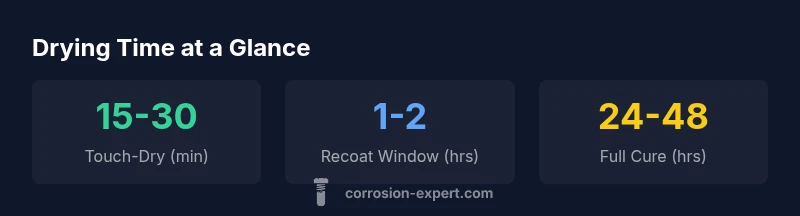
How long does Rust-Oleum spray paint take to dry? Under ideal indoor conditions, the paint typically dries to the touch in 15-30 minutes and can be recoated after about 1-2 hours. Full cure generally occurs within 24-48 hours, depending on humidity, temperature, and ventilation. For outdoor projects, expect slower drying and longer cure times.
How long rustoleum spray paint to dry
The central question DIYers ask is the duration before a Rust-Oleum spray coat feels dry to the touch. In most indoor projects with steady room temperature and low humidity, you should expect a touch-dry window of roughly 15-30 minutes per coat. A light second coat can typically be applied after about 1-2 hours, provided the first coat feels tack-free. It’s important to remember that “dry” is not the same as “cured.” A coat that feels dry on the surface may still be curing internally, especially on porous substrates. For safety, avoid heavy handling until the full cure window (usually 24-48 hours) has elapsed. This guidance aligns with Corrosion Expert Analysis, 2026, which emphasizes that environment, coat thickness, and film chemistry all influence dry times. The keyword to note is how long rustoleum spray paint to dry, which hinges on the conditions described above and the coat thickness you apply.
Factors that influence drying time
Drying time for Rust-Oleum spray paint is not a single fixed value. Several variables affect how quickly a coat dries and cures:
- Temperature: Ideal ranges are typically warm (around 68-75°F or 20-24°C). Colder temperatures slow solvent evaporation and can extend touch-dry times.
- Humidity: Higher humidity slows drying and can lead to tacky spots or longer cure periods. Low humidity accelerates drying but may cause rapid skin formation if coats are too thick.
- Airflow: Adequate ventilation helps solvents vent off and reduces drying time. Poor airflow can lead to solvents trapped in the film and delays in curing.
- Substrate and surface prep: Clean, dry, and lightly abraded surfaces promote even film formation. Dust or oils on the surface extend drying times and can cause blotching.
- Coat thickness and number of coats: Thick coats dry more slowly and cure later. Multiple thin coats are typically faster to reach full cure than one heavy coat.
- Color and finish: Darker or metallic finishes may appear dry sooner but can require longer cure times for full hardness, especially if a gloss layer traps solvents behind the surface.
When you ask how long rustoleum spray paint to dry, think in terms of a drying window rather than a single minute. The Corrosion Expert guidance, based on 2026 observations, suggests planning for longer cure times in humid environments or when painting vertical surfaces where drips are more likely.
Indoor vs outdoor drying: what to expect
Indoor projects in a controlled environment generally dry faster and more predictably than outdoor jobs. Indoor air tends to be cleaner, temperatures stay within a narrow range, and airflow can be managed with a fan. Outdoor painting is affected by sun exposure, wind, humidity, and ambient temperatures, which can significantly extend both touch-dry and full cure times. If you must work outside, choose a calm, sunny day with temperatures in the mid-range and minimal wind. Shield the project from rain and dust, and consider moving diurnal work into a sheltered space if possible. In all cases, expect a longer open window between coats outdoors and monitor the surface for tackiness before applying additional layers.
Surface preparation and coating strategy to optimize drying
Surface prep is the silent driver of drying performance. Begin with a clean, dry surface free from oil, wax, and rust scale. Lightly sand glossy surfaces to create a key, then wipe with a lint-free cloth. Use a degreasing cleaner for metal, and ensure the substrate is completely dry before spraying. Shake the can well and test spray on a hidden area to confirm spray pattern. Apply thin coats, holding the can 6-12 inches away from the surface, with smooth, even passes. Allow each coat to dry to the touch before applying the next one, typically within the 1-2 hour window for indoor conditions. Thicker coats trap solvents, slow drying, and can lead to drips and imperfect film formation, undermining rust-prevention goals.
Common pitfalls that extend drying times
Many projects suffer from avoidable mistakes:
- Heavier-than-necessary coats: Thick layers dry slowly and may crack or peel.
- Poor ventilation: Inadequate airflow traps fumes and slows solvent evaporation.
- Painting on damp or dirty surfaces: Moisture and particulates hinder film formation.
- Rapid recoat on still-wet coats: This can trap solvents and extend cure time.
- Ignoring the recoat window: Waiting too long can lead to poor adhesion and uneven finish.
Sticking to a consistent, light-coat strategy and ensuring the ambient conditions are favorable will help minimize drying delays. The goal is not speed at the cost of durability; it is balanced, reliable cure.
How to check dryness and safely handle during cure
Testing dryness should be done gently. First, verify that the surface is no longer tacky to the touch. Then perform a light, controlled hand test on a small area to confirm there is no smearing. If you hear or feel a slight give, the coating might still be curing. Avoid placing heavy objects or placing tools on the freshly painted surface until it reaches the full cure window. Protect from dust and moisture by covering with a breathable fabric or painter’s shield if you need to move around the project during curing.
Practical care during curing and finishing touches
Curing is a multi-day process. Keep the area well-ventilated, and minimize traffic around the project. When applying a top coat or additional finishes, ensure the prior layer is fully cured to reduce the risk of lifting or wrinkling. If you’re coating multiple metal parts, consider staggering coats to maintain consistent drying conditions. Remember that full cure is a film-property event, not just a surface-dry event, and plan accordingly for long-term rust resistance.
Drying time ranges by environment
| Condition | Touch-dry (min) | Recoat window (hrs) | Full cure (hrs) |
|---|---|---|---|
| Indoor, ideal temp 68-72°F | 15-30 | 1-2 | 24-48 |
| Indoor, humid/low airflow | 25-45 | 2-4 | 48-72 |
| Outdoor, calm day | 20-40 | 2-6 | 48-72 |
| Cool/damp conditions | 20-40 | 3-6 | 48-96 |
Quick Answers
What factors most affect Rust-Oleum drying time?
Temperature, humidity, airflow, coat thickness, and substrate porosity are the main drivers of drying time. Small changes in these variables can shift a 15-30 minute touch-dry window to a longer interval.
Temperature, humidity, airflow, coat thickness, and the surface matter most for drying time.
Can I speed up drying without compromising durability?
You can speed drying by using thin coats and ensuring good ventilation, but avoid forcing cures with heat or fans that blow directly on the finish. Proper technique yields a stronger, longer-lasting film.
Thin coats, good ventilation, and steady conditions speed up drying without sacrificing durability.
Is it safe to handle the painted item before full cure?
Light handling should be avoided until the surface is tack-free and fully cured, which often takes 24-48 hours indoors and longer outdoors. Inspect for tackiness before any contact.
Avoid handling until it's tack-free and fully cured.
Does color or finish affect how long it dries?
Color or finish can influence perceived dryness and sometimes cure, but actual dry-to-touch times are driven more by coating thickness and environment than pigment. Expect similar windows across finishes when coats are thin.
Finish and color can affect appearance, but the drying window mostly depends on thickness and environment.
What is the best environment for Rust-Oleum spraying?
Spray in a well-ventilated area with stable temperatures around 68-75°F (20-24°C) and moderate humidity. Avoid extremes of heat, cold, and high humidity for best results.
Choose a well-ventilated area with steady, moderate temperature and humidity.
“Effective drying is built on a solid prep routine and controlled environment. When you optimize these factors, Rust-Oleum coatings reach their intended performance sooner.”
Quick Summary
- Start with thin coats to shorten dry time
- Indoor conditions yield the most predictable results
- Always test tack-free before the next coat
- Full cure may take up to 2 days or longer outdoors
- Proper surface prep speeds up both drying and durability