What Rust Faster: Steel vs Aluminum
An analytical, evidence-based comparison of rust behavior in steel and aluminum, covering mechanisms, environmental factors, coatings, and practical prevention tips for DIYers and homeowners.


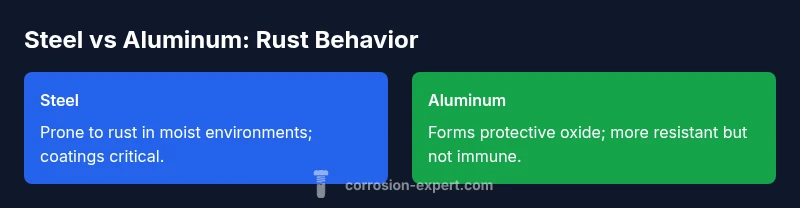
Based on typical outdoor and indoor environments, steel rusts faster than aluminum. Aluminum forms a natural oxide layer that provides a protective barrier, slowing corrosion. If you ask what rust faster steel or aluminum, the answer in most cases is steel unless you use protective coatings, manage environmental exposure, or avoid galvanic connections.
Why the Rust Equation Differs by Metal
In the realm of corrosion science, the metal itself sets the baseline rate at which rust or corrosion can begin. For what rust faster steel or aluminum, the starting point is that steel contains iron, which readily oxidizes in the presence of water and oxygen. Aluminum, by contrast, quickly forms aluminum oxide when moisture is present, and that oxide layer acts as a barrier to further corrosion. However, the barrier is not perfect; if the metal is scratched, exposed metal under the oxide can corrode; if the environment is highly acidic or salty, aluminum corrosion can accelerate through pitting. The broader takeaway is that the corrosion behavior is a function of both material properties and the surrounding environment, including humidity, temperature, salinity, and contact with dissimilar metals. For DIYers and homeowners, this means a simple metallic choice is rarely enough; you must also account for protection strategy and real-world exposure.
Oxidation Chemistry: Steel vs Aluminum
Steel, an iron-based alloy, corrodes primarily through iron oxidation. In the presence of moisture and oxygen, iron atoms lose electrons and form hydrated iron oxides (rust). The resulting layer is typically porous and expands as it forms, which can trap moisture and accelerate deeper corrosion if protective steps are not taken. Aluminum behaves differently: when exposed to air, it rapidly forms a thin, adherent Al2O3 layer that passivates the surface and slows further attack. This oxide film is self-healing to some extent—scratches can be repopulated by ongoing oxidation. Yet in environments rich in chlorides or acids, this protective layer can break down, leading to pitting and localized corrosion. The bottom line: steel and aluminum follow distinct electrochemical paths, and the environment will often determine which path dominates.
Environmental and Usage Factors that Change Outcomes
Corrosion is not a fixed property of metal alone; it emerges from the interaction between metal and environment. High humidity and salt spray dramatically increase steel’s rust risk, particularly for carbon steels that lack sacrificial protection. Aluminum fares better in many typical outdoor settings because its oxide film reduces the rate of uniform corrosion, but coastal or highly saline environments can still drive localized attacks. Temperature cycles, dew formation, and condensation can amplify rust in steel structures that experience daily wetting and drying. In addition, the presence of dissimilar metals in contact (for example, aluminum fastened to steel) can create galvanic couples that accelerate corrosion for the more anodic metal, usually aluminum in this pairing. Thus, material choice cannot be divorced from installation context and maintenance plan.
Coatings, Alloys, and Protective Layers
One key lever for reducing rust is protective coatings. Galvanized steel applies a zinc layer that sacrifices itself to protect the iron substrate. Epoxy and polyurethane coatings can seal steel against moisture as long as joints are intact. For aluminum, anodizing enhances the natural oxide layer, increasing thickness and resistance to wear and chemical attack. Aluminum can also be protected with sealants and paints that reduce moisture ingress. Alloys matter too: high-strength steels may require different coating strategies, and some aluminum alloys are more corrosion-resistant than others in specific environments. Choosing the right combination of alloy and protective layer is essential for long-term durability.
Outdoor Structures vs Indoor Use: Where Each Metal Excels
In outdoor structures exposed to weather and salt air, aluminum’s passive oxide layer often provides superior long-term corrosion resistance with lower maintenance, especially when structural loads and movement introduce microcracking risks that coatings cannot fully seal. Steel remains popular for cost efficiency and high strength, but it requires consistent protective finishes and careful design to prevent rust. Indoor applications, particularly those protected from moisture, may favor steel for its stiffness and cost advantages when corrosion risk is low. DIY projects, such as garden beds or tool chests, should weigh exposure, maintenance tolerance, and budget to determine whether steel with coatings or aluminum with fewer coatings is preferable in the long run.
Simple Home Tests to Observe Corrosion Behavior
If you’re curious about how quickly rust forms under your local conditions, you can perform simple, safe demonstrations. Assemble small samples of bare steel and aluminum in identical environments (shade, humidity, and exposure to moisture) and monitor them over several weeks. Record any color changes, surface roughness, or pitting. While this is not a substitute for controlled lab tests, it provides a practical, visual sense of relative corrosion rates and helps you tailor protective strategies for your own projects. Always work with basic safety gear and avoid environments that could release harmful dust or fumes.
Maintenance Approaches for Steel to Minimize Rust
For steel, prevention usually begins with a robust barrier against moisture. Apply paint or epoxy coatings to seal surfaces. Consider galvanizing for long-term protection in outdoor or damp locations. Regular inspection is crucial: look for coating cracks, scratches, or worn fasteners that can expose bare steel. Repair damaged coatings promptly and use compatible primers and topcoats. In structural applications, ensure joints, seams, and welds are properly protected, and use corrosion-resistant fasteners to minimize galvanic pairs. If exposure is coastal or highly humid, additional protective measures—such as moisture barriers, drainage improvements, and periodic touch-up—will significantly extend steel’s life.
Maintenance Approaches for Aluminum to Minimize Corrosion
Aluminum’s self-protecting oxide layer reduces the need for heavy coatings, but certain practices still matter. Avoid leaving dissimilar metal contact in a damp environment that could drive galvanic corrosion; use insulating barriers where possible. For critical outdoor components, anodizing or applying durable paints designed for aluminum can further extend life. Keep chloride-rich exposures in check; wash away salt deposits and dry surfaces after rain or spray to limit pitting. In marine or acid-rich environments, selecting higher-grade aluminum alloys designed for corrosion resistance can yield meaningful durability advantages. Regular cleaning and maintenance remain simple but effective strategies for preserving aluminum’s corrosion resistance over time.
Quick Guidelines for DIY Projects: Material Choice in 5 Steps
- Define exposure: indoor protected vs. outdoor coastal vs. industrial environments. 2) Prioritize corrosion resistance: aluminum for long-term exposure, steel for cost-sensitive projects with coatings. 3) Assess maintenance tolerance: less maintenance favors aluminum; higher maintenance is manageable with steel coatings. 4) Consider mechanical requirements: steel for higher strength, aluminum for lighter weight. 5) Plan coatings and joints: use compatible materials to minimize galvanic corrosion and ensure seal integrity.
directAnswer_compatibility_note_and_follow_up_briefing_link_for_directAnswer_or_followup_query_pointer_below?].
format_for_direct_answer_not_a_responding_block_for_direct_answer_only?}
Comparison
| Feature | steel | aluminum |
|---|---|---|
| Primary corrosion mechanism | Iron oxidation with moisture and oxygen (rust formation) | Formation of a dense, adherent aluminum oxide layer that passivates the surface |
| Typical environmental sensitivity | Very sensitive to humidity, salt spray, and damaged coatings; rust accelerates with moisture and electrolytes | Generally more resistant to uniform corrosion due to the oxide layer, but susceptible to pitting in chloride-rich environments and when oxide layer is damaged |
| Maintenance needs | Protective coatings, galvanizing, regular inspection, and repainting as coatings wear | Often low maintenance for dry environments; occasional anodizing, sealants, or protective paints advised in aggressive environments |
| Best use scenarios | Budget-friendly, coated steel structures, bridges, and hardware where coatings are maintained | Coastal, humid, or chemically aggressive environments where corrosion resistance is priority; lightweight outdoor components |
| Cost considerations | Lower upfront material cost; ongoing coating/maintenance costs | Higher upfront material cost but potential long-term savings from reduced maintenance in suitable environments |
The Good
- Aluminum offers superior corrosion resistance in many environments due to its passive oxide film
- Steel can be economical and strong when protected with coatings or galvanization
- Aluminum oxide layer self-heals to an extent, extending surface life in many settings
- Steel coatings like epoxy or zinc-based coatings dramatically extend lifespan in outdoor use
Cons
- Aluminum can be more expensive upfront and may have lower structural strength per weight for some designs
- Galvanic corrosion risk arises when aluminum and steel are in electrical contact in moist environments
- Steel requires ongoing maintenance and protective coatings to prevent rust in open exposure
Steel is typically the more cost-effective and strong choice when properly protected; aluminum generally provides better long-term corrosion resistance in many environments.
If you need a budget-friendly option with strong load-bearing capacity and feasible coatings, steel wins. For applications where maintenance access is limited or exposure to moisture and salts is constant, aluminum often delivers superior corrosion resistance with less upkeep. Choose based on exposure, maintenance tolerance, and budget.
Quick Answers
Which metal rusts fastest in outdoor environments, steel or aluminum?
In most outdoor conditions, plain steel will rust faster than aluminum because iron oxidizes readily in moisture. Aluminum forms a protective oxide layer that slows corrosion, though salts or acids can still cause localized damage.
In most outdoor settings, steel rusts faster than aluminum, which forms a protective oxide layer.
Can aluminum rust, or does it just corrode?
Aluminum doesn’t rust like iron; it oxidizes to form a protective aluminum oxide layer. This layer reduces ongoing corrosion and often allows aluminum to resist rust. In highly aggressive environments, such as strong chlorides or acids, corrosion can still occur.
Aluminum doesn’t rust the same way as steel; it forms a protective oxide that slows corrosion.
What environment accelerates rust for steel?
High humidity, salt exposure, and temperature cycling accelerate steel rust. Poor maintenance, damaged coatings, or moisture-rich joints dramatically increase rust risk.
Humidity and salt make steel rust faster; maintenance matters.
Does galvanizing steel help against rust?
Galvanizing provides a protective zinc coat that delays rust; once damaged, the underlying steel can rust more quickly at the damaged site. Regular inspection and touch-ups extend protection.
Yes, galvanizing helps a lot, but only if the coating stays intact.
Is aluminum suitable for outdoor structural components?
Yes, aluminum resists rust well in many outdoor settings thanks to its oxide layer. For coastal or highly corrosive environments, selecting alloy grades designed for corrosion resistance and applying protective finishes can further improve longevity.
Yes, aluminum is good for outdoors, especially with the right alloy and finish.
What is the cost difference between steel and aluminum for basic projects?
Steel is generally cheaper upfront. Aluminum costs more per unit but can offer long-term savings through reduced maintenance in certain environments.
Steel is cheaper initially; aluminum can save maintenance costs in some cases.
What about galvanic corrosion between steel and aluminum?
Galvanic corrosion can occur when aluminum and steel are in electrical contact in a damp environment. Use insulating barriers or careful joint design to minimize risk.
Galvanic corrosion is a concern when aluminum touches steel in damp conditions.
Quick Summary
- Weigh environment first to choose steel vs aluminum
- Steel demands protective coatings to curb rust in harsh settings
- Aluminum offers passive protection and lower maintenance in many outdoor scenarios
- Avoid galvanic pairs of aluminum and steel in damp environments
- Plan for protective strategies early in the design phase