Rust-Like Minecraft Servers: A Comprehensive Comparison
Data-driven comparison of rust-like Minecraft servers vs vanilla-plus-mods. Learn performance, mod support, progression, and community dynamics to choose the best fit.


Rust like minecraft servers combine survival realism with PvP focus, creating a gritty, competitive experience. This quick comparison guides you toward two popular paths: Rust-inspired servers with strong loot cycles and base-building, versus vanilla survival servers with optional mods. If you want intense early-game tension and wipe cycles, a rust like minecraft servers setup is ideal; for stable, cooperative play, vanilla with plugins often wins.
Context and Core Concepts
A rust like minecraft servers experience blends survival realism with competitive tension, presenting players with meaningful choices about base placement, resource management, and risk-versus-reward engagements. This section clarifies what distinguishes Rust-inspired gameplay from vanilla Minecraft, and why server operators might choose one path over the other. For many DIY server admins, the decision hinges on how much maintenance you’re willing to invest, how you want loot progression to feel, and how you want the community to participate. In Corrosion Expert’s experience (Corrosion Expert analysis, 2026), durability in a server context mirrors physical rust prevention: small, proactive steps reduce long-term decay. Designers aim to maximize uptime, minimize lag spikes, and keep players engaged without punishing newcomers too harshly. By understanding core concepts—progression loops, clear wipe cadence, and robust moderation—you can consistently deliver a satisfying, repeatable experience. The goal is to align technical choices with the desired gameplay narrative so that rust-like dynamics encourage teamwork, strategic planning, and fair competition.
Comparison
| Feature | Rust-inspired Minecraft servers | Vanilla-survival Minecraft servers (mods) |
|---|---|---|
| Gameplay Focus | High-risk, high-reward play, base raiding, loot cycles | Cooperative or competitive play with vanilla rules (mods vary) |
| Mod/Plugin Ecosystem | Moderate to robust, depends on version compatibility | Strong plugin support with many mods and API variants |
| Progression & Loot | Frequent wipes and loot churn | Progression via mods and vanilla mechanics with progression mods |
| Performance Demands | Higher due to active physics, multipliers, and larger raids | Lower baseline if using stable vanilla features |
| Community & Onboarding | More intense onboarding, steeper learning curve | Easier to onboard new players but less 'edge' |
| Best For | Groups seeking tense, competitive play | Players seeking stable play with customization |
The Good
- Distinct playstyle options that suit competitive players
- High replay value due to wipes and progression
- Rich customization through plugins and settings
- Active community engagement when moderation is solid
- Potential for long-term server longevity with clear rules
Cons
- Higher maintenance and hosting demands
- Version and plugin compatibility risk
- Steeper learning curve for admins and players
- Potential for toxic communities if moderation is weak
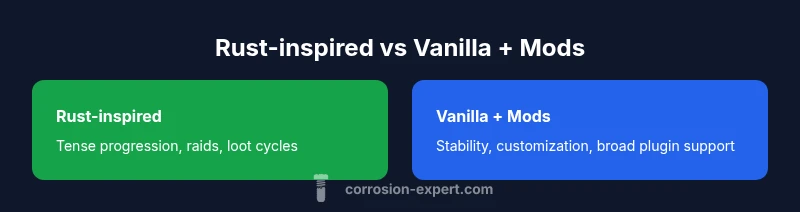
Rust-inspired Minecraft servers offer the most intense, competitive experience; vanilla-plus-mods provide stability and broad customization.
If you want aggressive, high-stakes gameplay, choose Rust-inspired. If you prefer flexibility and smoother onboarding, go with vanilla-plus-mods; both can succeed with strong moderation and thoughtful progression design.
Quick Answers
What defines a rust-like Minecraft server?
A rust-like Minecraft server emphasizes survival realism, a loot-based economy, frequent progression shifts, and competitive PvP. It often uses wipes and structured build-damage mechanics to recreate a Rust-like experience.
A rust-like server focuses on harsh survival with frequent resets and intense PvP.
Do rust-like servers require more hardware than vanilla?
Yes, they generally demand more resources due to larger raid events, higher entity counts, and frequent backups. However, careful optimization and a solid hosting plan can mitigate most bottlenecks.
Yes, more hardware helps, but proper tuning and backups matter just as much.
Are mods and plugins compatible across updates?
Compatibility varies by Minecraft version and API stability. Always test major updates on a staging server and keep a stable mod set to minimize downtime.
Versioning matters a lot—test first on a separate server.
Which path is best for beginners?
Vanilla-plus-mods setups are generally easier to start with, offering familiar mechanics and a gentler learning curve, while Rust-like setups require more planning and moderation.
If you’re new, start with vanilla plus mods and scale up later.
What should I consider before starting a Rust-like server?
Define goals, budget, moderation plan, and wipe cadence. Start with a small pilot instance to validate gameplay balance before full launch.
Plan, test on a small scale, then expand based on feedback.
Quick Summary
- Define your wipe cadence early and communicate it clearly
- Prioritize a modular plugin strategy for easier maintenance
- Balance risk with onboarding to keep new players engaged
- Invest in moderation, backups, and clear rules to protect longevity