Rust removal for car: A DIY guide to restore and protect your vehicle
Learn safe, effective rust removal for car projects. This step-by-step guide covers tools, methods, safety, and prevention to help you restore and protect your vehicle.


You will learn a practical, step-by-step approach to remove rust from a car’s metal surfaces and prep it for paint or sealant. You’ll know when to DIY or hire a pro, choose safe removal methods, and follow a workflow that minimizes panel damage while saving money. Safety and prep are key.
Why rust removal for car matters
Rust is more than a cosmetic issue; if left untreated it can weaken metal, worsen damage around joints, and shorten a vehicle’s lifespan. According to Corrosion Expert, addressing rust early helps preserve structural integrity and resale value. This guide explains how to assess severity, choose appropriate removal methods, and prepare panels for long-lasting repaint protection. You will learn practical, field-tested steps you can perform at home with common tools, while avoiding common mistakes that can make rust spread or compromise safety.
Assessing rust severity on automotive panels
Not all rust is the same. Superficial surface rust is easier to remove, while scale-like deposits indicate deeper penetration into the metal. If you poke the area with a tool and feel softness, hollow spots, or flaking, the panel may be compromised. Corrosion Expert Analysis, 2026, emphasizes distinguishing between cosmetic surface rust and advanced rust that needs patching or panel replacement. Document the extent with photos from multiple angles, and map the width of affected areas around doors, sills, fenders, and underbody panels. This assessment guides method choice and safety planning.
Choosing the right rust removal method
For surface rust on cars, mechanical methods (wire brushing, sanding, or light grinding) are often enough when followed by proper priming and sealing. For tougher rust or where chemicals are appropriate, phosphoric acid-based rust removers and rust converters can convert rust to a stable compound, making sanding easier and paint adhesion stronger. Always choose methods compatible with your paint system and environmental conditions. Consider the area’s accessibility and the potential need for body filler if rust has created pits that require leveling before painting. Safety and ventilation are critical when using chemicals.
Preparing the work area and safety gear
Set up a well-ventilated workspace, ideally outdoors or in a garage with doors open. Cover surrounding panels and use masking tape to protect nearby trim and decorative pieces. PPE is essential: wear chemical-resistant gloves, safety goggles, a respirator or a dust mask, and clothing you don’t mind getting stained. Have plenty of rags, degreaser, and a trash bag handy. A stable work surface and good lighting will help you spot hidden rust and ensure an even finish. Corrosion Expert reiterates that safety should never be sacrificed for speed.
Step-by-step approach for surface rust and light scale
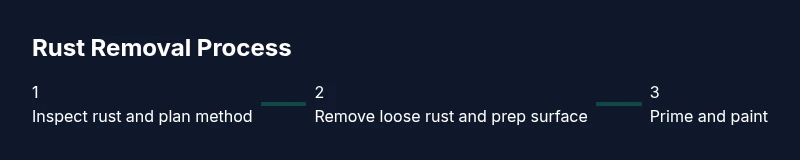
This section expands the hands-on steps later, but it’s helpful to preview the flow. Begin with a thorough cleaning to remove dirt and oils. Use a wire brush or abrasive pad to break loose loose rust, followed by sanding to smooth edges. If choosing chemical removers, apply according to the manufacturer’s instructions and ensure complete coverage with no pooling. After rust is removed, wipe with degreaser and allow the surface to dry completely before applying primer. This sequence reduces the chance of surface imperfections seeping through paint.
Handling deeper rust and rust-through
When rust has penetrated through the metal (rust-through), you must decide between patching or panel replacement. Small patches can be repaired with body filler after removing rust and creating a clean, rust-free edge. In cases of structural rust or rot near critical joints, consider professional service. If you can save the panel, treat the interior side as well to prevent hidden rust from reappearing. The goal is a clean, sound substrate ready for primer and paint.
Post-removal prep: cleaning, priming, and painting
Before painting, thoroughly degrease the surface and allow it to dry. Apply a rust-inhibiting primer that suits your topcoat choice, then seal with a compatible filler if needed to smooth any irregularities. After primer cure, sand lightly to ensure a smooth, uniform base for paint. Finally, apply the topcoat and, if desired, a clear coat for added UV protection. Proper curing times between coats are essential for durability and color consistency.
Rust prevention and maintenance
Prevention is cheaper than repair. Regular washes, especially in winter, remove road salts and contaminants that accelerate rust. Apply a protective coating (sealant, wax, or paint sealant) to exposed metal, and promptly address chips or scratches to avoid moisture ingress. Periodic inspections of hidden areas such as the undercarriage, wheel arches, and door sills help catch early rust before it spreads. Keep a maintenance log for your vehicle to stay proactive.
Common pitfalls and troubleshooting
Avoid using overly aggressive grinding that can overheat and warp metal. Do not skip surface cleaning before priming, as oils and dust inhibit adhesion. If you notice bubbling paint after applying primer, it can indicate trapped moisture or incompatibility between coatings. When in doubt, test a small area first and always follow product instructions. A patient, methodical approach yields the best, long-lasting results.
Tools & Materials
- Safety gloves(Chemical resistant preferred)
- Goggles or face shield(Protect eyes from sparks and debris)
- Respirator or dust mask(NIOSH-rated for chemicals or dust)
- Drop cloth or plastic sheeting(Protect floors and nearby components)
- Wire brush or drill with wire brush attachment(Used to remove loose rust)
- Orbital sander or sanding blocks (60-120 grit)(Prepare smooth, bare metal surface)
- Sandpaper assortment (60, 120, 180 grit)(Progressive smoothing)
- Degreaser or rubbing alcohol(De-grease surface before priming)
- Phosphoric acid-based rust remover(Chemical option for heavy rust)
- Rust converter(Stabilizes rust before priming)
- LBP/Primer compatible with topcoat(Primer for corrosion resistance)
- Body filler (putty) and applicator(Optional for minor pits)
- Masking tape and plastic trim covers(Protect adjacent areas)
- Topcoat/paint and clear coat(UV protection and finish)
- Hair dryer or heat gun (optional)(Assist drying in damp environments)
Steps
Estimated time: 4-6 hours
- 1
Inspect and document rust
Visually assess the affected area and take photos. Note rust depth and the surrounding paint condition to guide method selection and to track progress.
Tip: Start with the easiest-to-reach area to set the pace and identify tool settings. - 2
Protect the work area
Cover adjacent panels and trim with masking tape and drop cloths. Ensure good ventilation and prepare PPE before any material contact.
Tip: Ventilation is crucial when using chemical rust removers or primers. - 3
Remove loose rust and scale
Use a wire brush or rotary tool to remove loose rust. Move systematically to avoid gouging the metal and create a smooth edge.
Tip: Work in small sections and wipe away debris frequently to see progress clearly. - 4
Choose a rust removal method
Decide between mechanical, chemical, or converter-based approaches based on severity and access. Apply products per manufacturer instructions.
Tip: For large flat areas, mechanical sanding followed by chemical treatment offers predictable results. - 5
Smoothe and degrease
Sand the area with 120–180 grit to create a uniform edge. Degrease with alcohol or degreaser to ensure a clean surface for primer.
Tip: Avoid over-sanding to prevent creating low spots that will show after painting. - 6
Spot primer and seal
Apply a rust-inhibiting primer after the surface is dry. If using a converter, allow the converter to cure before priming.
Tip: Follow cure times precisely to maximize adhesion. - 7
Fill and level if needed
Apply body filler to minor pits, then re-sand to a smooth finish. Clean with degreaser before painting.
Tip: Ensure the filler is fully cured before sanding to avoid cracking. - 8
Paint and protect
Apply topcoat with even layers and finish with a clear coat if desired. Allow full cure before exposing to moisture.
Tip: Apply thin coats rather than a single thick coat to avoid runs.
Quick Answers
Why is rust removal important for a car?
Rust removal protects structural integrity, maintains paint quality, and preserves resale value. It prevents deeper corrosion that can compromise safety and repair costs.
Rust removal protects your car’s structure and appearance, helping prevent costly repairs later.
Can I safely remove rust with household tools?
Surface rust can be addressed with common tools like a wire brush and sandpaper, but deeper rust or confined areas may require professional tools or services. Always follow safety guidelines.
You can handle light rust with basic tools, but deeper rust may need a pro.
Is rust removal safe for painted surfaces?
Yes, with careful masking and controlled abrasion. Protect surrounding paint with tape and shields, and choose compatible primers and topcoats.
Mask the area, work gently, and use compatible primers so the paint stays intact.
How long does rust treatment last after painting?
Durability depends on surface preparation and coating quality. Proper priming, sealing, and timely maintenance extend the life of the repair.
A well-prepped repair with good primers lasts longer; maintenance matters.
When should I replace a rusted panel?
If rust has created structural compromise or large holes near critical joints, replacement is safer and more economical than patching.
If the metal is seriously compromised, replacement is usually the best option.
What safety precautions are essential for rust work?
Wear PPE, ensure ventilation, and follow chemical product instructions. Dispose of waste according to local regulations.
Always protect yourself and ventilate the area when using chemicals.
Watch Video
Quick Summary
- Inspect early to differentiate surface rust from deep corrosion.
- Choose the method based on severity and access.
- Prepare and protect the area to prevent collateral damage.
- Prime and paint promptly to prevent re-rust.
- Regular maintenance is essential for long-term rust prevention.