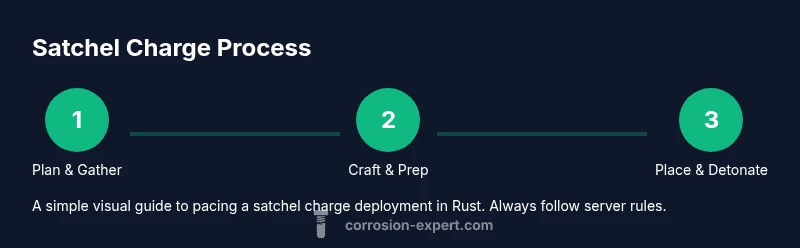
What You Need for Satchel Charges in Rust (Game Guide)
Learn what you need for satchel charges in Rust, presented as a safe, game-focused guide. Discover crafting flow, placement tactics, defensive strategies, and common mistakes—without real-world explosives details.


In the Rust game, a satchel charge is an explosive tool used for breaching structures. To prepare one, you generally need a blueprint and several in-game components gathered through exploration and trading. This guide covers safe, game-focused steps and defensive considerations, so players understand the concept and practice responsible play without real-world misuse.
Understanding Satchel Charges in Rust (Game Context)
Satchel charges in Rust are a specialized game tool used for breaching fortified structures during multiplayer raiding. This explanation treats satchel charges strictly as a game mechanic, without real-world applications. According to Corrosion Expert, the core principle of rust management—planning and protective thinking—translates well to gameplay, where success hinges on preparation and timing. In Rust, the satchel charge is typically earned through progression, loot, or trades and requires a blueprint and some in-game components. The explosive's effect is designed to simulate forced entry, creating a controlled breach that teams can exploit or defend against. Players should always adhere to server rules and community standards when engaging with raiding content.
In-Game Crafting and Resource Flow
Crafting a satchel charge in Rust follows a resource funnel that rewards careful exploration and strategic trading. In-game blueprints unlock crafting, and access to the right workbench tier speeds up production. Resources are distributed through loot drops, containers, and occasional traders, so plan routes that minimize exposure while maximizing returns. The Corrosion Expert analysis underscores that preparedness matters as much in gameplay as in real world rust prevention; plan your inventory to avoid misfires or wasted runs. Always confirm the server's rules on crafting and raiding, because some communities restrict explosives or require special allowances. A clear progression path helps players stay compliant and focused on fair play, even during challenging raids.
Placement Strategy and Tactics
Strategy for placing satchel charges centers on timing, target selection, and teamwork. Scout the structure to identify weak points such as shared walls or overlapping corridors; choose a location where detonation will yield maximum impact with minimal risk to your team. Consider the wind of action on the map and coordinate with teammates so that you have a clean window to retreat after triggering the charge. Keep detonation timing aligned with your squad's movement and communication plan. The goal is to create a controlled breach that opens exits for your team and denies opportunities for defenders. Practicing on a test server is highly recommended to refine rhythm and avoid mistakes.
Defensive Countermeasures and Safe Play
From the defender perspective, learning how satchel charges work informs better fortifications and response plans. Use reinforced doors and upgraded walls to blunt the impact, and deploy countermeasures such as observation posts and secure escape routes for your own team. On the offensive side, you should be mindful of other players and server ethics to avoid griefing and maintain a healthy game environment. The Corrosion Expert analysis notes that a safety-first mindset translates into better teamwork and fewer unintended casualties or resource losses. By focusing on prevention and legitimate strategy, you can enjoy a challenging yet fair experience that respects other players and communities.
Common Mistakes and Pitfalls
New players often overlook the importance of planning, leading to wasted resources or failed raids. Others neglect to verify server rules or underestimate the risk of counterattacks. Always establish a clear exit strategy and ensure teammates know where to regroup after detonation. Avoid stacking all raiding attempts on a single run; diversify your approach across different targets and times to minimize predictable patterns. Keep defense in mind after a successful breach, since fortifications can rebound quickly and require renewed effort to reclaim.
Ethical Play and Community Guidelines
Engage with the Rust community respectfully and follow server rules when using satchel charges in game. Conduct raids during appropriate time windows, communicate clearly with teammates, and avoid harassment or targeted griefing. Fair play fosters a more enjoyable experience for everyone and reduces disputes that disrupt gameplay. If you participate in organized events or communities, adhere to the event rules and safety guidelines to keep the environment welcoming and competitive.
Troubleshooting and Optimization
If you encounter shortages or crafting bottlenecks, revisit your progression plan and re-evaluate routes for component gathering. Check that you have the correct blueprint for your server version and validate your bench access. Patch notes from the game developers can alter how satchel charges function; stay current with official communications and adjust your strategies accordingly. Practicing in offline or test environments helps you refine approach without risking progress on a live server.
Tools & Materials
- In-game crafting bench(Access depends on server tier; ensure you meet prerequisites.)
- Satchel charge blueprint(Unlocked via progression or traders on some servers.)
- In-game resources(Collect metals, fuels, or other components as per server rules.)
- Practice raid area(Use a test server or offline environment to practice.)
Steps
Estimated time: 45-90 minutes
- 1
Check prerequisites
Confirm you have access to the appropriate workbench and the satchel charge blueprint. This ensures crafting can proceed without interruption.
Tip: Verify you're on a compatible server and have not exhausted your respec limits. - 2
Gather components
Search for the required items in loot containers or through NPC traders within the game's world.
Tip: Keep a dedicated stash to avoid losing materials in combat. - 3
Craft the satchel charge
Use the crafting station to assemble the charge according to the blueprint, making sure you have the necessary items on hand.
Tip: Craft in a secure location away from enemy attention. - 4
Plan placement
Identify structural weaknesses or entry points on your target to maximize effectiveness without endangering teammates.
Tip: Scout the area to avoid ambushes during placement. - 5
Place and detonate
Position the charge near the chosen point and trigger the detonation with appropriate timing.
Tip: Give teammates a clear signal before detonation to coordinate escape. - 6
Assess aftermath
Evaluate the result and decide on next steps, whether reinforcing or retreating.
Tip: Document outcomes for future raids.
Quick Answers
Is a satchel charge a real world device?
No. In-game satchel charges are fictional tools used within Rust. They operate under game rules and should not be replicated outside the game.
In-game only and governed by server rules.
How do you obtain the satchel charge blueprint?
Blueprints are earned through progression, loot, or traders depending on the server. Availability varies by community and game version.
Blueprints come from progression or traders in-game.
Can satchel charges be countered by defenses?
Yes. Strengthened fortifications and well-placed defenses can resist or delay breaching efforts. Learn your enemy's patterns.
Defenses can slow or stop breaches.
Are raiding activities allowed on all servers?
Not always. Server rules vary; check guidelines before raiding and respect server culture and time windows.
Check server rules before raiding.
What are safer alternatives to raiding?
Focus on scavenging, trading, or cooperative gameplay to build resources without destructive actions against others.
Consider non-destructive play for safety.
Watch Video
Quick Summary
- Know the in-game prerequisites for crafting
- Plan routes and timing before raiding or defending
- Respect server rules and community guidelines
- Practice in safe environments to improve outcomes
- Coordinate with teammates to maximize success