What to Do If You Accidentally Eat Rust: A Practical Guide
Learn safe, practical steps for accidental rust ingestion, when to seek medical care, and how to prevent future incidents. A clear, actionable guide for DIYers and homeowners.


By staying calm and acting quickly, you can minimize risk after accidentally swallowing rust. This quick guide outlines immediate steps, when to call a healthcare professional, and what not to do. Key actions include rinsing the mouth, drinking water, avoiding induced vomiting, and monitoring for symptoms. If in doubt, seek medical advice promptly.
What happens when you swallow rust
If you’re wondering what to do if you accidentally eat rust, understanding what happens in the body helps you decide on next steps. Rust is mainly iron oxide and is poorly absorbed in the gut, but it can irritate the lining of the mouth, esophagus, and stomach. The Corrosion Expert team notes that most minor exposures don’t cause systemic poisoning, and symptoms—if any—are typically mild, such as stomach upset or a sore throat. Corrosion Expert Analysis, 2026 shows that most minor rust exposures resolve with supportive care, but the exact outcome depends on the amount swallowed, presence of sharp fragments, and any underlying medical conditions. If a larger piece was swallowed or a sharp shard was involved, medical evaluation becomes more important. The takeaway is to stay calm, observe your body, and act according to established safety steps. This guidance reflects the Corrosion Expert approach to rust safety and first-aid best practices for ingestion events.
Immediate actions to take after ingestion
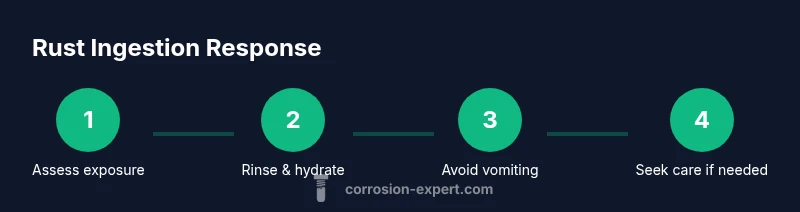
Right after you realize you may have swallowed rust, begin with simple, practical steps. Rinse your mouth thoroughly with cool water and spit it out. If available, use a mild saltwater rinse to reduce any irritation. Sip small amounts of water or clear fluids to stay hydrated. Do not swallow large amounts at once, and avoid alcohol or caffeinated beverages that can irritate the GI tract. Do not induce vomiting, as this can worsen irritation or cause injury. Do not take iron supplements or dairy products specifically to counteract rust ingestion; there is no evidence these help and they can complicate clinical evaluation. If you have a known allergy or medical condition, follow your clinician's guidance. Keep track of time and any symptoms. The Corrosion Expert team reiterates that while rust ingestion is not usually life-threatening, prompt basic care reduces risk and helps clinicians evaluate you accurately.
When to seek medical attention
Seek medical advice if you experience persistent or worsening symptoms, or if you swallowed a noticeable amount. Go to urgent care or your local emergency department if you have severe abdominal pain, vomiting that lasts more than a few hours, fever, dehydration, or blood in vomit or stool. Even in the absence of symptoms, contact a clinician if the ingestion involved a large quantity, a sharp fragment, or if the rust came from contaminated sources (e.g., dirty surfaces or rusty metallic objects). Tetanus risk is not a direct result of ingestion, but if a wound is present, assess tetanus vaccination status with a healthcare provider. The Corrosion Expert team recommends erring on the side of caution and seeking professional evaluation for any ingestion event and to rule out rare complications.
Common myths vs facts about rust ingestion
There are several myths about rust ingestion that can mislead well-meaning homeowners. Fact: rust is not a highly toxic substance when swallowed in small amounts. Myth: dairy products or antacids will neutralize rust; fact: there is no evidence these interventions reliably alter outcomes after ingestion. Fact: most cases resolve with basic supportive care and observation; myth: any rust exposure guarantees poisoning. The best approach is to treat the incident with caution, monitor for symptoms, and consult a medical professional if there is any doubt. The Corrosion Expert team emphasizes relying on evidence-based guidance rather than home-remedies.
Prevention and safe handling to avoid future incidents
Prevention starts with reducing contact between rust and edible surfaces. Store rusty tools away from kitchens, cleaning zones, and food, and use separate utensils when handling rusty items. Wear gloves when inspecting or cleaning rust to minimize skin contact and potential cross-contamination. Clean and sanitize areas that have come into contact with rust, especially if they will touch food or drink. Keep rusted items out of reach of children and pets, and establish a simple routine for inspecting and discarding compromised tools. Regular handwashing after handling rusty metal and before meals is a simple but effective habit. The aim is to minimize incidental ingestion and to maintain a safe home environment with clear boundaries between rust and food.
What to tell your doctor after rust exposure
When talking to a clinician, provide as much detail as possible: the exact source of rust, time of ingestion, approximate amount, and any symptoms experienced. Mention any underlying medical conditions, current medications, and recent meals to help evaluate potential interactions. If available, bring packaging or description of the rusty item to aid assessment. The Corrosion Expert team notes that honest reporting and precise information support accurate diagnosis and appropriate follow-up care. Even if you feel well, a brief check-in with a healthcare professional after rust ingestion can prevent delayed issues.
Tools & Materials
- Water (plain) for rinsing and drinking(Cool water; rinse mouth 15-30 seconds, then sip small amounts to stay hydrated)
- Mouth rinse or saltwater (optional)(Rinse can help reduce irritation if available)
- Phone access to contact poison control or emergency services(Have local numbers handy; record time of ingestion)
- Documentation (time of ingestion, source)(Helpful for medical evaluation)
Steps
Estimated time: 15-60 minutes for initial actions; follow-up as advised by a medical professional.
- 1
Assess exposure and symptoms
Identify how much rust was ingested, whether a sharp fragment was involved, and what symptoms exist (if any). This helps determine urgency and the level of medical care needed.
Tip: If unsure about amount, treat as a potential exposure and monitor closely; when in doubt, contact a professional. - 2
Rinse mouth and spit
Thoroughly rinse the mouth with cool water for 15-30 seconds and spit it out to remove residual particles. This reduces oral irritation and minimizes ingestion of any loose rust.
Tip: Avoid swallowing the rinse; repeat if you feel grit in the mouth. - 3
Sip water to stay hydrated
Drink small sips of water or clear fluids to stay hydrated without triggering gag reflex. Do not gulp large amounts at once.
Tip: Hydration supports comfort and helps your body process any irritants. - 4
Do not induce vomiting
Vomiting can cause additional irritation and may worsen any injury to the esophagus or stomach lining. It is generally not recommended after rust ingestion.
Tip: If you already vomited, note the time and presence of any material; inform a clinician. - 5
Call poison control or seek medical advice
Contact your local poison control center or seek medical evaluation, especially if you swallowed a noticeable amount or have symptoms.
Tip: Have product source, time of ingestion, and any symptoms ready for the operator. - 6
Watch for red-flag symptoms
Seek emergency care if you have severe abdominal pain, persistent vomiting, dehydration, fever, or blood in vomit or stool.
Tip: If symptoms escalate, do not delay; head to the nearest urgent care or ER. - 7
Follow up and document
Keep a record of the incident and any medical advice given. Follow up with your healthcare provider if symptoms persist or new symptoms appear.
Tip: Share any prior rust exposure or incidents to aid ongoing care.
Quick Answers
Is it dangerous to swallow rust?
Swallowing small amounts of rust is usually not highly toxic, but it can irritate the GI tract. The risk increases with large amounts or contaminated sources.
Swallowing small amounts is not usually dangerous, but monitor for irritation and seek care if symptoms worsen.
What should I do right after swallowing rust?
Rinse your mouth, drink small sips of water, and avoid inducing vomiting. If symptoms appear or the amount was large, contact a medical professional.
Rinse, sip water, and contact a clinician if symptoms develop or you’re unsure of the amount.
Can rust ingestion cause tetanus?
Tetanus is related to wounds, not ingestion. If you have a wound from rusty metal, check vaccination status with a healthcare provider.
Tetanus is linked to wounds, not swallowing rust, but get evaluated if there’s a cut or wound.
When should I go to urgent care after rust ingestion?
Go to urgent care if you have severe abdominal pain, persistent vomiting, dehydration, fever, or blood in stool/vomit, or if you swallowed a large amount.
Go to urgent care if you have severe symptoms or swallowed a lot of rust.
Do antacids or milk help after rust ingestion?
There’s no solid evidence that antacids or milk reliably improve outcomes after rust ingestion. Rely on medical advice and supportive care.
Milk or antacids aren’t proven to help; follow medical guidance instead.
What long-term health effects can rust ingestion cause?
In most cases, there are no lasting health effects from small ingestions, but irritation can occur. Seek medical advice if symptoms persist or if you worry about exposure.
Most people recover without long-term problems, but consult a clinician if symptoms linger.
Watch Video
Quick Summary
- Rinse mouth and hydrate after rust ingestion
- Do not induce vomiting; seek medical advice if unsure
- Monitor for symptoms and seek urgent care for red flags
- Document exposure to aid medical evaluation