How to Know If You Got Cut by Rust: A DIY Safety Guide
Learn to identify rust-related cuts, assess infection risk, and perform safe cleaning and aftercare. Includes tetanus considerations and practical prevention tips from Corrosion Expert.


To know if you got cut by rust, inspect the wound for a rust-stained edge and a puncture or scrape. Contamination from metal shards is common, and rust can carry bacteria or tetanus spores. Immediately clean the area, assess bleeding, and decide if medical care is needed based on wound size, depth, and signs of infection.
How to know if you got cut by rust: initial recognition
A rust-related wound isn’t defined by color alone. Rust may indicate the wound contacted metal that could harbor bacteria or tetanus spores. The first clue is a rust-stained edge where skin meets metal, often with a small puncture or scraping sensation. Look for a clean break in the skin, even if the bleeding is light. The Corrosion Expert team emphasizes that any cut from rusty metal deserves careful attention because metal fragments can lodge under the skin and create a channel for bacteria. If you notice redness around the wound, warmth, or increasing pain, these can signal infection, even if the rust stain appears minor. Remember, rust itself isn’t a toxin, but the environment that rust creates can increase risk. How you respond in the first minutes can significantly affect healing, so practice calm, deliberate cleaning and dressing. This section outlines practical steps to recognize a rust cut and distinguish it from less serious skin breaches, with practical signs to watch for over the next 24 to 72 hours.
Immediate first steps after a suspected rust cut
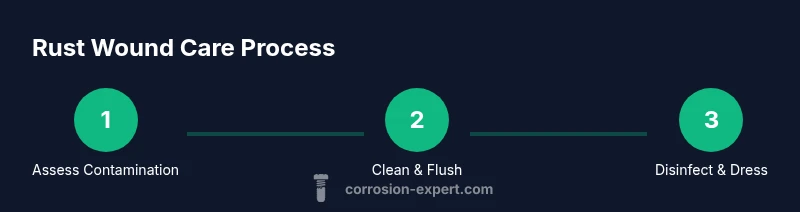
When you’re unsure whether a cut came from rust, start with rapid, clean first aid. Put on disposable gloves if available to minimize contamination. Rinse the wound under clean running water for 5–10 minutes to flush out debris and rust particles. If blood flows, apply gentle pressure with a clean cloth or sterile gauze until bleeding reduces. Do not scrub the wound aggressively, avoid harsh antiseptics that can irritate tissue, and avoid pulling out embedded fragments with bare fingers. After rinsing, pat dry with a sterile pad and cover with a clean bandage. If debris remains or you suspect deep penetration, seek professional care. Documentation, such as a quick photo, can help a clinician assess changes over time. Throughout, keep hands and tools clean to prevent introducing new bacteria. This rapid response minimizes infection risk and helps you monitor the wound more effectively.
Cleaning and decontaminating a rust-contaminated wound
Cleaning a rust-contaminated wound requires a gentle, thorough approach. Begin with mild soap and running water, letting the water wash away loose rust particles rather than scrubbing. If available, use antiseptic wipes sparingly and avoid aggressive antiseptics like hydrogen peroxide, which can irritate tissue with repeated use. Do not attempt to remove embedded rust shards with unsterile tools. If you suspect a fragment may be lodged, do not probe aggressively; seek medical evaluation for safe removal. After cleaning, gently pat dry and apply a clean sterile dressing. Keep the dressing dry and change it daily or whenever it becomes wet or dirty. The goal is to establish a clean, protected environment for healing while minimizing friction that could reopen the wound.
Infection risk signals you should not ignore
Rust-related wounds can become infected if surface cleaning is insufficient or if debris remains. Watch for increasing redness spreading from the wound, warmth or swelling beyond the immediate site, or discharge that looks cloudy or pus-like. Fever or swollen lymph nodes near the wound are warning signs requiring medical evaluation. If pain worsens after cleaning or the wound fails to show improvement within 48–72 hours, escalate care. These signs do not always mean a severe infection, but they do indicate that professional assessment would be prudent to rule out deeper damage, anaerobic infection, or tetanus risk. Early intervention reduces complications and speeds recovery, particularly for cuts on the hands, feet, or joints where movement can aggravate healing.
Understanding tetanus risk with rusty injuries
Rusty injuries raise concerns about tetanus because Clostridium tetani, the bacterium behind tetanus, can inhabit soil and rusty metal surfaces. Vaccination status dramatically influences risk. If your tetanus vaccination is up to date, you have a strong protection against severe tetanus; if it’s not current or you’re unsure, consult a clinician about a tetanus booster. Signs to watch for include muscle stiffness, jaw clamping, or trouble swallowing—rare, but serious. Public health sources recommend verifying your vaccination history after a rusty wound and receiving a booster if your latest shot was more than 10 years ago (or 5 in high-risk wounds).
When to seek professional medical care
If the wound was deep, large, or contaminated with visible rust or debris, if bleeding is heavy or won’t stop, or if you notice any infection signs, seek medical care promptly. Medical professionals can assess wound depth, remove foreign material safely, and determine the need for a tetanus booster or antibiotics. Individuals with compromised immune systems, diabetes, or poor circulation should err on the side of caution and seek evaluation sooner rather than later. For facial wounds or wounds over joints, seek care sooner due to functional considerations. It’s always better to have a professional assess potential complications than wait and risk slower healing or infection.
Prevention: safer handling of rusty metal and tools
Prevention starts before contact with rusty metal. Wear gloves, long sleeves, and eye protection when handling tools or materials with visible rust. Keep metal objects dry and store them away from moisture to minimize rust formation. If you must use rusty tools, consider cleaning and de-rusting before use; use rust converters or absorbent rust removers following manufacturer instructions. After work, wash hands thoroughly and sanitize tools and work surfaces to reduce contamination risk. Proper handling, storage, and protective gear dramatically reduce the chance of rust-related wounds and subsequent infections.
Aftercare and long-term healing tips
After you’ve addressed the wound, focus on long-term healing to prevent complications. Keep the wound clean and dry, change dressings daily or as directed by a clinician, and monitor for changes in color, odor, or drainage. Protect the area from reopening by avoiding tight or friction-heavy clothing and activities that stress the wound. Maintain good hand hygiene and consider a light antibiotic ointment if recommended by a healthcare provider. If you have ongoing exposure to rust-prone environments, ensure your tetanus vaccination is up to date and follow up with your clinician for wound checks if healing stalls or new symptoms appear.
AUTHORITY SOURCES
- CDC: Tetanus information for wound management: https://www.cdc.gov/vaccines/vpd/tetanus/index.html
- MedlinePlus: Tetanus overview: https://medlineplus.gov/tetanus.html
- NIH/NIAID: Tetanus information and resources: https://www.niaid.nih.gov/diseases/tetanus
Tools & Materials
- Gloves (disposable)(Latex-free preferred; use once per wound to avoid cross-contamination)
- Mild soap(Gentle cleanser for skin and wound surrounding area)
- Clean running water(Accessible, potable water for rinsing)
- Sterile gauze or pads(For dressing and absorbing bleeding)
- Antiseptic wipes or solution (optional)(Use sparingly; avoid harsh antiseptics that irritate tissue)
- Adhesive bandage or sterile dressing(Protect wound from contamination and friction)
- Tweezers (sterile, if needed)(Only to remove obvious debris; do not probe)
- Tetanus vaccination status check (documented)(Have vaccination records available when seeking care)
Steps
Estimated time: 15-25 minutes
- 1
Assess the wound
Visually inspect for depth, debris, and contusion. Note size, location, and whether rust is embedded in the skin. This helps determine next steps and if medical care is needed.
Tip: Take a quick photo to compare healing progress later. - 2
Rinse with clean water
Hold the wound under running water for several minutes to flush out debris and rust particles. Avoid scrubbing; let water do the work.
Tip: If debris remains, do not probe; seek professional removal. - 3
Gentle cleaning and drying
Wash the surrounding skin with mild soap, rinse, and pat dry with a sterile pad. Do not apply harsh chemicals directly to the wound.
Tip: Pat dry gently to prevent reopening the wound. - 4
Dress and protect
Apply a thin layer of antibiotic ointment if advised, then cover with a clean dressing. Change daily or when wet.
Tip: Keep dressing in place until it becomes dirty or wet. - 5
Monitor for infection
Check for redness, swelling, warmth, or discharge. If signs worsen, seek care promptly.
Tip: If fever develops, seek medical attention immediately. - 6
Evaluate tetanus risk
Review your vaccination history and consider a booster if needed, especially for dirty, deep, or uncertain wounds.
Tip: Bring vaccination records to a clinician.
Quick Answers
Is rust dangerous to touch?
Rust by itself isn’t a toxin, but rusty metal can harbor bacteria and tetanus spores. Protect yourself by cleaning the wound, keeping it covered, and seeking care if signs of infection arise.
Rusty metal can carry bacteria and tetanus spores. Clean, cover, and watch for infection signs.
Do I need a tetanus shot after a rust cut?
Check your vaccination history. If your tetanus vaccine isn’t up to date or the wound is deep or dirty, consult a clinician about a booster.
Check your tetanus status; booster may be needed for dirty or deep rust injuries.
Can hydrogen peroxide help with rust wounds?
Hydrogen peroxide can irritate or damage tissue if used repeatedly. Use mild soap and water, and reserve antiseptics for when recommended by a clinician.
Hydrogen peroxide isn’t ideal for routine wounds; use soap and water unless advised otherwise.
When should I go to the ER for a rust cut?
Go to the ER if bleeding is heavy, the wound is deep or contaminated, or you notice rapidly spreading redness or fever.
Seek emergency care for heavy bleeding or signs of infection.
Are there long-term risks from rusty metal exposure?
Repeated exposure to rust-prone environments can increase infection risk if wounds aren’t properly cared for and vaccines aren’t up to date.
Rust exposure isn’t always dangerous, but proper wound care and vaccination are key.
Watch Video
Quick Summary
- Inspect rust-related wounds for depth and contamination.
- Clean gently and avoid aggressive scrubbing or harsh chemicals.
- Monitor for signs of infection and assess tetanus risk.
- Seek medical care when in doubt, especially for deep or dirty wounds.