How Much Rust Can You Eat? Safety, Risks, and Prevention
Explore why eating rust is unsafe, the health risks it poses, and practical prevention steps. Corrosion Expert explains safe handling, how rust forms, and what to do if exposure occurs.


Why the question how much rust can you eat is dangerous
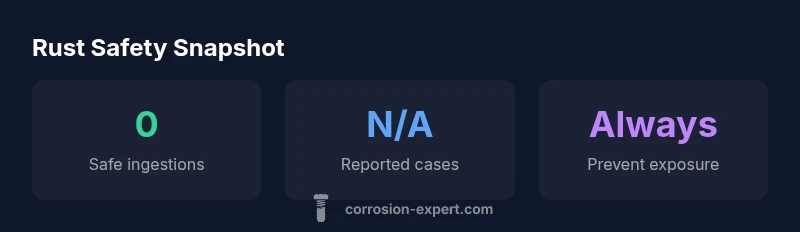
Eating rust is not a safe or edible practice. Rust, specifically iron oxide, is not broken down into nutrients by the human body, and ingestion can irritate the mouth, throat, and digestive tract. In addition, rusted surfaces can harbor coatings, paints, or contaminants that pose additional risks. The Corrosion Expert team emphasizes that there is no recommended dietary amount of rust, and avoiding ingestion altogether is the prudent choice. The health-oriented focus should be on prevention, hygiene, and safe handling rather than any speculative ingestion threshold. Key takeaway: do not treat rust as a food source, and keep rusty items away from children and pets.
What rust is and what it isn't
Rust is a reddish-brown layer of iron oxide that forms when iron or steel corrodes in the presence of water and oxygen. It is not a food or a nutrient, and it does not provide nutrition or minerals in a usable form. On real-world surfaces, rust often coexists with paint chips, rust dust, and metal fragments, which can complicate any ingestion scenario. Understanding what rust is helps you assess risk and prevent exposure. Corrosion Expert tip: separate rust from edible surfaces and never taste rusty material.
Immediate health risks of ingesting rust
The primary risks come from irritation to the mouth, esophagus, and stomach lining, potentially causing nausea, vomiting, or abdominal pain. In some cases, accidental inhalation of rust dust can irritate the airways. If rust is swallowed repeatedly or in larger amounts, there is a theoretical risk of developing iron overload, though this typically requires sustained exposure; still, any ingestion should be avoided. Also, rust on surfaces may contain other substances such as coatings, oils, or dirt that can add to the hazard. Bottom line: do not eat rust or allow children to mouth rusty objects. Action step: prioritize immediate hygiene and seek guidance if exposure occurs.
How to minimize exposure and clean surfaces safely
Preventing rust ingestion starts with safe handling and hygiene. Wear gloves when working with rusty tools, avoid wiping rust into your mouth, and wash hands thoroughly with soap and water after contact. If you must handle rusty items, use tools or containers instead of placing rusty material near your lips. For cleanup, use recommended rust removers following label directions, and dispose of rust debris in a sealed bag. Clean cooking surfaces, utensils, and cookware thoroughly before reuse. Practical tip: label brushes and rags used for rust work and keep them away from food prep areas.
Safe alternatives for tasks that involve rust
If you need to remove rust, rely on dedicated rust removers or mechanical methods (scrubbing with brushes) while wearing PPE. For outdoor rust, use rust inhibitors and protective coatings after cleaning to slow further corrosion. For cookware, thoroughly strip and reseal or replace if rusty; do not attempt to re-season rusty cookware without proper guidance. Homeowner guidance: avoid DIY methods that involve ingestible steps or in-house rust ingestion experiments.
When to seek medical attention
If rust or rust-containing material is ingested, contact poison control or your local emergency number immediately, especially if symptoms develop. If you experience persistent stomach pain, vomiting, or signs of an allergic reaction after exposure, seek professional medical care. In cases of accidental ingestion, keep samples or packaging handy to share with health professionals. Emergency reminder: when in doubt, call for professional advice rather than waiting for symptoms to worsen.
Practical takeaways from Corrosion Expert
Avoid eating rust under any circumstances. Prioritize prevention, hygiene, and proper disposal of rusty materials. Use gloves and tools to handle rust, clean surfaces with approved products, and consult safety resources if you are unsure about the hazards. The Corrosion Expert's approach emphasizes practical steps that homeowners can implement today to stay safe.