Which Acid for Rust Removal: A Practical DIY Guide
A comprehensive, step-by-step guide to choosing the right acid for rust removal, with safety tips, tools, and practical DIY strategies for homeowners and hobbyists.


Which acid for rust removal depends on the job: mild acids like citric or oxalic acids remove light rust stains, while phosphoric acid converts iron oxide to iron phosphate for deeper rust treatment. Strong mineral acids (muriatic/hydrochloric) are powerful but hazardous and should be used only with protective gear and proper ventilation.
What acids do in rust removal
Rust is primarily iron oxide, and acids work by attacking that oxide layer. They either dissolve the rust, Chelate it so it lifts away, or convert rust into a more stable compound that cleans up easier. For the question which acid for rust removal, you’re weighing speed, surface safety, and user safety. According to Corrosion Expert, the safest, most reliable DIY approach starts with mild acids and progresses only if necessary. Citric acid and oxalic acid are common for light rust and leave less risk of etching. Phosphoric acid converts rust into iron phosphate, which can create a tougher, less permeable surface that resists further rust. Strong acids like muriatic (hydrochloric) acid remove rust quickly but can damage metal, coatings, and nearby materials. Start gentle, test on a hidden patch, and adjust based on results and metal type.
What acids do in rust removal
Rust is primarily iron oxide, and acids work by attacking that oxide layer. They either dissolve the rust, Chelate it so it lifts away, or convert rust into a more stable compound that cleans up easier. For the question which acid for rust removal, you’re weighing speed, surface safety, and user safety. According to Corrosion Expert, the safest, most reliable DIY approach starts with mild acids and progresses only if necessary. Citric acid and oxalic acid are common for light rust and leave less risk of etching. Phosphoric acid converts rust into iron phosphate, which can create a tougher, less permeable surface that resists further rust. Strong acids like muriatic (hydrochloric) acid remove rust quickly but can damage metal, coatings, and nearby materials. Start gentle, test on a hidden patch, and adjust based on results and metal type.
What acids do in rust removal
Rust is primarily iron oxide, and acids work by attacking that oxide layer. They either dissolve the rust, Chelate it so it lifts away, or convert rust into a more stable compound that cleans up easier. For the question which acid for rust removal, you’re weighing speed, surface safety, and user safety. According to Corrosion Expert, the safest, most reliable DIY approach starts with mild acids and progresses only if necessary. Citric acid and oxalic acid are common for light rust and leave less risk of etching. Phosphoric acid converts rust into iron phosphate, which can create a tougher, less permeable surface that resists further rust. Strong acids like muriatic (hydrochloric) acid remove rust quickly but can damage metal, coatings, and nearby materials. Start gentle, test on a hidden patch, and adjust based on results and metal type.
Tools & Materials
- Safety PPE (goggles, nitrile gloves, respirator or well-ventilated area)(Essential when handling acids and fumes)
- Non-reactive container (plastic or glass)(For mixing and soaking; avoid metal containers)
- Citric acid powder(Food-grade is fine; used for mild rust removal)
- Oxalic acid crystals(More aggressive than citric; handle with care)
- Phosphoric acid-based rust remover(Follow label directions; safer than strong mineral acids)
- Distilled water(For dilution and rinsing; reduces mineral deposits)
- Muriatic acid (concentrated hydrochloric acid)(Only for experienced users; ensure excellent ventilation)
- Neutralizing solution (baking soda + water)(Used to halt chemical reaction after treatment)
- Soft-bristle brush(Gentle scrubbing without scratching metal)
- Rags or microfiber cloths(For wiping and drying surfaces)
Steps
Estimated time: 2-4 hours depending on rust extent
- 1
Assess rust and select acid strategy
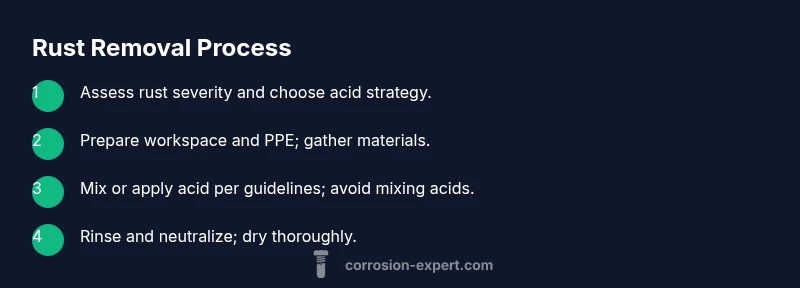
Inspect the metal to determine rust depth and surface finish. Choose a mild acid for light rust first, reserving stronger acids for tougher jobs. Document any sensitive coatings or compatibility issues with the substrate.
Tip: Start with citric acid to test the reaction on an inconspicuous area. - 2
Protect workspace and wear PPE
Set up in a well-ventilated area. Put on goggles, chemical-resistant gloves, and a respirator if fumes are a concern. Lay down a plastic drop cloth and have baking soda ready for neutralization.
Tip: Protect skin, eyes, and lungs from splashes and fumes. - 3
Prepare acid solution according to guidelines
Dissolve the acid in water following manufacturer directions or reputable references. Never mix acids together unless explicitly instructed. Label the container and keep it away from children and pets.
Tip: Always add acid to water, never water to acid. - 4
Apply acid to rusted areas
Submerge or brush the rusted area with the prepared solution. Avoid soaking non-rusted metal if the base metal is soft or plated. Monitor for reaction; time will vary by rust severity.
Tip: Work in short intervals to prevent overreaction and metal damage. - 5
Rinse and assess progress
Rinse thoroughly with plenty of clean water. Wipe with a cloth to gauge rust removal. If rust remains evident, consider a second, milder pass or switch acids for a gentler finish.
Tip: Dry completely to prevent flash rust before the next step. - 6
Neutralize residue and dry
Apply baking soda solution if needed to neutralize remaining acid, then rinse again. Dry to the touch with a clean cloth and allow to air-dry fully before coating.
Tip: A heat gun on low can speed drying in a controlled way. - 7
Protect the surface after treatment
Apply a rust-inhibiting primer or oil to prevent immediate re-oxidation. For metal that will be outdoors, consider a protective coating system with periodic maintenance.
Tip: Choose a finish compatible with the base metal and environment. - 8
Clean up and disposal
Dispose of spent acid according to local regulations. Clean tools with plenty of water and neutralizer; store or dispose of residues safely.
Tip: Never pour concentrated acids down the drain; use proper disposal channels.
Quick Answers
What is the safest acid for rust removal in DIY projects?
Citric acid and phosphoric acid-based rust removers are commonly recommended for DIY projects due to safety and effectiveness. Always test on a hidden area first and follow manufacturer's directions.
Citric and phosphoric acids are safer choices for DIY rust removal; test first and follow directions.
Can I use muriatic acid on aluminum?
No. Muriatic acid can aggressively corrode aluminum and many other metals. Use milder acids or chelating agents instead.
Muriatic acid can corrode aluminum. Avoid it for aluminum surfaces.
Do I need to neutralize after rust treatment?
Yes. Neutralizing with a baking soda solution and a thorough rinse helps stop the chemical reaction and prevent flash rust.
Yes, neutralize and rinse thoroughly after treatment.
Are there eco-friendly rust removal options?
Yes. Mild acids like citric or oxalic acids with proper disposal are safer choices. Chelating rust removers also reduce environmental impact when used correctly.
Yes, consider citric or oxalic acids; dispose properly.
What safety gear is essential?
Goggles, gloves, and a respirator or well-ventilated area are essential when handling acids. Keep a neutralizing agent nearby.
Wear PPE: goggles, gloves, and a mask or ensure good ventilation.
Watch Video
Quick Summary
- Assess rust severity before choosing acid
- Start with milder acids for safety
- Phosphoric acid offers a balance of safety and effectiveness
- Never mix acids; follow dilution guidelines
- Neutralize, rinse, and protect after treatment