What rust will fail a wof: inspection & prevention
Discover what rust will fail a wof and how inspectors assess rust risk. Learn which rust types trigger a failure, practical prevention steps, and remediation options to keep your vehicle roadworthy in 2026.


What rust will fail a wof? It isn’t just cosmetic blemishes. Rust that compromises structural integrity or safety-critical components—such as perforations in load-bearing members, severe underbody corrosion, or rust near brake, fuel, and suspension systems—will trigger a fail. The threshold varies by location and severity, but inspectors prioritize safety-critical areas. According to Corrosion Expert, understanding this distinction helps you plan targeted remediation before the WOF date.
What rust will fail a wof means in practice
Understanding the phrase 'what rust will fail a wof' starts with the WOF itself—the Warrant of Fitness. It is not a simple pass/fail on cosmetic rust; inspectors evaluate rust that could compromise safety or compliance. In practical terms, rust that weakens structural elements like chassis rails, floor pans, or suspension mounts is a red flag. The Corrosion Expert team notes that many DIY rust projects address surface flaws, but WOF-critical rust operates at a deeper level, often requiring professional assessment or replacement. The key question is whether rust can propagate and reduce the metal’s load-bearing capacity or interfere with essential systems like braking, steering, or fuel delivery. Early recognition of this threshold allows homeowners to plan targeted remediation, avoiding costly scrapes with the inspector and preserving roadworthiness. According to Corrosion Expert, proactive rust management saves time, money, and potential safety risks for both drivers and passengers.
Inspectors focus: rust on critical structural zones
WOF inspections place a heavy emphasis on areas that bear load or contribute to vehicle integrity. Inspectors scrutinize chassis rails, subframes, floor pans, door sills, and suspension mounting points. Any thinning, perforation, or corrosion that could impact structural performance is likely to trigger a failure or require immediate repair. In addition, rust near brake lines, fuel lines, and electrical harness anchors is treated as high risk because these systems directly affect safety. Regularly washing the underside, removing salt buildup, and applying corrosion-inhibiting treatments can help, but only to slow progression. The Corrosion Expert approach combines visual checks with functional assessments to gauge how far rust has progressed and whether it poses a risk to pass the WOF.
Cosmetic rust vs structural rust: what's acceptable
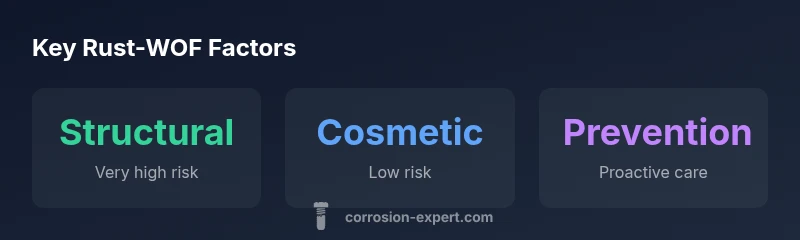
Cosmetic rust on body panels or trim is generally not a direct WOF disqualifier if it remains surface-level and non-penetrative. Structural rust, however, that compromises metal thickness, creates holes, or stubs from load-bearing areas is typically unacceptable. Inspectors distinguish based on location, depth, and the potential to worsen with time. Surface rust that doesn’t progress to perforation may still warrant treatment to prevent escalation. This distinction is essential for DIYers who want to prioritize work efficiently and avoid over-investing in non-critical areas. Corrosion Expert emphasizes documenting progress and maintaining a proactive maintenance schedule to minimize long-term risk and uncertainty during inspections.
Common rust scenarios that trigger a WOF failure
There are several scenarios that commonly lead to a WOF failure due to rust. Perforations or holes in structural members, significant thinning of frame rails, or corrosion around braking and fuel systems are red flags. Rust that migrates to floor panels in the driver’s footwell or near seat belt anchors also raises safety concerns. Even if the rust appears localized, the inspector will assess whether it has penetrated to a degree that reduces strength or increases the likelihood of sudden failure under stress. The takeaway is to treat any suspicious rust as a warning sign and seek professional evaluation before the next WOF.
How rust is tested during a WOF inspection
A WOF inspection blends visual assessment with a practical stress check of critical components. Inspectors examine the undercarriage, body mounts, and load-bearing joints for signs of deep corrosion, flaking metal, or perforation. They may tap the metal with a tool to detect hollow sounds indicating thinning, especially around chassis members. Any rust in proximity to brake lines, steering components, or suspension is prioritized for testing. In some jurisdictions, inspectors may require proof of repairs or a clean bill of health from a corrosion professional before approving the WOF. The goal is to ensure continued safety and structural integrity on the road.
Prevention strategies: rust prevention before WOF
Prevention is more effective than remediation after a WOF fail. Regular underbody washing, especially after winter salting or coastal driving, helps remove corrosive agents. Apply rust inhibitors or protective coatings to vulnerable areas, and address small rust spots promptly before they expand. Parking away from salt spray and using wax-based sealants can slow progression. For owners in high-risk environments, rust-proofing treatments and repeated inspections every 6-12 months can catch early signs before they escalate to a fail. Corrosion Expert recommends scheduling a proactive rust assessment mid‑cycle to stay ahead of rust-related WOF risk.
Remediation steps if rust might fail a WOF
If rust shows potential to fail a WOF, take a staged remediation approach. For minor surface rust, mechanical removal followed by rust converter and repaint is a practical route. For deeper corrosion, consult a professional for patching, plating, or structural replacement on affected components. In safety-critical areas like the chassis, brakes, or fuel lines, replacement parts may be necessary. Document all steps with photos and receipts, and seek a professional inspection to ensure the fix meets WOF standards. Timely action keeps costs predictable and reduces the chance of an unexpected fail.
Real-world examples and takeaways
Real-world cases illustrate why rust care matters for WOF outcomes. In some instances, vehicles with minor surface rust passed after proper treatment, while others failed due to hidden perforation in load-bearing members discovered during thorough checks. The consistent lesson is that rust’s threat is location- and depth-dependent. DIY rust work can help, but for structural concerns, professional intervention is often required. The key takeaway is to treat rust proactively, focus on high-risk zones, and maintain clear repair documentation to smooth the WOF process.
Rust-related WOF risk factors
| Rust Condition | Impact on WOF | Recommended Action |
|---|---|---|
| Perforation/holes | Very high | Immediate repair or replacement before inspection |
| Severe structural rust on chassis | Very high | Plan structural repair with a professional |
| Surface rust on cosmetic panels | Low to moderate | Treat and repaint; monitor progression |
Quick Answers
What rust will fail a WOF?
Rust fails a WOF when it affects structural integrity or critical safety components, such as perforations in load-bearing members or corrosion near brakes and fuel lines. Cosmetic rust alone typically does not cause a fail, but it may indicate the need for preventative care.
Rust that affects safety or structure will fail a WOF. Cosmetic rust alone usually won’t.
Will surface rust pass a WOF?
Surface rust may pass if it is truly cosmetic and non-penetrative. If it progresses to structural damage or perforation, it will likely fail and require remediation.
Surface rust can pass if it’s only cosmetic, but deeper corrosion won’t.
Can rust be repaired to pass a WOF?
Yes, rust can be repaired if it is non-structural or limited. Structural corrosion often requires part replacement or professional repair. Always obtain a post-repair inspection to verify compliance.
Yes, but only if it's not structural; otherwise replacing parts may be necessary.
How can I prevent WOF failure due to rust?
Regular underbody washing, rust inhibitors, and protective coatings help reduce rust progression. Timely repairs and proactive maintenance are the best defense against WOF failure.
Wash and protect, fix early.
Does WOF consider rust on the underbody?
Yes. Inspectors check underbody rust closely because it often signals structural risk. Rust near brakes or fuel lines is a major red flag and may require immediate attention.
Yes, underbody rust is checked and can cause a fail.
What should I collect before a WOF if rust is present?
Gather photos of rust progress, repair quotes, and records of prior rust treatment. These documents help demonstrate proactive maintenance and can speed up the process.
Have docs and photos ready.
“Rust is a warning signal: when it reaches critical structural areas, a WOF is likely to fail. Proactive treatment preserves safety and avoids surprise inspections.”
Quick Summary
- Know the threshold for WOF failure.
- Differentiate cosmetic and structural rust.
- Address rust early to save cost.
- Keep repair records for the WOF process.