WD-40 Rust Removal: Practical Guide for Light Rust
Learn how to use WD-40 for rust removal on light surfaces, safety considerations, and finishing tips to prevent future corrosion. A practical, educational guide from Corrosion Expert for DIY enthusiasts.


WD-40 rust removal is best for light surface rust. It helps loosen particles and eases scrubbing, acting as a penetrant and lubricant. For heavier rust, pair with mechanical cleaning or a dedicated rust remover for best results. Always test on a small area first and wear gloves to avoid skin contact.
What wd 40 rust removal is and when to use it
wd 40 rust removal refers to using WD-40 as a penetrant and lubricant to loosen rust bonds on ferrous parts. It is most effective on light surface rust and as a pretreatment before mechanical cleaning or applying more aggressive rust removers. WD-40 helps lift loose corrosion and makes scrubbing easier, reducing the amount of abrasive work required. According to Corrosion Expert, wd 40 rust removal is most effective on light surface rust and works best as a pretreatment before deeper cleaning. For heavy, flaking rust or deep pitting, WD-40 alone won't restore the metal; you should escalate to dedicated rust removers or mechanical removal techniques.
Limitations and safety considerations
WD-40 rust removal is not a cure-all. It works best on mild, clean rust and on metals that aren't deeply pitted. Before starting, choose a well-ventilated space, wear gloves and eye protection, and avoid inhaling fumes. Do not use WD-40 on hot surfaces or near open flames. The product can leave an oily residue that may affect paint adhesion or other coatings, so plan to wipe thoroughly if you intend to repaint or seal later. If the rusting is extensive or structural (for example, critical car frame parts or load-bearing hardware), consult a professional. Always test on a small, inconspicuous area and document the before-and-after with photos for progress tracking.
Preparation steps before applying WD-40
Before you spray, gather your tools, inspect the area, and clean off loose dirt. Remove any paint chips or scale with a stiff brush. Lightly wipe the surface to remove dust. This ensures the WD-40 can reach the rusty areas. If you are dealing with porous rust or wood near metal, mask off adjacent surfaces to avoid unintended coating. wd 40 rust removal works best when the surface is dry and free from loose paint or oil.
Step-by-step method for light rust
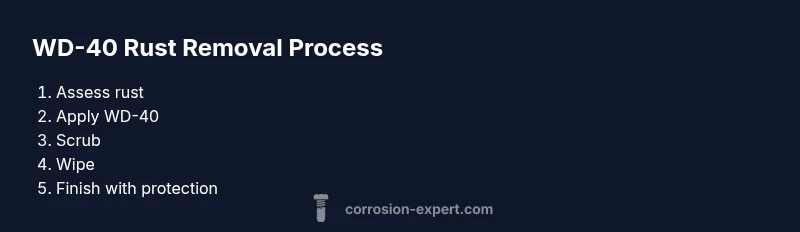
This section walks through a practical approach to light rust using WD-40. Start by inspecting the area and confirming that the rust is mild. Apply WD-40, let it dwell, scrub with a brush, then wipe clean. Repeat as needed. The goal is to remove loose rust without removing metal mass. If you encounter stubborn spots, shift to a finer abrasive and reapply WD-40 to keep the surface lubricated.
Combining WD-40 with mechanical methods
WD-40 rust removal pairs well with mechanical actions like brushing, sanding, or using steel wool. The lubricant keeps the metal surface lubricated and reduces friction during scrubbing, limiting the risk of scratching. Use medium-bristle brushes for larger areas and fine pads for corners. After the rust loosens, you may switch to dry wiping to inspect the progress. For tools with intricate features, apply WD-40 into crevices, then scrub with a small brush.
Finish with protection to prevent future rust
Once the rust is removed, it's essential to apply protection. Wipe the surface dry, then apply a rust inhibitor, primer, or paint depending on the material. For outdoor tools, consider a topcoat or clear sealant to seal out humidity. Keep in mind that WD-40 itself offers moisture displacement but does not provide long-term corrosion protection; combine with protective coatings for lasting results.
What to expect in real-world applications
In practice, wd 40 rust removal will show visible improvement after one or two applications on light rust. Heavy rust may require more aggressive steps; you may need to resort to chemical rust removers or mechanical removal. The Corrosion Expert team notes that results vary based on metal type, moisture exposure, and rust depth. Cases from DIY projects (garden tools, bike parts, and hardware) show that consistent application and follow-up protection yield the best outcomes.
Common mistakes and how to avoid them
Common mistakes include over-reliance on WD-40 for heavy rust, skipping surface preparation, and failing to protect cleaned metal. Always test on a hidden area, wipe thoroughly to remove oil residues before painting or sealing, and use appropriate PPE. Remember that WD-40 is a penetrant, not a long-term rust inhibitor, so plan for a protective coating afterward.
Tools & Materials
- WD-40(Penetrating oil and lubricant suitable for light rust)
- Rust brush or steel wool(Medium stiffness for scraping loose rust)
- Microfiber cloths(For wiping residue and drying)
- Gloves(Protect skin from solvents)
- Safety goggles(Eye protection)
- Sandpaper or abrasive pad (grits 400-800)(For tougher spots after WD-40 pretreatment)
- Rust inhibitor or primer(Apply after cleaning to prevent re-rust)
Steps
Estimated time: 45-90 minutes
- 1
Prepare the area
Clear the workspace and wipe the metal surface to remove loose dirt. This ensures the WD-40 can penetrate effectively and prevents contaminants from scratching the metal during scrubbing.
Tip: Work in a ventilated area and wear gloves. - 2
Apply WD-40 generously
Spray a thin, even layer over the rusted zone. Allow 5–10 minutes for the penetrating oil to soften rust bonds before scrubbing.
Tip: Avoid applying to non-rusted areas to prevent oil buildup. - 3
Scrub with a rust brush
Use a rust brush or steel wool to scrub in a coarse circular pattern. Focus on edges and pits where rust is active.
Tip: Keep the surface damp with WD-40 to maintain lubrication. - 4
Wipe away residue
Wipe away dissolved rust and excess lubricant with a microfiber cloth. Dry the surface thoroughly to prevent flash rust.
Tip: Check for remaining rough spots; repeat if necessary. - 5
Repeat or move to abrasive refinishing
For stubborn spots, reapply WD-40 and move to a finer abrasive pad (800 grit) to smooth the surface.
Tip: Do not over-sand; you can damage the base metal if overworked. - 6
Finish with protection
After cleaning, apply a rust inhibitor or primer to protect the metal from humidity and oxygen.
Tip: Choose a coating compatible with the metal type (steel, aluminum, etc.). - 7
Evaluate long-term results
Inspect after 24 hours. If rust reappears, consider deeper rust removal or professional treatment.
Tip: For critical parts, consider sealing with paint or sealant. - 8
Document and maintain
Take photos before and after, and set a schedule to re-inspect exposed metal regularly.
Tip: Light maintenance spray of WD-40 can buy time between full cleanings.
Quick Answers
Can WD-40 remove heavy rust?
WD-40 rust removal helps loosen light rust and acts as a lubricant; it is not designed for heavy rust removal. For heavy rust, use mechanical cleaning or commercial rust removers.
WD-40 helps with light rust, but it's not a heavy rust remover.
Is WD-40 safe on chrome or painted surfaces?
WD-40 is generally safe on chrome, but it can leave a residue. Wipe clean and test on a small area before applying near painted surfaces.
It's usually safe, but test and wipe away residue.
Can WD-40 prevent rust after removal?
WD-40 offers temporary moisture displacement, not long-term protection. For lasting prevention, use a dedicated rust inhibitor or coating.
WD-40 can help in a pinch, but not long-term.
How is WD-40 rust removal different from rust converters?
WD-40 is a lubricant and penetrant; rust converters chemically convert rust. They serve different roles: prep versus conversion.
WD-40 loosens rust; converters change it chemically.
Should I wear PPE when using WD-40?
Yes. Wear gloves and eye protection to avoid skin contact and splashes.
Yes, wear gloves and goggles.
Watch Video
Quick Summary
- WD-40 rust removal is best for light surface rust
- Always test on a small area before full use
- Follow with a rust inhibitor to prevent re-rust
- Wear protective gear and work in a ventilated area