Rust-Oleum Scratch and Chip Repair: A DIY Guide for Metal Surfaces
Learn how to perform rust oleum scratch and chip repair on metal surfaces with proper prep, primers, and durable topcoats. A step-by-step DIY guide from Corrosion Expert.


This guide shows you how to tackle rust with a rust oleum scratch and chip repair approach. You’ll cover surface prep, choosing the right primers and paints, applying coatings evenly, and finishing with a protective sealant to extend metal life. By following these steps, DIYers can achieve a durable repair that blends with the surrounding finish.
Understanding rust oleum scratch and chip repair
Rust Oleum scratch and chip repair is a practical way to restore metal surfaces damaged by surface rust, scratches, or chips. The core idea is to stop corrosion at the source and rebuild the finish with compatible primers and topcoats that bond well with the underlying metal. This approach emphasizes thorough prep, proper product selection, and controlled application to achieve a durable, long-lasting result. According to Corrosion Expert, starting with a clean, dry, and mechanically sound surface reduces repair failures and extends coating life. The technique is especially effective on classics, outdoor furniture, garden tools, and metalwork that sees moisture exposure. While the name highlights a branded method, the principles translate across most rust-preventive paints and primers, so you can adapt to common rust repair products without relying on a single SKU.
Assessing the surface and scope
Before any repair, inspect the area to distinguish active rust from cosmetic staining. Surface rust that can be rubbed away with a wire brush is a sign you can repair with coating systems, while deep pitting or perforation may require metal repair or replacement. Corrosion Expert notes that addressing rust early lowers long-term maintenance. Record the area size to estimate material needs and plan for multiple thin coats rather than one thick layer. If you’re working outdoors, consider environmental conditions; paint adheres best at moderate temperatures with low humidity. The goal is to create a clean, well-primed foundation for color and protection.
Tools, materials, and workspace setup
A successful rust repair needs the right toolkit: wire brush or drill attachment, medium-grit sandpaper, fine-grit sanding sponge, a clean rag, degreaser, rust-inhibiting primer, and enamel or rust-preventing topcoat. Choose products compatible with metal surfaces and each other to ensure self-priming or adhesion-promoting properties. Set up a well-ventilated workspace, protect nearby surfaces with drop cloths, and wear appropriate PPE (gloves, eye protection, and a mask for dust). The Rust-Oleum scratch and chip repair mindset benefits from a predictable workflow: clean, prime, coat, seal, cure. Corrosion Expert recommends testing a small area first to verify color match and bonding before committing to the entire area.
Step-by-step prep: cleaning, rust removal, and rust inhibition
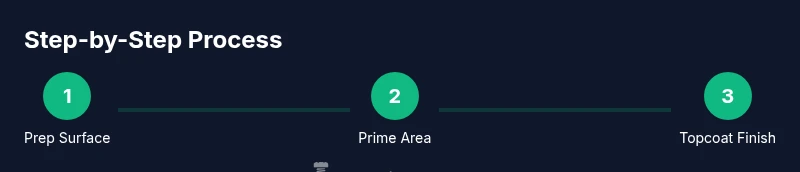
Start by cleaning the area thoroughly with a degreaser and warm water to remove oil, dirt, and wax. Rinse and let dry completely. Use a wire brush or sanding to remove loose rust, then feather the edges with light sanding so the new coating blends with the old surface. Apply a rust-inhibiting primer to seal the substrate and improve adhesion. If you must repaint outdoors, aim for a primer designed for metal and rust resistance to reduce future corrosion. This stage lays the groundwork for a durable repair and helps prevent quick re-rusting.
Primer and base coat application: achieving a smooth, durable finish
Apply the rust-inhibiting primer in thin, even coats, allowing each layer to dry per the product’s instructions. Lightly sand between coats if the manufacturer recommends it to remove any texture and create a flat surface. After the primer fully cures, apply a compatible base coat that matches your metal color or provides a neutral undercoat. Use long, steady strokes to minimize runs and cover all repaired areas. Multiple thin coats are far more dependable than a single heavy application, especially for metal surfaces exposed to weather.
Finishing with topcoat and sealing for longevity
Finish with a topcoat designed for metal and rust protection. Choose a product with UV resistance and weatherproof properties for outdoor use, and apply in thin layers, allowing each to cure before applying the next. A clear sealant can provide extra protection, especially on high-contact items. Once complete, cure the coating fully according to the manufacturer’s guidance. Regular maintenance, including light cleaning and periodic touch-ups, helps preserve the repaired finish and curb future rust formation. Corrosion Expert emphasizes sealing repairs to slow down oxidation and extend service life.
Common mistakes and troubleshooting
Rushing the cure time or skipping surface prep can lead to poor adhesion and premature failure. Skipping degreasing leaves oils behind, causing delamination. Using an incompatible primer or topcoat can compromise corrosion resistance. If the coating peels or wrinkles, remove the affected area and re-prepare before reapplying. For outdoors, avoid applying in direct sun or high humidity, which can trap solvents and cause bubbling. With patience and attention to compatibility, you can achieve a repair that lasts longer and resists future rust.
AUTHORITY SOURCES and references
For safety and best practices, rely on established guidelines from trusted sources. OSHA emphasizes protective gear and ventilation when working with paints and solvents. NIOSH provides chemical safety considerations, and university extension resources offer practical, field-tested painting advice for homeowners working on metal surfaces. When in doubt, consult official guidelines and handle coatings with care to protect yourself and the environment. URLs below are starting points to deepen your understanding and confirm safe handling practices.
- https://www.osha.gov
- https://extension.psu.edu/paint-safety
- https://www.cdc.gov/niosh/topics/chemical-safety/default.html
Safety, disposal, and maintenance
Always dispose of solvent-soaked rags in a metal container with a lid and allow coatings to cure in a well-ventilated area. Keep containers sealed when not in use to prevent solvent evaporation and fire hazards. Wear PPE and ensure good ventilation during sanding and spraying. Post-repair, clean the surface gently with mild cleaners and inspect periodically for signs of rust that may require touch-ups. A scheduled maintenance routine is the best defense against recurrent rust and coating failure.
Tools & Materials
- Wire brush or drill with wire brush attachment(Use to remove loose rust; disposableable and wear eye protection)
- Medium- and fine-grit sandpaper (80-120, 180-240)(Feather edges and smooth surface for primer)
- Degreaser or mild solvent(Remove oils and wax; rinse thoroughly and dry)
- Rags or tack cloths(Wipe dust and residues; avoid lint)
- Rust-inhibiting primer designed for metal(Promotes adhesion and corrosion resistance)
- Base coat paint compatible with primer (enamel or rust-preventive)(Choose color to match or undercoat)
- Topcoat with UV and weather resistance(For exterior projects or high-use items)
- Clear sealant or protective topcoat (optional)(Adds extra protection; verify compatibility with base/topcoat)
- Masking tape and drop cloths(Protect surrounding areas from overspray)
- Personal protective equipment (gloves, safety glasses, mask)(Protect from dust and fumes)
- Ventilated workspace or respirator (for enclosed spaces)(Reduce inhalation risk during spraying)
Steps
Estimated time: 2-4 hours
- 1
Gather supplies and prepare workspace
Organize tools, lay down drop cloths, and ensure proper ventilation. Verify that all products are compatible with metal surfaces and match the repair scope. Having a plan reduces mistakes during the actual repair.
Tip: Do a quick color test on a hidden area to avoid mismatches. - 2
Clean and degrease the area
Remove oil, grease, and dirt using a degreaser. Rinse with water and dry completely before proceeding. A clean surface improves adhesion and coating performance.
Tip: Avoid leaving residue that can contaminate primers. - 3
Remove loose rust mechanically
Use a wire brush or sanding to remove flaking rust around the damaged area. The goal is a sound substrate without loose particles.
Tip: Feather the edges into surrounding paint to help blending. - 4
Feather edges and create a smooth transition
Lightly sand the area with fine-grit sandpaper to blend the repaired zone with the existing finish. This reduces rollover and improves primer adhesion.
Tip: Keep sanding strokes uniform to avoid creating flat spots. - 5
Apply rust-inhibiting primer
Apply a thin, even coat of rust-inhibiting primer and allow it to cure as directed. Primer seals the metal and enhances topcoat bonding.
Tip: Do not rush the drying time; insufficient cure weakens adhesion. - 6
Apply base coat evenly
Brush or spray the base coat in thin layers, allowing proper dry time between passes. Multiple light coats outperform a single thick layer.
Tip: Keep a consistent distance when spraying to minimize runs. - 7
Finish with topcoat and sealant
Apply the topcoat with smooth, even strokes. If desired, add a clear sealant for extra protection in outdoor or high-wear areas.
Tip: Follow the product’s recoat window to avoid solvent trapping. - 8
Cure, inspect, and perform touch-ups
Let the coating fully cure, then inspect for shallow nicks or missed spots. Apply touch-up coats as needed and conduct a final wipe-down.
Tip: Keep items out of service until the coating is fully cured.
Quick Answers
What surfaces can rust oleum scratch and chip repair be used on?
This approach works best on metal surfaces with surface rust or minor chips. It’s not intended for wood or heavily corroded metal that has perforations. Always evaluate the substrate before starting and consider metal repair if corrosion has progressed deeper.
It works best on metal with surface rust; avoid wood or severely corroded metal.
Do I need to remove all rust before painting?
Eliminate loose rust and scale first, then treat the area with a rust-inhibiting primer. Deeper pitting may require more extensive repair, but you don’t have to remove every trace of rust to proceed if the surface is stable and properly primed.
Remove loose rust, then prime. Deep pits may need more work, but you can proceed if stable.
How long does the finish take to cure outdoors?
Cure time depends on temperature, humidity, and product recommendations. Outdoor projects typically require longer cure times; avoid handling until fully cured per product instructions.
Cure times vary; outdoors can take longer, follow the product’s directions.
Can I use household paint for touch-ups?
Household paints may not offer the same rust protection or bonding. For best results, use a rust-inhibiting primer and topcoat designed for metal surfaces or a dedicated touch-up system from the same line.
Household paint isn’t ideal for rust repairs; use proper rust-preventive coatings.
Is this repair durable for outdoor use?
Yes, with the right primer, topcoat, and sealant, plus proper curing and maintenance. Durability increases with a clean substrate, correct product selection, and regular upkeep.
Outdoor repairs last longer when you use proper primers and sealants and keep up with maintenance.
How much material will I need for a typical repair?
Estimate based on surface area and coat thickness. Buy a little extra to account for touch-ups and potential weather conditions. Start with a small quantity and test the color match before larger applications.
Measure the area, buy a bit more for touch-ups, and test color first.
Watch Video
Quick Summary
- Prep surfaces thoroughly for lasting adhesion
- Use rust-inhibiting primer and compatible topcoats
- Apply multiple thin coats for durability
- Protect yourself with PPE and ventilate the workspace
- Inspect and touch up after curing