Rust in Toilet Tank: Troubleshooting Guide
Learn to diagnose, fix, and prevent rust in toilet tanks with clear steps, practical tips, and safety guidance from Corrosion Expert.


The most likely cause of rust in the toilet tank is corrosion of metal components caused by hard water minerals and aging fittings, often accelerated by minor leaks. Quick fix: replace rusty parts with corrosion-resistant equivalents, inspect and reseal fittings, and consider water treatment or a descaler if mineral buildup is heavy. If leaks persist, shut off water and call a plumber.
What rust in toilet tank looks like and why it happens
Rust in toilet tank is typically visible as reddish-brown staining on metal components, flaky rust on bolts, or rust-colored sediment in the tank. It happens when water chemistry corrodes metal parts such as bolts, screws, fill valves, and flush valves. According to Corrosion Expert, rust can start as a tiny pinhole of corrosion on a steel fastener or a zinc-coated screw, then spread with moisture exposure. Regular inspection helps catch signs early, before leaks become a bigger problem. Remember: even small amounts of rust can affect valve performance and water flow, so address it promptly rather than postponing.
Common causes of rust in the toilet tank
Rust in a toilet tank is rarely caused by one factor alone. Common culprits include aging metal fittings, poor-quality or galvanized steel hardware, hard water with high mineral content, and minor leaks that keep fittings damp. Corrosion can also happen where different metals meet (galvanic corrosion) or where cleaning agents interact with metal parts. In many homes, rust starts at the bolts or screws that connect the tank to the bowl and gradually spreads if moisture persists. Regular replacement with brass or corrosion-resistant plastics can dramatically reduce future rust.
How water chemistry and minerals contribute
Hard water introduces minerals like calcium, magnesium, and iron that can form deposits on metal surfaces. These minerals can trap moisture against metal, accelerating oxidation. The resulting rust not only looks unsightly but can seed further corrosion around seals and gaskets. Corrosion Expert analysis shows that mineral-scale buildup can insulate parts from seals, cause leaks, and lead to accelerated wear on internal components. Replacing affected parts with corrosion-resistant options and occasional descaler use can help mitigate this risk.
Leaks, fittings, and metal components to inspect
Inspect the tank for any signs of moisture around bolts, the fill valve, the flush valve, and the overflow tube. Leaks near seals keep metal parts damp, increasing rust risk. Check for discoloration on bolts and screws, white calcium buildup near joints, and any loose fittings. If you notice rust on metal components, plan to replace those parts with brass or high-grade plastic equivalents. Tighten fittings moderately—over-tightening can damage porcelain or seals and worsen leaks.
Step-by-step inspection checklist
- Inspect the external bolts securing the tank to the bowl and the fill/flush valves for rust or corrosion.
- Look at the gasket around the tank and the flush valve seal for signs of wear.
- Test for leaks by gently pressing on the tank while observing for drips.
- If you find rust, note the exact part: bolts, screws, valve stems, or connectors.
- Decide whether replacement parts should be brass, plastic, or stainless steel to resist corrosion.
- Check water quality: if minerals are high, discuss a water treatment option with a plumber.
- Plan replacement of any severely corroded parts rather than trying to salvage them.
- Reassemble with careful alignment and a new wax gasket if needed.
- Refill and test the system, watching for leaks and rust recurrence.
Immediate fixes you can safely attempt
If you spot rust, stop using any rusty parts and replace them first rather than cleaning rust out of critical seals. Begin with the easiest parts: a rusted bolt or nut can be swapped for brass, and a corroded fill valve should be replaced. Apply moderate torque to avoid stripping threads. After replacement, flush a few times to check for leaks and observe fresh metal surfaces for signs of new rust. Avoid aggressive acids that can damage porcelain and rubber gaskets.
Long-term prevention and maintenance
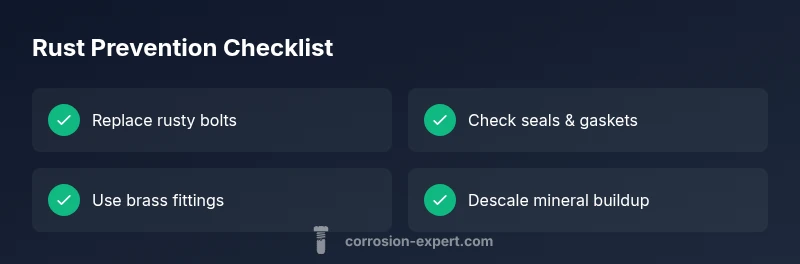
To prevent rust from returning, replace steel components with brass or high-grade plastics, and choose corrosion-resistant hardware for tank fittings. Consider water treatment solutions if mineral content is high, such as a whole-house softener or a point-of-use descaler. Regularly inspect the tank, especially after any maintenance work, for new rust spots and ensure seals remain tight. Dry storage and proper ventilation around the bathroom can also reduce moisture exposure that accelerates corrosion.
When to call a professional
If you see extensive rust, multiple rusty components, or persistent leaks after replacements, it’s time to call a plumber. Severe corrosion can compromise the tank’s integrity and lead to leaks or water damage. A professional can assess whether a full replacement of the toilet or tank is necessary and can recommend corrosion-resistant alternatives. Don’t delay if you notice hidden corrosion behind tiles or in hard-to-reach seams.
Practical cleanup and safe disposal
For cleanup, wear gloves and avoid scraping rust with metal tools that could scratch porcelain. Use a mild rust remover approved for bathroom use or a vinegar solution on non-sensitive metal parts, then rinse thoroughly. Do not mix cleaners with bleach; this can create hazardous gases. When replacing parts, dispose of old metal components according to local regulations and recycle metal when possible. Keeping the area dry after cleaning helps prevent new rust from forming.
Steps
Estimated time: 60-90 minutes
- 1
Power off and drain the tank
Shut off the water supply to the toilet and flush to empty the tank. Disconnect the supply line, then dry the tank interior with a cloth to minimize rust spread. This step reduces the risk of electrolyte activity during repair.
Tip: Have towels ready; keep a bucket handy for any residual water. - 2
Inspect and catalog rusted parts
Carefully remove the tank lid and inspect all metal parts for rust: bolts, screws, valves, and connectors. Note which parts show advanced corrosion and may need replacement rather than cleaning.
Tip: Take photos to guide shopping for exact replacements. - 3
Source corrosion-resistant replacements
Choose brass or high-grade plastic components for rust-prone parts. Ensure compatibility with your toilet model. If unsure, bring part numbers to a plumbing supply store.
Tip: Avoid cheap steel bolts; they rust quickly in bathrooms. - 4
Replace rusted components
Install the new parts in the reverse order of removal. Gently tighten fittings without over-torquing; over-tightening can crack porcelain or strip threads.
Tip: Use plumber’s tape on threaded connections if recommended. - 5
Check seals and gaskets
Inspect gaskets around the fill valve and flush valve; replace if discolored or stiff. Ensure wax ring and other seals are seated correctly to prevent leaks.
Tip: Do not reuse old gaskets that show wear. - 6
Test for leaks
Reconnect the water supply and slowly turn it on. Observe for leaks around joints during first fill. If you see drips, tighten or reseal as needed.
Tip: Watch for a full cycle of flushing to verify seal integrity. - 7
Evaluate mineral buildup
If mineral deposits remain, consider a descaler treatment or water-softening option. Run several cycles to see if deposits recur.
Tip: Follow product instructions and ventilate the bathroom. - 8
Document maintenance plan
Record what you replaced and when. Schedule periodic checks for rust signs and leaks to catch future problems early.
Tip: Set a reminder for seasonal inspection. - 9
Plan for replacement if needed
If rust keeps returning or the tank shows cracks, discuss full replacement with a corrosion-resistant toilet or tank.
Tip: A newer unit with anti-corrosion features saves long-term costs.
Diagnosis: Rust stains or flakes and potential leaks in the toilet tank
Possible Causes
- highPowerful oxidation of steel bolts, screws, and valve hardware
- highHard water minerals accelerating corrosion on metal fittings
- mediumDissimilar metals causing galvanic corrosion at joints
- lowMinor leaks that keep parts damp and promote rust
Fixes
- easyReplace rusty bolts, screws, and valves with brass or corrosion-resistant plastics
- easyTighten or reseal joints and washers; address leaks promptly
- mediumUse a descaler or water-softening solution if mineral buildup is heavy
- hardCall a plumber for significant corrosion or tank replacement
Quick Answers
What are the common signs of rust in a toilet tank?
Common signs include reddish-brown stains on metal components, rust flakes on the tank surface, and corrosion around bolts or valves. These indicate ongoing oxidation and potential leaks. Addressing rust early can prevent more serious damage.
Look for brown stains and rust flakes around bolts and valves—these indicate corrosion and should be checked quickly.
Can rust in the toilet tank affect water quality?
Rust from tank hardware can mix with water, potentially affecting taste and appearance. While it rarely harms health in small amounts, it signals hardware wear and the need for replacement to prevent leaks.
Rusty hardware can color the water and indicate worn parts; replace affected components to maintain quality.
Which parts rust most often in toilet tanks?
Bolts, screws, fill valves, and flush valves are most prone to rust due to constant moisture. Replacing with brass or plastic reduces future corrosion risk.
Bolts and valve parts are the usual rust culprits; swap them with corrosion-resistant options.
Is it safe to use vinegar to remove rust from toilet tank components?
Vinegar can help with mild rust on non-sensitive metal parts, but avoid it on rubber gaskets and seals where it may degrade materials. Always rinse thoroughly after treatment.
Vinegar can help mild rust on some parts, but skip it on seals and rinse well afterward.
When should I replace the entire toilet tank?
If corrosion is widespread, seals fail repeatedly, or the tank shows cracks, replacement with a corrosion-resistant unit is often the best option. A professional can advise on the best long-term solution.
If rust is extensive or leaks persist, consider replacing the tank and consult a plumber.
Watch Video
Quick Summary
- Inspect tank hardware regularly for early rust signs
- Replace rusty parts with brass or corrosion-resistant plastics
- Address leaks promptly to prevent moisture damage
- Consider water treatment to reduce mineral-related corrosion