Remove Rust with WD-40: Practical DIY Guide
Learn to remove rust with wd 40 safely and effectively. This step-by-step guide covers prep, application, scrubbing, and prevention for DIYers tackling light corrosion.


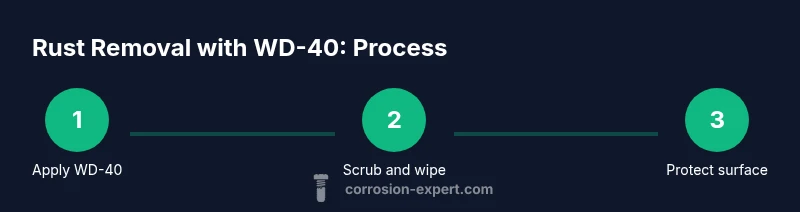
Follow this simple process to remove rust with wd 40 on light rust and small parts. Start with safe prep, apply WD-40, scrub away the oxidation, and finish with a protective coating. WD-40 works best on surface rust, not deep pits. For stubborn spots, reapply and scrub again. With patience, you’ll see a cleaner metal that’s easier to finish.
How WD-40 Works on Rust
Corrosion is a surface-level problem that WD-40 can help manage by penetrating and displacing moisture, loosening oxidation, and providing a light film to slow further rust. According to Corrosion Expert, the product is most effective on light surface rust on metal parts such as screws, bolts, and tools. It’s not a cure for deep pits or heavily corroded surfaces. Always test a small area first and ensure good ventilation. For many light rust scenarios, you can remove rust with wd 40 and then scrub with a brush to lift loose oxidation.
Suitable Rust Types for WD-40
WD-40 shines when rust is shallow and cosmetic. It can help with surface rust on metal tools, blades, and fittings, but it won’t fully restore metal that has aggressive pitting or flaking paint. For deep rust or structural components, you’ll want mechanical removal (brushes, sandpaper) or specialized rust removers. If you’re working on items that will be painted, WD-40’s film can make prep easier by removing adhesives and cleaner residue.
Complementary Methods and Tools
Besides WD-40, gather a few tools to help the cleaning process: a stiff scrub brush, 0000-grade steel wool, soft cloths, disposable gloves, and safety glasses. Optional items include a mild soap and an old toothbrush to target crevices. Use the brush to scrub after applying WD-40, and always wipe with a clean cloth to judge progress. Keep non-metal surfaces away from the spray to prevent staining.
Maintenance and Prevention After Rust Removal
After you finish the cleaning, dry the metal completely to prevent flash rust. Wipe with a dry rag, then apply a protective coating such as a light rust-preventive oil or a primer if you plan to repaint. Store items in a dry, cool environment and consider periodic reapplication of a protective film on moving parts. Regular maintenance helps extend the life of metal surfaces and reduces future rust.
Tools & Materials
- WD-40 multi-use product(Choose original or multi-use formula; avoid silicone-based if you plan to paint.)
- Clean rags(Lint-free and absorbent for wiping residue.)
- Wire brush or 0000 steel wool(Use gently on delicate surfaces to avoid scratching.)
- Mild abrasive pad(Optional for stubborn spots after WD-40 application.)
- Safety gloves(Protect skin from solvent exposure.)
- Safety glasses(Shield eyes from splashes.)
- Rust-preventive coating or primer(Recommended for long-term protection after cleaning.)
- Small tray or dish(Contain overspray and make cleanup easier.)
Steps
Estimated time: 20-30 minutes
- 1
Gather materials and prepare workspace
Lay down a drop cloth and work in a well-ventilated area. Gather WD-40, brushes, rags, gloves, and safety glasses. This keeps cleanup quick and reduces spills on nearby surfaces.
Tip: Keep a dedicated rag for residue and another for dry patting. - 2
Clean the surface and remove loose debris
Wipe the area with a clean rag to remove dirt, oil, and loose rust particles. A clean surface helps you see progress and prevents scratching during scrubbing.
Tip: Use a mild soap if the area is greasy; dry thoroughly before proceeding. - 3
Apply WD-40 generously to the rusted area
Spray a liberal amount of WD-40 on the affected metal, ensuring full coverage of the rusted portion. Let it sit for a moment to penetrate oxidation.
Tip: Keep the spray directed away from non-metal surfaces to avoid staining. - 4
Wait 5–10 minutes for penetration
Allow the solvent to soak in and loosen the rust. This step improves the effectiveness of subsequent scrubbing.
Tip: Avoid letting the spray dry completely on delicate finishes. - 5
Scrub with a brush or pad to lift rust
Use a stiff brush or 0000 steel wool to agitate the surface in straight, even strokes. You should see oxidation begin to lift as you scrub.
Tip: Use controlled pressure to prevent scratching the base metal. - 6
Wipe away residue and inspect progress
Wipe with a clean rag to reveal the metal’s true condition. If rust remains, you can repeat the application and scrubbing steps.
Tip: Inspect in good lighting to catch hidden spots. - 7
Repeat the application if needed
For stubborn patches, reapply WD-40 and repeat steps 4–6. Persistence pays off on light to moderate rust.
Tip: Don’t over-saturate; multiple light treatments are better than one heavy shot. - 8
Apply a protective coating to prevent relapse
Finish with a rust-preventive oil or paintable primer if the item will be exposed to moisture. This slows future corrosion.
Tip: Label and store WD-40 securely after use.
Quick Answers
Can WD-40 remove rust completely?
WD-40 helps loosen and remove surface rust, especially on small items. It is not a guaranteed solution for deep pits or heavy corrosion; you may need stronger rust removers or mechanical cleaning.
WD-40 removes surface rust well, but it won’t fix deep rust; you may need additional methods.
Is WD-40 safe on all metals?
For most metals, WD-40 is safe for temporary use. Avoid prolonged exposure on soft plastics or rubber seals; always test a small area first.
Generally safe on metal, but test on sensitive materials first.
How long should WD-40 sit before scrubbing?
Allow 5 to 10 minutes for penetration on light rust; larger areas may require longer. Do not let it dry completely on delicate finishes.
Let it soak for about 5 to 10 minutes.
Can WD-40 prevent rust after cleaning?
WD-40 leaves a light film that can slow oxidation but is not a long-term rust inhibitor. For best protection, wipe dry and apply a dedicated rust-preventive coating.
It can slow rust briefly, but you need proper coating for long-term protection.
What if rust remains after WD-40?
If rust remains, use a brush or sandpaper to remove stubborn areas, or consider rust converters and primer. For critical parts, consult a professional.
If rust stays, try mechanical cleaning or rust converters.
Does WD-40 work on heavy rust?
WD-40 is not ideal for heavy, deep corrosion. For heavy rust, consider mechanical removal, rust converters, or professional treatment.
Not ideal for heavy rust; you may need stronger treatments.
Watch Video
Quick Summary
- Assess rust type before treatment.
- WD-40 works best on light surface rust.
- Prep, scrub, and protect for lasting results.
- Pair WD-40 with proper coatings to prevent future rust.