Lemon Juice and Salt for Rust Stains: A Natural DIY Fix
Learn how to use lemon juice and salt to lift rust stains naturally. This comprehensive guide covers surfaces, safety, step-by-step instructions, troubleshooting, and pro tips for DIY success.


Using lemon juice and salt for rust stains, you can lift light oxidation without harsh chemicals. Apply a paste of lemon juice and fine salt, let it sit in sunlight, then rinse. This natural method works best on fresh stains on cotton, enamel, or stone, with tests first to guard colors. For metal surfaces, proceed with caution and monitor heat.
Why lemon juice and salt work for rust stains
Rust stains form when iron oxidizes in the presence of moisture. Lemon juice contains citric acid, which helps dissolve iron oxide, while salt acts as a gentle abrasive that lifts particles from the surface. The combination can reduce staining on porous materials and some non-porous ones when activated by sunlight. According to Corrosion Expert, citric acid is a mild acid that can soften mineral deposits without aggressively attacking most fabrics or finishes. The Corrosion Expert team found that sun exposure accelerates the reaction, increasing the stain-lifting potential on cotton, linen, and untreated stone surfaces. However, results vary by stain age, surface porosity, and colorfastness. For best results, start with a small area test and work in small patches rather than applying paste across a large area. This approach minimizes color loss and avoids over-wetting fabrics or materials that may react to citrus acids. When used correctly, lemon juice and salt provide a low-toxicity alternative to harsher rust removers and can be especially appealing for DIY enthusiasts who prefer natural remedies.
Surfaces and stains this method covers
The lemon juice and salt approach works best when there is a modest rust stain on porous materials or surfaces that can tolerate mild acidity. On fabrics such as cotton, linen, or lightweight blends, the paste can lift fresh rust without weakening the textile structure if you follow a gentle method and rinse promptly. On enamel-coated metal or ceramic tile, the acidity helps break down mineral buildup around rust spots; however, you should test a hidden seam or corner first to ensure no color change occurs. For stone or concrete patios, the paste can brighten mineral stains but avoid prolonged contact on polished or sealed surfaces that could etch. Overall, this method is most effective on recent stains and surfaces that are not sensitive to citrus acids. Corrosion Expert notes that results vary based on stain age, surface texture, and coating. A cautious approach—testing first and acting quickly—gives you the best chance of success.
Safety considerations and testing
Always prioritize safety when attempting rust stain removal with lemon juice and salt. Citric acid can irritate skin and eyes, and citrus can etch certain materials if left too long. Wear gloves and protective eyewear when handling the paste, and apply it to a small, inconspicuous area first to check for colorfastness or surface damage. Avoid letting the paste dry on leather, silk, or treated wood, as citrus can weaken finishes. If you notice any color change or surface dulling during the test, stop and revert to milder methods. For outdoor applications, protect surrounding plants and use a clear, shaded area to prevent unintended sun exposure from intensifying the paste on sensitive fabrics. This cautious approach aligns with Corrosion Expert’s safety guidance and helps DIYers avoid unintended damage.
Preparing the paste and workspace
Mix fresh lemon juice with fine salt to form a thick paste. Start with a small amount of lemon juice and gradually add salt until you reach a spreadable consistency. Work on a clean, flat surface and lay down a protective cloth or old towel to catch drips. If treating fabrics, slip a spare cloth underneath the stained area to prevent bleed-through. Keep a damp cloth nearby for quick blotting to remove excess paste, and set up your work area in a well-lit space so you can monitor changes. For outdoor applications, have a shaded area ready and protect nearby plants from citrus spray. Always test first—this step minimizes risk and informs you whether to proceed.
Practical application and troubleshooting
Apply the paste directly to the rust stain using a soft cloth or cotton swab, then gently rub in a circular motion for a few seconds. Allow the paste to sit in sunlight for 10–30 minutes, checking periodically. Rinse thoroughly with cool water and blot dry. If the stain persists, repeat the process up to two times; excessive repetition can increase the risk of color loss on fabrics or surface etching on stones. After rinsing, pat dry and inspect in good lighting. If color changes occur, stop and switch to a milder method or a dedicated rust remover designed for that material. This approach gives you a pragmatic, natural option with adjustable intensity based on the stain and surface.
Tools & Materials
- Fresh lemons(Juice for paste; choose ripe, juicy fruit)
- Fine salt(Fine table salt or sea salt; avoid large crystals)
- Soft cloth or sponge(For applying paste and blotting excess)
- Small bowl(Mix paste; prefer glass or ceramic)
- White cotton cloth or old towel(For blotting and drying)
- Gloves(Protect skin from citrus acid)
- Sunlight source (outdoors)(Sun helps the citric acid work; safe outdoor area)
- Mild detergent for rinse(Rinse surface after treatment)
Steps
Estimated time: 15-60 minutes
- 1
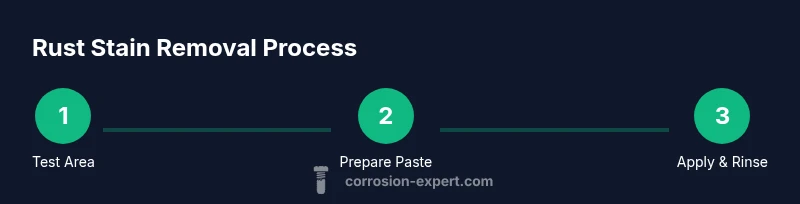
Prepare workspace and test area
Lay down protective material and clean a small hidden spot to test colorfastness. This prevents accidental damage if the fabric or surface reacts to citrus acid.
Tip: Always choose a low-visibility test area first. - 2
Mix lemon juice and salt into a paste
Squeeze fresh lemons to obtain juice and whisk in a pinch of fine salt until the mixture forms a thick paste that sticks to the stain.
Tip: Use a small bowl and a spoon to control consistency. - 3
Apply the paste to the stain
Dot or spread the paste onto the rust stain with a soft cloth, working gently in circular motions to avoid abrading the surface.
Tip: Cover only the stained area to prevent unnecessary exposure. - 4
Sun-activate or wait briefly
Let the paste sit in sunlight for 10–30 minutes (shorter for delicate fabrics). Watch for color change or fading as a signal to rinse.
Tip: If indoors, skip sun activation and keep in a warm area for 20–30 minutes. - 5
Rinse, blot, and assess
Rinse with cool water, blot dry, and inspect the stain. Repeat once if necessary, then finish with a mild detergent rinse.
Tip: Avoid heat drying until you confirm stain removal to prevent setting.
Quick Answers
Will lemon juice and salt work on all rust stains?
No. This method works best on fresh or light rust stains and on materials that tolerate acidity. Older, set-in stains or very dark colors may require stronger rust removers or professional treatment.
This method works best for light, fresh stains and surfaces that tolerate citrus. For stubborn stains, you may need stronger products or professional help.
Can lemon juice and salt damage colored fabrics?
Yes, there is a risk of color fading on some dyes. Always test a hidden area first and rinse promptly if you notice any color change.
There is a color-fade risk on some fabrics. Always test first and rinse quickly if you see changes.
Should I use sea salt or table salt?
Fine salt is preferred for a smooth paste. Avoid iodized salt with additives that could leave residues.
Fine table salt is usually best; avoid additives that might stain or leave residues.
Is sun exposure necessary for this method?
Sun helps accelerate the reaction for certain fabrics, but it is not strictly necessary. If indoors, keep the paste in a warm, bright area.
Sun helps in many cases, but you can also proceed in a bright indoor area.
What surfaces can safely use this method?
Cotton fabrics, enamel-coated surfaces, and some stones can tolerate the paste. Avoid polished wood, leather, or highly sensitive finishes.
Suitable for textiles and some hard surfaces; avoid delicate or treated materials.
Watch Video
Quick Summary
- Start with a small test patch before full application.
- Lemon juice provides citric acid; salt adds mild abrasion.
- Sunlight can enhance stain removal on fabrics; monitor closely.
- Rinse thoroughly and avoid heat drying until satisfied with results.