How to Remove Rust Fast from Metal: Quick Guide
Learn how rust forms on metal and how to remove it quickly. This step-by-step guide compares methods, provides practical tips, and shows long-term protection for DIY homeowners.


With this guide you will remove rust from metal quickly and safely, then seal and protect the surface to prevent recurrence. You’ll learn when to choose mechanical vs chemical methods, plus simple prep steps and everyday supplies. Follow clear steps for reliable results in under an hour for small projects.
How rust metal quickly forms and how to stop it
Rust forms when iron or steel encounters moisture, oxygen, and sometimes salts. According to Corrosion Expert, humidity and exposure to water accelerate the reaction, so even small metal objects can begin to show signs of rust within hours. Recognizing this helps you act fast to protect surfaces before irreparable damage occurs.
To stop rust quickly, the first priority is surface dryness. Wipe away any standing moisture, dry the area with a clean cloth, and ensure ventilation to speed evaporation. Once dry, remove loose rust particles with a stiff brush so the next coating adheres well.
Preventive habits matter just as much as repair. After you remove rust, apply a primer designed for metal, followed by a protective topcoat. For outdoor items, look for coatings with UV resistance and water beading properties. Regular maintenance—wiping, cleaning, and touching up coatings—extends life and reduces future rust growth.
Quick comparison of rust removal methods
There are three primary approaches: mechanical, chemical, and electrochemical (less common for home projects). Mechanical methods use physical abrasion—wire brushes, sanding discs, or scraping—to lift rust from the surface. They are fast, inexpensive, and do not introduce chemicals, but they can scratch soft metals if used too aggressively.
Chemical methods rely on rust removers or converters that dissolve or chemically stabilize rust. Acids such as phosphoric or oxalic acids are effective on moderate rust; citric acid-based products are milder and safer for beginners. Always follow product instructions and work in a ventilated area.
Electrochemical methods use a setup that draws rust particles away using electrical current and a sacrificial anode. This is powerful but usually reserved for larger or heavily corroded parts and can require specialty equipment. For most DIY projects, mechanical or chemical methods offer the best balance of speed, safety, and cost.
Preparing the surface: Safety and setup
Safety comes first. Put on safety goggles, nitrile gloves, and a dust mask or respirator. Work in a well-ventilated space and keep kids and pets away. Set up a clean, contained workspace with a drop cloth and masking tape to protect nearby surfaces. Gather your tools and materials in advance so you won’t interrupt the process later.
Begin with a visual inspection to determine rust thickness and whether underlying metal is structurally sound. If the metal is flaky or severely pitted, capacities may be limited and replacement might be a better option. In lighter rust, the following steps will restore a smooth base for protection.
Prevention and long-term protection after cleaning
Prevention is cheaper than repair. After rust removal, seal the metal with a rust-inhibiting primer, then apply a topcoat suitable for indoor or outdoor use. For tools and tools, wipe down after use and apply a thin layer of oil to bare metal to deter moisture.
If you’re storing metal items, keep them dry and consider humidity-control measures. For outdoor metal, select coatings that specify salt resistance and UV protection. In high-rain regions, reapply coatings every 1-3 years and perform periodic inspections for early rust signs.
AUTHORITY SOURCES
- OSHA.gov
- NIST.gov/topics/corrosion
- PubS.acs.org
Tools & Materials
- Safety glasses(Impact-resistant lenses)
- Nitrile gloves(Chemical resistance)
- Respirator or mask(Ventilated area recommended)
- Wire brush(Stiff bristles for rust lift)
- Steel wool pads(Fine to medium grade)
- Sandpaper (60-120 grit)(For smoothing edges)
- Rust remover or converter(Follow label directions)
- Metal primer(Adhesive undercoat for paint)
- Paint or sealant(Exterior-grade for outdoors)
- Rags/cloths(Lint-free for wipe-downs)
- Masking tape(Protect adjacent areas)
- Bucket and water(For rinsing (optional))
Steps
Estimated time: 60-120 minutes
- 1
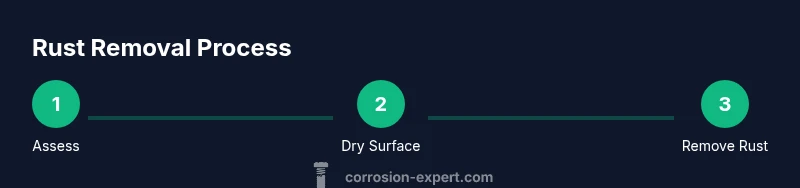
Assess workspace and safety
Survey the area to identify hazards and plan your route. Clear the space, lay down drop cloths, and have your tools within reach. Confirm the metal item is stable and safe to work on. This step sets the pace for a clean, safe process.
Tip: Keep a dedicated trash bag for rusty debris to avoid contamination. - 2
Dry the surface thoroughly
Wipe away surface moisture with a clean cloth and allow the area to dry completely. Use a fan or natural ventilation to speed evaporation, especially in humid environments. A dry surface ensures better adhesion of primers and coatings.
Tip: If in doubt, wait 5–10 minutes longer to ensure all moisture is gone. - 3
Remove loose rust mechanically
Use a wire brush or steel wool to lift loose rust and flaking. Work in small circular motions until the metal shows a uniform dull finish. Avoid heavy grinding on delicate parts to prevent gouges.
Tip: Wear gloves and goggles; keep strokes shallow to minimize gouging. - 4
Apply rust remover or converter
Follow the product’s instructions to apply rust remover or a rust converter. Allow it to sit for the recommended time, then wipe away residue or rinse as directed. This step chemically stabilizes remaining rust for a smooth base.
Tip: Test on a small area first to ensure color changes are acceptable. - 5
Neutralize, rinse, and dry
Rinse off any chemical residues and dry the surface thoroughly. Pat the area dry with a lint-free cloth and allow additional air-drying time in a warm, dry area before painting.
Tip: Avoid leaving moisture pockets; they can cause new rust formation. - 6
Prime and seal the surface
Apply a corrosion-inhibiting primer, then a topcoat appropriate for the location (indoor vs outdoor). Cure times vary by product; plan for adequate drying before handling or exposure.
Tip: Apply thin, even coats and allow full curing between layers.
Quick Answers
Can rust be removed from stainless steel?
Stainless steel is more resistant to rust, but rust can form on alloys with lower chromium content. Use gentle mechanical cleaning and avoid harsh acids that can discolor the surface. For stubborn spots, specialized rust removers suitable for stainless steel are recommended.
Stainless steel resists rust, but spots can appear. Use gentle cleaning and proper cleaners designed for stainless steel.
Is rust removal safe for home DIY projects?
Yes, with proper safety gear, ventilation, and following product instructions. Mechanical methods produce dust and grit, while chemicals require gloves and masks. Always work in a well-ventilated area and keep kids away.
Yes, as long as you wear protection and follow the product guidelines.
How long does the preventive coating last after rust removal?
Longevity depends on environment, coating type, and maintenance. Outdoor metal often needs reapplication every 1–3 years, while indoor items may last longer with periodic inspections.
Outdoor coatings typically need reapplication every 1 to 3 years, depending on conditions.
What’s the best rust remover for thick rust?
For thick rust, a two-step approach often works best: mechanical removal to reduce thickness, followed by a chemical rust remover or converter for stabilization. Test compatibility on a small area first.
Use mechanical removal first, then a chemical stabilizer for thick rust.
Can I paint over rust after cleaning?
Paint can be applied after the surface is rust-free and properly primed. Do not paint over active rust; ensure all corrosion is stopped and the primer is compatible with the topcoat.
Paint only after you’ve neutralized and primed the surface.
Watch Video
Quick Summary
- Assess rust thickness before choosing a method
- Dry the surface completely to ensure coating adherence
- Choose mechanical or chemical methods based on rust severity
- Finish with primer and sealant to prevent recurrence