Can You Put Rust Out in a Water Softener? A Practical Guide
Learn whether rust can be addressed in a water softener, how rust affects resin beds and brine tanks, and a clear step-by-step approach for safe cleaning and prevention. Corrosion Expert provides practical tips for DIY enthusiasts.


By the end of this guide, you’ll know if you can put rust out in a water softener and how to handle rusty components safely. You’ll learn what rust does in a softener, when to clean or replace parts, and a clear, practical step-by-step approach to rust prevention and safe maintenance.
Can you put rust out in water softener? Can you put rust out in a water softener is a question many homeowners face when they notice rust-colored water or sediment around the unit. The question can you put rust out in water softener is more than a curiosity; it signals potential trouble inside the system. According to Corrosion Expert, rust in home water-treatment components often indicates iron sediment or mineral scale that can clog resin beds if left untreated. This block explains what rust does in a water softener and how to approach safe cleaning and prevention. The goal is to identify the rust sources without contaminating the resin bed or brine pathways, then apply targeted steps to keep your system running efficiently. Remember, exterior rust is usually easier to manage than interior corrosion, but both require careful attention to avoid long-term damage. This is a practical, DIY-friendly overview that sets the stage for safer maintenance and better water quality.
What parts are most affected by rust in a water softener
Rust can affect several pathways within a softener. The resin bed is the core component that removes hardness minerals, and rust debris or iron fouling can reduce ion-exchange efficiency. The brine tank and its fittings are also prone to corrosion, which can cause leaks or brine dosing irregularities. Control valves, metal housings, and nearby piping may show visible rust stains or pitting that compromises seals and operation. Exterior rust on the cabinet or brackets can indicate ongoing moisture exposure and corrosion risk. The most effective approach is to prioritize rust removal and prevention on components that directly contact water, salt solutions, or air exchange. Corrosion Expert emphasizes that stopping rust at its source helps protect overall performance and prolongs the life of the system.
How to diagnose rust without risking resin bed
Begin with non-invasive checks to avoid contaminating the resin bed. Look for visible rust on exterior metal fittings, screws, or the tank exterior. If you suspect internal rust, do not disassemble the resin bed yourself unless you are trained; interior components require professional handling. For exterior rust, wipe with a damp cloth and a mild solution like white vinegar, then rinse thoroughly and dry. If you notice orange staining in the brine tank, rust could be migrating from fittings; address those fittings first and monitor water quality. Always shut off the water supply before any inspection and wear protective gear to avoid skin contact with cleaning agents. Corrosion Expert recommends keeping rust away from resin paths and salt routes to prevent unintended contamination.
Cleaning and treatment options: exterior rust vs interior rust
Exterior rust on a water softener is typically easier to manage. Use a non-abrasive brush and a mild vinegar solution to lift rust deposits from housings and screws; dry completely to slow further oxidation. Avoid harsh metal scrapers that could scratch coatings or expose fresh metal. Interior rust, especially if it involves the brine line or valve, is trickier. Do not introduce acidic cleaners directly into the resin bed. Instead, remove and inspect accessible metal fittings, replace worn gaskets, and run rinsing cycles to flush any dislodged deposits. If rust persists or you see rotted components, consider replacement of affected parts and professional assessment. Exterior rust is often DIY-friendly, while interior rust may require professional service to avoid resin bed damage.
Prevention and maintenance strategies that work long-term
To prevent rust from returning, implement a preventive maintenance routine. Use a rust-inhibiting filter at the water supply if your iron levels are high, and schedule periodic checks of fittings for corrosion. Keep the unit in a dry, ventilated area to minimize moisture exposure. Regularly disinfect and flush the system per manufacturer instructions to reduce mineral buildup that fosters rust. Consider a water test to quantify iron content and evaluate the need for an iron-removal system or a more complete water-treatment plan. Corrosion Expert suggests that a proactive approach saves money over time by extending the life of softener components and maintaining water quality for your household.
Quick-start diagnosis and maintenance checklist
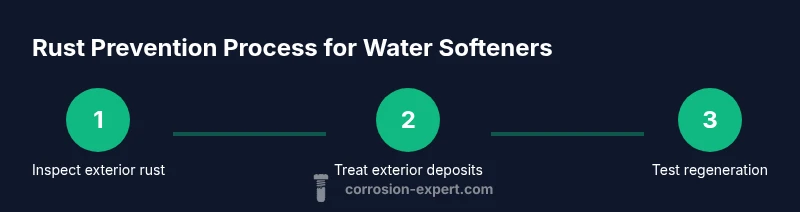
- Inspect exterior fittings for rust and tighten any loose connections.
- Check brine tank surfaces; inspect for orange staining indicating rust migration.
- Wipe exterior surfaces with a mild vinegar solution, then rinse and dry.
- Run a regeneration cycle and observe for leaks or uneven resin bed performance.
- If rust appears inside or after cleaning, schedule professional evaluation.
Tools & Materials
- Safety gear (gloves and safety glasses)(Protect hands and eyes from rust particles and cleaners)
- Soft cloths or towels(Catch drips and dry surfaces)
- Plastic bucket or tray(Contain rust debris and cleaners)
- White vinegar or lemon juice(Mild rust-removal solution for exterior metal)
- Non-metal brush or old toothbrush(Gentle scrubbing to lift deposits)
- pH test strips (optional)(Check acidity of cleaners if used)
Steps
Estimated time: 45-90 minutes
- 1
Shut off water supply and power
Close the main water supply to the softener and switch off the power to the unit if applicable. This prevents accidental regeneration or water flow while you inspect. Then locate rust-prone areas to target first.
Tip: Have towels ready to catch any drips and ensure you have easy access to the unit. - 2
Inspect exterior and identify corrosion sources
Visually inspect all exterior metal fittings, screws, and housings for rust. Note any leaks or staining on nearby pipes. Avoid disassembling the resin bed unless you are trained; interior components require professional handling.
Tip: Document locations with photos before you touch anything. - 3
Treat exterior rust with a mild cleaner
Apply a mild vinegar solution to exterior rust spots using a non-metal brush. Gently scrub, then wipe clean and dry. Do not allow liquid to seep into electrical boxes or control valves.
Tip: Use minimal liquid; avoid soaking the unit. - 4
Rinse and reassemble exterior parts
Rinse away any residues with clean water and dry all surfaces. Re-tighten any fittings that may have loosened during cleaning. Ensure there is no moisture near electrical components.
Tip: Dry thoroughly to slow future rusting. - 5
Run a test regeneration and monitor
Power the unit back on and run a normal regeneration cycle. Check for leaks, proper brine draw, and resin bed performance. If you see continued rust, stop and consult a pro.
Tip: Keep an eye on water clarity and any odd tastes. - 6
Plan long-term prevention
Schedule routine checks (every 6-12 months). Consider iron-removal options or filters if iron levels remain high. Keep a maintenance log for future reference.
Tip: Consistency beats intensity; short, regular sessions reduce rust buildup.
Quick Answers
Can rust in a water softener cause resin bed damage?
Rust can degrade fittings and deposits that disrupt resin bed function. If rust reaches the resin path, it can reduce efficiency and shorten the life of the bed. Inspect regularly and address rust at its source.
Rust can damage fittings and disrupt resin bed function. Inspect regularly and address rust early.
Is it safe to use vinegar near a water softener?
Exterior rust cleanup with mild vinegar is generally safe when kept away from electrical components and resin. Rinse thoroughly and dry. Avoid applying vinegar inside the resin bed or brine line.
Exterior rust cleanup with mild vinegar is generally safe if you rinse well and avoid the resin bed.
Can rust affect water hardness or taste?
Iron deposits can discolor water and impart a metallic taste. While it does not necessarily change the hardness rating, it signals water quality issues that can impact softener performance over time.
Iron can discolor water and affect taste; address water quality too.
When should I replace resin or brine components due to rust?
If rust compromises the resin bed’s integrity or severe corrosion is found on the brine valve or tanks, replacement is advisable. A professional assessment helps determine exact parts and costs.
If rust is severe or a threat to the resin bed, replacement is advisable.
Should I call a professional for rust in my water softener?
For internal rust, especially inside the resin bed or brine line, professional service is recommended. They can safely disassemble, inspect, and replace worn components as needed.
Internal rust usually needs a professional assessment.
What’s the best way to prevent rust from returning?
Preventing rust involves addressing iron in the water, using appropriate filtration, and performing regular maintenance. A rust-prevention plan minimizes future corrosion and extends equipment life.
A rust-prevention plan with filtration and regular checks helps.
Watch Video
Quick Summary
- Inspect exterior rust sources first
- Do not disturb the resin bed during DIY rust work
- Use mild cleaners on exterior parts only
- Test regeneration and watch for leaks
- Plan long-term rust prevention and iron management