Can You Get Rust Stains Out of Clothes? A DIY Guide
Discover can you get rust stains out of clothes with safe home remedies and step-by-step guidance for fabrics, including whites and delicates. Learn proven techniques from Corrosion Expert to restore stained garments.


According to Corrosion Expert, yes—most rust stains on clothing can be removed with a quick, targeted treatment. If you’re wondering can you get rust stains out of clothes, start by testing a small hidden area, then apply a rust-removal agent or household acids like lemon juice with salt or vinegar. Rinse, wash, and air-dry; repeat if needed, using color-safe methods for delicate fabrics.
What are rust stains and why they form on fabrics
Rust stains on fabrics happen when iron-containing metals or water with minerals contact fibers, forming iron oxide that binds to dyes. The result is a stubborn orange-brown mark that can feel chalky or slick depending on the fabric. For many people, the question can you get rust stains out of clothes is urgent when dealing with jeans, table linens, or work shirts. According to Corrosion Expert, rust stains are more likely to cling to protein-based fibers (like wool) and natural fibers (cotton, linen) than to synthetic fabrics, but no fabric is completely immune. The key is to act quickly and choose a treatment appropriate for the fabric type. Fresh stains respond well to mild acids (lemon juice, vinegar) and gentle mechanical action; older stains may require stronger helpers like hydrogen peroxide or a specialty rust remover. Always test on a hidden seam before applying any chemical, and never mix acids with bleach, which can create hazardous fumes or set the stain. In this guide, you’ll learn practical, fabric-safe methods to remove rust stains without damaging the garment.
Pre-testing fabrics and choosing safe cleaners
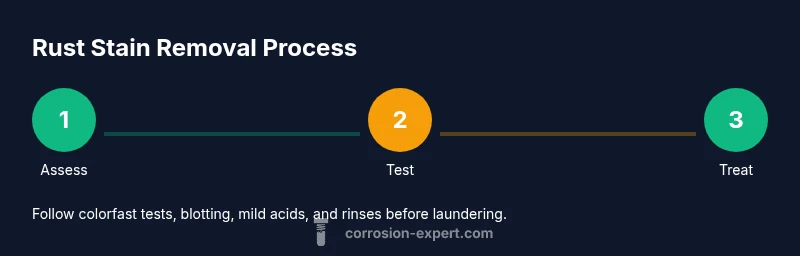
Before any treatment, test each fabric area for colorfastness using a hidden seam or hem. If color transfers to your test cloth, stop and seek gentler options. For white or light fabrics, hydrogen peroxide can be effective but use a low concentration and gloves. For colored fabrics, start with milder remedies like lemon juice and salt or white vinegar diluted with water. Corrosion Expert recommends avoiding concentrated acids on delicate fibers and never using chlorine bleach on rust stains, as this can worsen discoloration or damage the fabric. Keep the garment damp during testing to see if the stain spreads or lightens. Note the fabric type and care label so you choose the right method.
Household remedies overview: lemon juice, salt, vinegar, and beyond
Household remedies rely on acids and simple abrasives to lift rust without harsh chemicals. Lemon juice plus salt creates a mild paste that can activate when exposed to air. White vinegar acts as a mild acid that helps dissolve iron particles, especially on cottons and linens. A paste of baking soda and water can serve as a gentle deodorizer and mild abrasive, but it is less effective on heavy rust. Hydrogen peroxide is a stronger oxidizer that can lighten stains on whites or color-safe fabrics but may bleach some colors. When in doubt, start with the gentlest method and test again. For stubborn stains, a commercial rust remover designed for fabrics offers stronger action, but always follow the label and test first. With any method, work from the outside edge of the stain inward to prevent spreading.
Lemon juice and salt method
Prepare a fresh lemon and squeeze it to collect juice. Dip a clean cloth into the juice and rub the rust stain, then sprinkle salt directly onto the wet area to form a paste. Apply the paste to the stain and let it sit for a few minutes, not longer than 15 minutes. Rinse with cold water, checking progress after washing a small area. If the stain remains, move to vinegar or another method rather than continuing to rub or heat-set the stain.
White vinegar method
If lemon fails, try white vinegar. Dilute vinegar 1:1 with water and apply to the stain using a clean cloth. Let it soak for 20-30 minutes, occasionally blotting to lift particles. Rinse and inspect; if the stain fades but remains, repeat or switch to a hydrogen peroxide treatment for whites. For delicate fabrics, skip hydrogen peroxide and rely on vinegar and gentle washing.
Hydrogen peroxide and rust converter options
Hydrogen peroxide 3% is a stronger oxidizer that can lift rust on whites and colorfast fabrics. Apply a small amount to the stain, wait 5-10 minutes, and rinse. Do not use on wool or silk fabrics, and always test first. Rust converters or specialty rust removers can convert rust to a colorless compound and ease removal, but they may weaken fibers if left too long. Always follow product directions and rinse thoroughly.
Using commercial rust removers safely
Commercial rust removers designed for fabrics can be effective on stubborn stains. Look for oxygen-based formulas that are labeled safe for fabrics. Apply sparingly to the stained area, wait the recommended time, then launder. Always test on an inconspicuous area first, wear gloves, and ventilate the workspace. Avoid mixing with ammonia or bleach.
Post-treatment care and prevention
After removing rust, wash garment separately to avoid transfer to other clothes. Avoid high heat until you confirm the stain is fully gone, since heat can set iron-based stains. If you notice a faint trace remains, repeat the process or consider taking the item to a professional cleaner. To prevent future rust stains, store metal items away from laundry, check pockets for rusted nails or razors, and treat water with rust inhibitors if you live in hard water areas.
Fabric-specific tips: whites vs colors, delicates
White fabrics tolerate stronger oxidizers, but colored fabrics may fade; delicates like silk require gentler approaches. Always choose a method based on fabric type and colorfastness, and avoid heat until the stain is removed. The Corrosion Expert team recommends documenting care labels and testing every method on hidden areas first, then proceeding with caution. By following these steps, you can protect garments and extend their life.
Tools & Materials
- Lemon juice (fresh)(Freshly squeezed preferred; avoid bottled juice with additives)
- Salt(Coarse or table salt; helps activate acid on stain)
- White vinegar (5% acidity)(Dilute 1:1 with water for some stains)
- Hydrogen peroxide 3%(Use only on whites or colorfast fabrics; test first)
- Commercial rust remover (fabric-safe)(Follow label; use on sturdy fabrics first)
- Liquid laundry detergent(For washing after treatment)
- Soft-bristled toothbrush or stain brush(Gently agitate without damaging fibers)
- White cloth or sponge(For blotting and applying solutions)
- Gloves (rubber or nitrile)(Protect skin from acids and rust chemicals)
- Cold water(Rinse thoroughly after treatment)
Steps
Estimated time: 60-90 minutes, plus washing and drying
- 1
Test fabric colorfastness
Before applying any rust removal method, test colorfastness on a hidden area using a small amount of cleaner. If color transfers, do not proceed.
Tip: Use a white cloth and a discreet seam. - 2
Blot the stain with a clean cloth
Gently blot to remove excess liquid. Do not rub, which can push rust deeper into fibers.
Tip: Blot from the outside toward the center. - 3
Apply lemon juice and salt paste to stain
Apply fresh lemon juice to the stain and sprinkle salt to form a paste; ensure even coverage without flooding the fabric.
Tip: Avoid letting the paste dry completely on delicate fabrics. - 4
Wait 5-15 minutes for the paste to work
Allow the acidity to act for 5-15 minutes; keep the garment away from direct sunlight to prevent dye fading.
Tip: Do not leave paste longer than 15 minutes. - 5
Rinse with cold water
Rinse under cold running water, then inspect the area to assess stain fading.
Tip: Check progress before repeating any treatment. - 6
Soak in white vinegar solution
Soak the stained area in a 1:1 vinegar-water solution for 20-30 minutes to help dissolve iron particles.
Tip: Stir gently and avoid scrubbing. - 7
Apply hydrogen peroxide for whites
On white or colorfast fabrics, apply a small amount of 3% hydrogen peroxide; wait 5-10 minutes and rinse thoroughly.
Tip: Test again on hidden area to ensure no color change. - 8
Use commercial rust remover if needed
If the stain persists, apply a fabric-safe rust remover per label directions; again test first and rinse well.
Tip: Ventilate and wear gloves. - 9
Launder and air-dry
Wash the garment according to its care label on the appropriate cycle; avoid heat until the stain is fully gone, then air-dry and re-check.
Tip: If any trace remains, do not machine-dry.
Quick Answers
Can rust stains be removed from delicate fabrics like silk?
Delicates like silk can be more challenging. Use gentler methods (lemon juice with salt or diluted vinegar) and avoid strong oxidizers. If doubt remains, use professional cleaning.
Delicates are trickier; stick to mild methods or consult a cleaner.
Is hydrogen peroxide safe to use on colored fabrics?
Hydrogen peroxide can bleach some colors. Test on a hidden area first and consider milder alternatives for non-white fabrics.
Test first; avoid applying peroxide to non-white fabrics unless colorfast.
Will rust stains disappear completely after treatment?
Many rust stains can be removed, especially if treated promptly. Some older or stubborn stains may leave a faint trace and require repeat treatment.
Most stains come out, but some faint traces can linger.
Should I heat the fabric to speed up rust removal?
No. Heat can set iron-based stains and make them harder to remove. Let the treatment finish before any warm or hot wash.
Avoid heat until the stain is gone.
What should I do if rust returns after washing?
If rust reappears, repeat the treatment steps starting with a fresh colorfastness test, and check for residual metal sources in pockets or zippers.
If it comes back, try again carefully and inspect for metal sources.
Watch Video
Quick Summary
- Test fabric colorfastness before treatment
- Act quickly to prevent setting the stain
- Choose method based on fabric type and color
- Avoid heat until the stain is removed
- Repeat steps if rust remains