Will Zinc Screws Rust? A Practical DIY Guide
Discover whether zinc screws rust and how coating choices affect durability. This practical guide covers indoor vs outdoor environments, corrosion factors, and prevention tips for homeowners and DIYers.


Will zinc screws rust? In typical indoor or dry conditions, zinc-coated screws resist rust for many years. But moisture, salt exposure, and damaged coatings can expose steel, leading to rust. The answer depends on coating type, installation, and environment. Zinc coatings are designed to act as sacrificial anodes, sacrificing themselves to protect the steel substrate. In practice, whether a zinc screw will rust hinges on how well the coating was applied and how demanding the environment is. For DIY projects, this means you can't assume permanent rust immunity; you must assess exposure, maintenance, and replacement cycles. According to Corrosion Expert, the most durable outcomes come from matching coating type to the specific environment, avoiding mechanical damage, and inspecting fasteners regularly. By understanding the failure modes—coating wear, scratching, and moisture ingress—you can choose strategies that maximize longevity and minimize surprises on your next project.
Will zinc screws rust?
Will zinc screws rust? The short answer is: not immediately in dry indoor environments, but sustained moisture, salt exposure, or physical damage to the coating can expose bare steel and lead to rust. Zinc coatings are designed to provide sacrificial protection while forming a barrier against moisture; when the coating remains intact, corrosion is slowed dramatically. However, if the coating is nicked, scratched, or worn away, the underlying steel becomes vulnerable. For DIY projects, this means you should evaluate the environment, coating type, and the likelihood of coating damage before assuming rust will never occur. According to Corrosion Expert, choosing the right coating for the job and inspecting fasteners regularly can dramatically improve outcomes over the life of a project.
This is why understanding the failure modes is important: coating wear, mechanical abrasion, and moisture intrusion are the primary routes by which zinc screws can begin to rust. By recognizing these cues early, you can take action—whether that means replacing fasteners, re-coating, or switching to a more corrosion-resistant option for harsher environments.
How zinc coatings work
Zinc coatings work on two core principles: barrier protection and sacrificial protection. A barrier coating physically shields steel from moisture and oxygen, while sacrificial protection uses zinc's more active electrochemistry to corrode first, slowing underlying rust. In practice, electro-galvanized (EG) and hot-dip galvanized (HDG) screws achieve twofold protection through different processes. When the coating is intact, moisture cannot reach the steel, and rust development is extremely slow. If the surface is compromised—through abrasion, impact, or improper installation—zinc begins to corrode, forming zinc oxide and zinc salts that may appear as a chalky white residue, commonly called white rust in damp environments. Recognizing these mechanisms helps you predict performance and plan replacements before failure occurs.
Indoor vs outdoor: environmental pressures
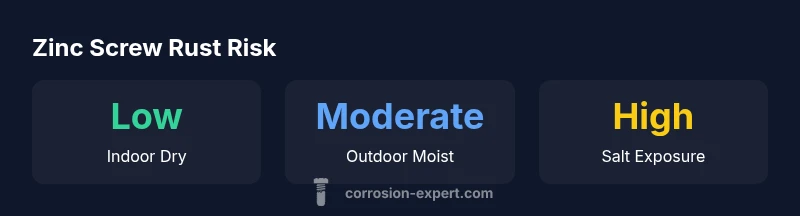
Environmental context defines how long zinc screws last. Indoor, dry environments with controlled humidity drastically reduce corrosion risk, allowing zinc-coated screws to perform well for many years. Outdoor settings introduce moisture, temperature fluctuations, and possibly salt spray, all of which accelerate coating consumption and potential rusting if the coating is breached. Coastal areas with salt-laden air pose a particular challenge, while shaded, damp spaces (like basements or garages) can promote white rust if condensation forms on metal surfaces. In practical terms, a zinc screw in a humid bathroom may require periodic inspection, while one used in dry interior trim can outlast the project if undamaged. The Corrosion Expert team notes that exposure to moisture pairs with any coating defect to drive rust more quickly than either factor alone.
Zinc-coated screw types and their vulnerabilities
There are several zinc-based coating types, each with strengths and vulnerabilities. Electrogalvanized (EG) screws are coated during manufacture and provide good coverage but may be less robust to abrasion. Hot-dip galvanized (HDG) screws receive a thicker zinc layer, offering longer life in exposed settings but at a higher cost and with potential for coating spatter if installed near edges. Zinc-plated screws are common, but their thinner coating makes them more prone to corrosion in damp environments. In heavy-use outdoor projects or where chemicals and salts are present, HDG or even stainless steel screws are often a better bet. Understanding these differences helps you tailor fastener choices to the specific context and anticipated wear, reducing will zinc screw rust in practice.
Signs the coating is failing
Recognizing early warning signs helps you prevent broader rust progression. Look for chalky white residues on the screw surface, flaking coating, or discoloration near the head or threads. Small rust spots at the edge of a scratch can indicate coating wear. When moisture is present, white rust can form even on otherwise protected surfaces. If you even suspect coating damage, inspect adjacent fasteners and the substrate for signs of corrosion. A proactive approach—replacing compromised screws and retreating surrounding areas where feasible—can extend the life of a project and avoid more costly repairs later.
Prevention strategies that actually work
Prevention starts with choosing the right coating for the environment. For dry indoor projects, zinc-coated screws are often sufficient; for outdoor or coastal settings, HDG or stainless steel screws may be necessary. Prevent coating damage by avoiding over-tightening, spreading load with washers where appropriate, and using barrier materials to isolate galvostic pairs (avoid dissimilar metals that create galvanic cells). Maintain dryness by sealing any joints that could trap moisture and applying anti-corrosion sealants in exposed areas. Regular inspection is crucial: even the best coatings degrade over time due to wear and environmental exposure, and replacing damaged screws early can dramatically reduce total rust risk over a project’s life.
Practical tips for DIY projects
In practice, start with a project-appropriate plan. Indoor wooden framing often tolerates zinc-coated screws well, while outdoor decks and fence posts facing salt air benefit from HDG or stainless alternatives. When selecting fasteners, verify coating thickness, verify compatibility with the substrate, and consider installing with protective barriers such as stainless washers to minimize metal-to-metal contact. Store unused screws in a dry place to prevent pre-install corrosion. During installation, avoid bending or nicking the coating; minor damage can be repaired by coating touch-ups, but larger defects warrant replacement. Finally, familiarize yourself with the environment around your project so you can adjust future fastener choices as needed.
Quick troubleshooting steps if you notice rust
If you spot rust, pause and assess the extent. Check adjacent screws for similar signs and inspect the substrate for moisture intrusion. If damage is localized, you may be able to replace the affected fastener and seal surrounding joints to prevent further intrusion. For widespread rust or compromised structural elements, consider switching to a more corrosion-resistant screw type and re-sealing the area. Maintain a dry environment and consider applying a protective coating or sealant to exposed edges. Routine maintenance reduces the risk of unexpected rust progression and extends the life of the installation.
Environment-based suitability of zinc-coated screws
| Scenario | Rust Risk | Recommended Screw Type |
|---|---|---|
| Indoor dry wood | Low | Zinc-coated screws are usually sufficient if kept dry and protected |
| Outdoor weathered wood | Moderate | Hot-dip galvanized screws or stainless steel recommended |
| Coastal salt exposure | High | Stainless steel or high-grade HDG with protective barriers |
| Direct contact with copper or aluminum nearby | Elevated | Use compatible screws and isolation barriers |
Quick Answers
Will zinc screws rust if used indoors?
In dry indoor environments, zinc-coated screws resist rust well for many years, but humidity and coating damage can still cause issues. Regular checks help ensure longevity.
In dry indoor spaces, zinc screws resist rust well, but keep an eye on any coating nicks.
Are galvanized screws better than zinc-plated screws for outdoor use?
Yes. Hot-dip galvanized or stainless steel screws generally perform better outdoors due to thicker protective coatings and greater corrosion resistance.
Outdoors, go with galvanized or stainless for the best rust resistance.
How can I prevent rust on zinc screws?
Choose the right coating for the environment, avoid coating damage, use barrier materials, keep the area dry, and replace damaged screws promptly.
Pick the right coating, keep things dry, and replace damaged screws to prevent rust.
Do zinc screws rust in saltwater environments?
Salt accelerates corrosion. For salt-prone areas, stainless steel or specially coated HDG screws are preferred.
Saltwater makes zinc coatings struggle; stainless is usually the safer choice.
Can you repair rust on zinc screws?
Rust on screws is best addressed by replacing the affected fastener and inspecting surrounding fasteners for early signs of corrosion.
If you see rust, replace the screw and check nearby fasteners.
Is there a safe rust remover for zinc-coated screws?
Use mild cleaners and avoid harsh acids near zinc-coated surfaces; test any product on a small area first before wider use.
Stick to mild cleaners and test first to avoid damage.
“Zinc coatings dramatically slow corrosion in most interior applications, but the moment the coating is breached, rust can follow. The key is to pair material choice with environmental demands and inspect for damage regularly.”
Quick Summary
- Assess environment before selecting fasteners
- Match coating type to exposure for longevity
- Inspect coatings regularly and replace damaged screws
- Prefer stainless steel in high-corrosion areas
- Apply barriers to minimize galvanic corrosion if needed